


The industry professionals we met at WebX 2026 offered different answers.
Abel from BitGo highlighted tokenized stocks and stablecoins. Mengqi from bitFlyer pointed to real-world assets and AI. Tatsu from Startale Group selected prediction markets and privacy, while Mio Yonenaga from SBI VC Trade viewed regulation and compliance as more important than any specific technology or asset.
These were personal views from professionals working in different areas of the industry. Their answers naturally varied depending on their roles and the market demand they encounter firsthand.
However, there was broad agreement on what Japan’s crypto market needs to grow.
Japan’s crypto market is being formalized into a financial market in which institutions can participate in practice.
Clear regulation establishes the conditions for institutional entry. Custodians and market makers provide an environment in which assets can be securely held and traded. Stablecoins and payment and settlement infrastructure connect onchain assets with the existing financial system.
Views differed on which sectors held the greatest potential, but they converged on what was needed to turn those sectors into real markets: crypto must be reshaped into a form that the traditional financial industry can work with.
There were many answers to the question of which sectors would grow. Yet there was near consensus on the conditions required for those sectors to become functioning markets.
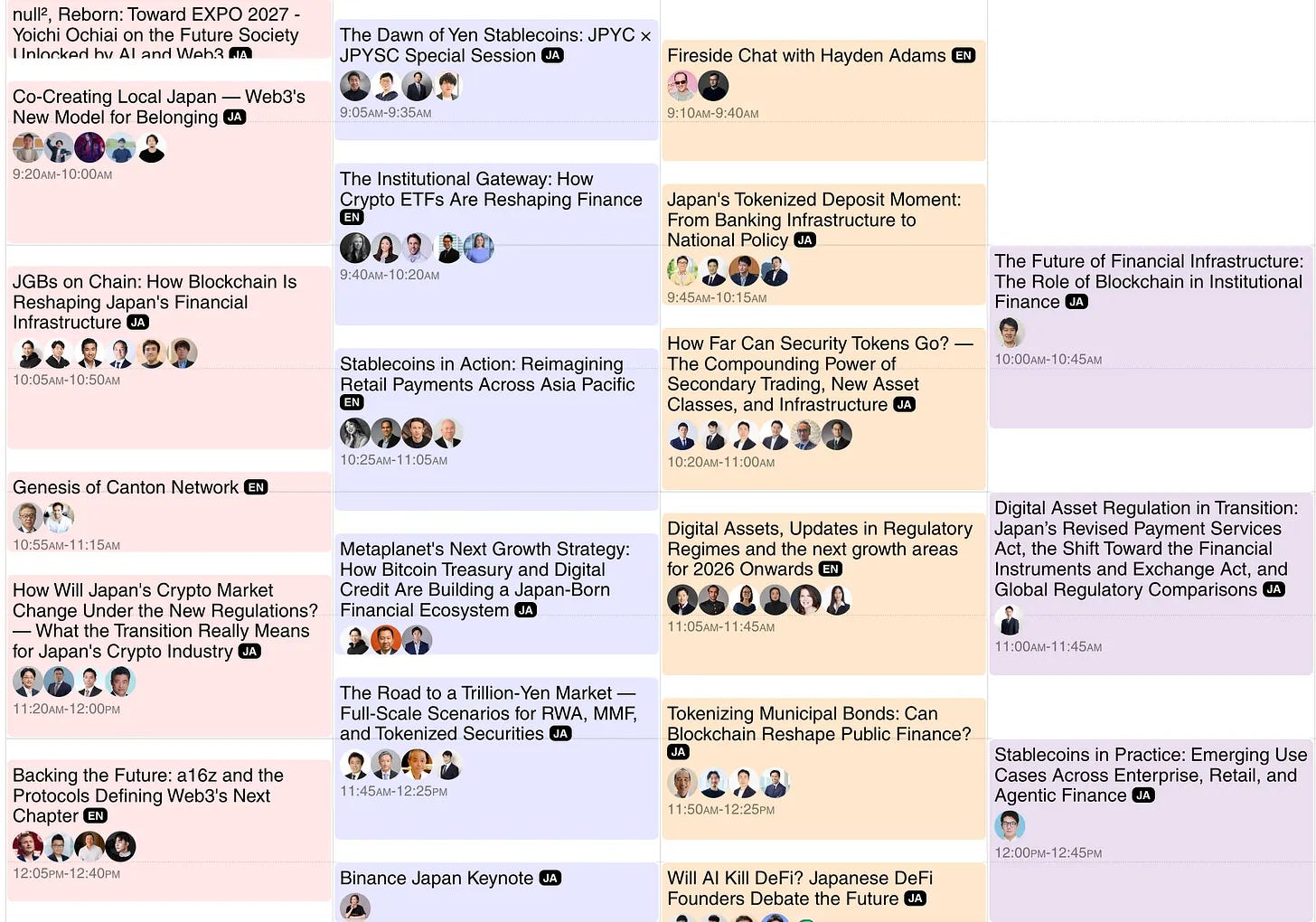
The official WebX 2026 program pointed in the same direction. Stablecoins and digital payments, tokenized capital markets, AI, regulatory reform, and institutional digital-asset adoption were major themes throughout the event.
Representatives from global financial institutions such as Fidelity, Mastercard, Franklin Templeton, Ripple, and Swift took part. In Japan, established financial players—including SBI and the country’s three megabanks—moved to the forefront. Institutional participation, payments infrastructure, and regulatory clarity were already at the center of the conference.
The atmosphere on the ground also differed from that of a conventional crypto event. Companies presenting licenses, custody, stablecoins, enterprise wallets, and institutional trading infrastructure had a greater presence than teams promoting new tokens.
What WebX 2026 revealed was not which sector would generate the next market cycle. It offered a view of what the market could look like once crypto is incorporated into a country’s financial system. At the same time, it showed how Japan intends to approach that market.
1. What Did Industry Professionals Choose for Crypto’s Next Five Years?
At WebX, Exilist asked representatives from Startale Group, BitGo, bitFlyer, and SBI VC Trade the same question:
“Which crypto sector do you think will be the next big thing over the next five years?”
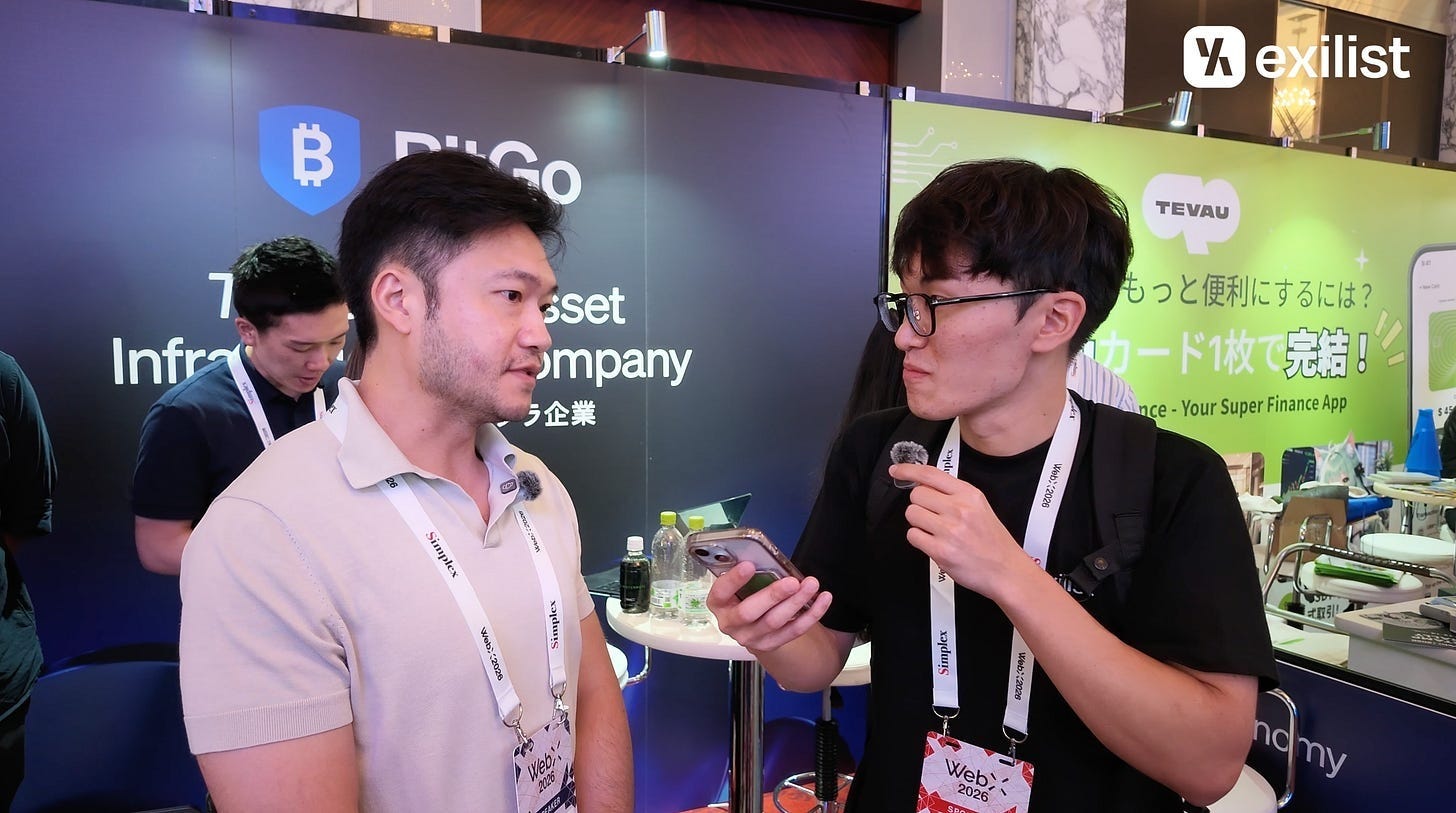
Abel, who oversees BitGo’s business in Asia, selected tokenized stocks and stablecoins.
“I definitely think tokenized stocks will be a significant part of the market share moving forward. I also believe stablecoins will take on a much more dominant role. People have begun to see the practical use cases and the real-world problems that stablecoins can solve.”
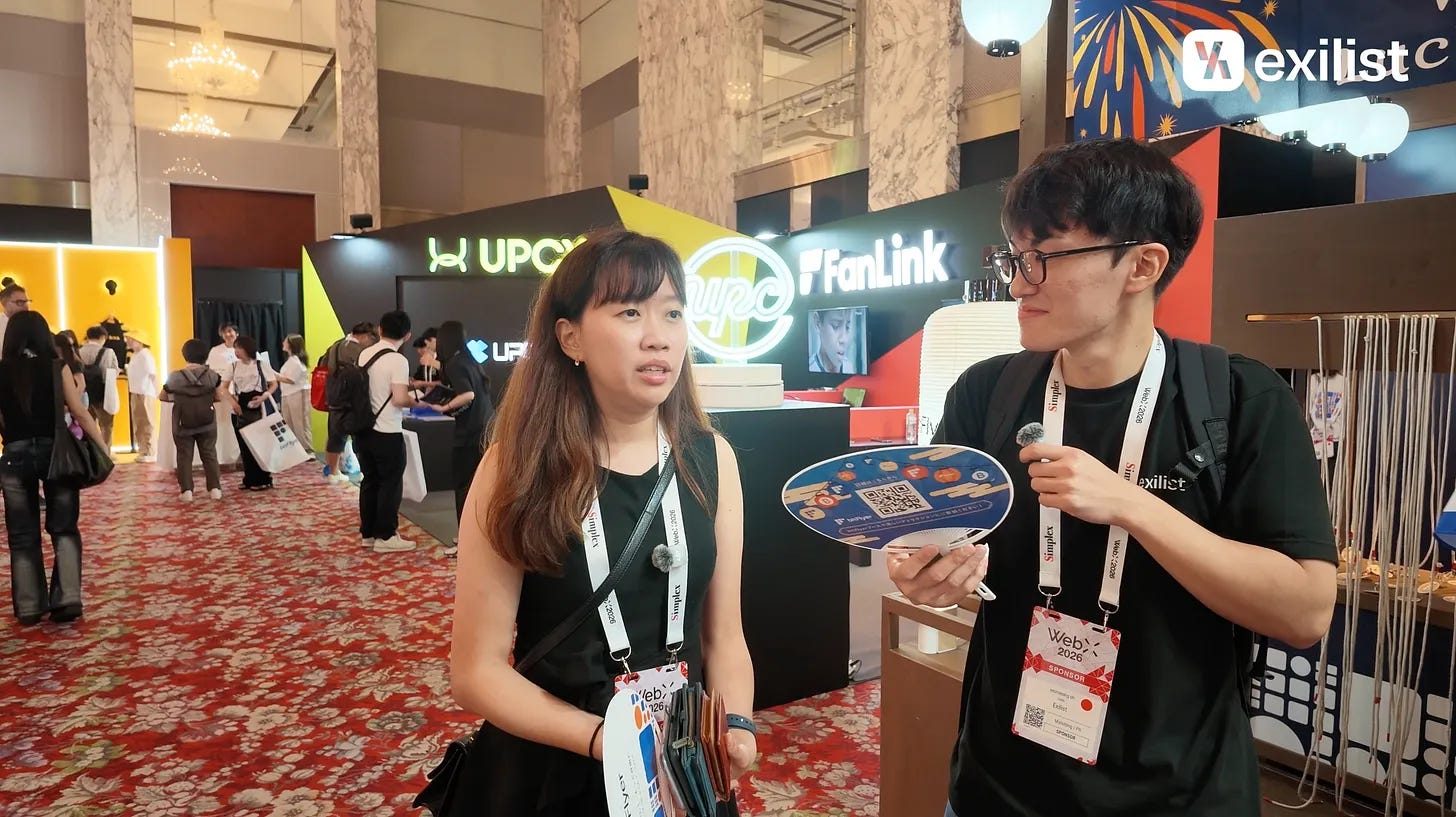
Mengqi, who covers institutional clients at bitFlyer, selected real-world assets and AI.
“There has always been a constraint where people can only trade traditional stocks during market hours, and RWA is a space that will develop to solve this.”
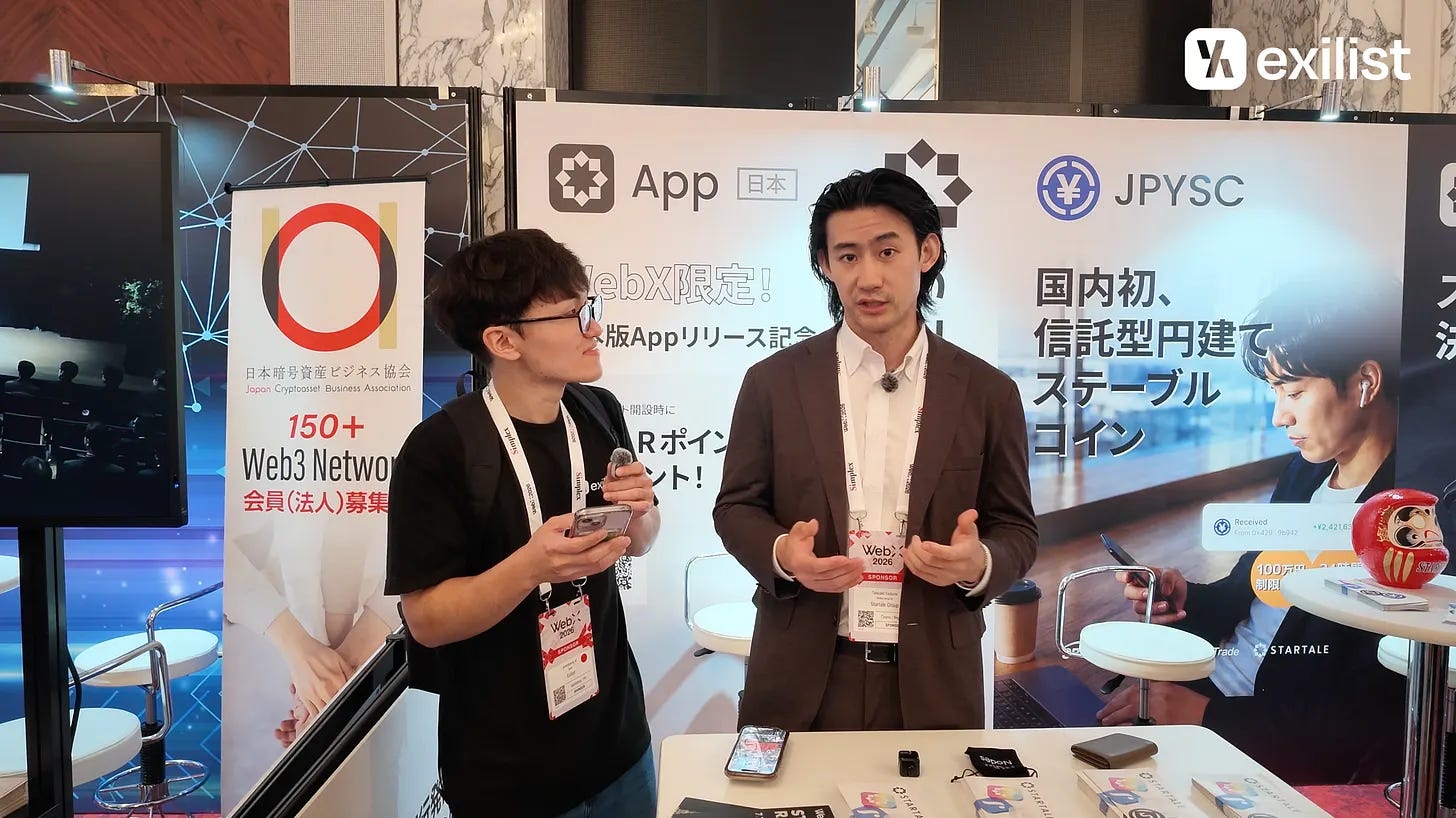
Tatsu, who leads business development at Startale Group, focused on prediction markets and privacy.
“Prediction markets are already very big globally. I also think privacy will be important as more enterprises adopt blockchain-based networks and transactions. There will be a need to keep certain transactions hidden or private, so privacy solutions will become increasingly important.”

Mio Yonenaga from SBI VC Trade offered a somewhat different answer.
“Personally, I believe regulation and compliance will be the most important factors. Whether it is onchain technology or AI, regulatory compliance will be the foundation that allows these businesses to expand globally.”
Read only as sector forecasts, these responses leave five themes: RWAs, stablecoins, AI, privacy, and prediction markets. Once the role of each sector is separated, however, they begin to form a single financial system.
Stablecoins bring cash onchain. Tokenization brings stocks, funds, and commodities. DeFi and perpetual futures enable those assets to be traded and used as collateral. AI automates asset management and trading. Privacy and compliance create the conditions under which companies and institutions can use the system.
Each person selected a different sector, but all were describing a market that emerges after financial assets and transactions move onchain.
2. Stablecoins Are the First Market Moving Into Real-World Use
Stablecoins were the area where commercialization appeared most concrete at WebX 2026.
They have already established themselves as the base currency of crypto trading. The industry’s focus is now moving beyond exchanges. Stablecoin use is expanding into conventional financial activities such as payments, cross-border remittances, corporate treasury management, and foreign-exchange settlement.
In Japan, this transition is emerging around yen-denominated stablecoins.
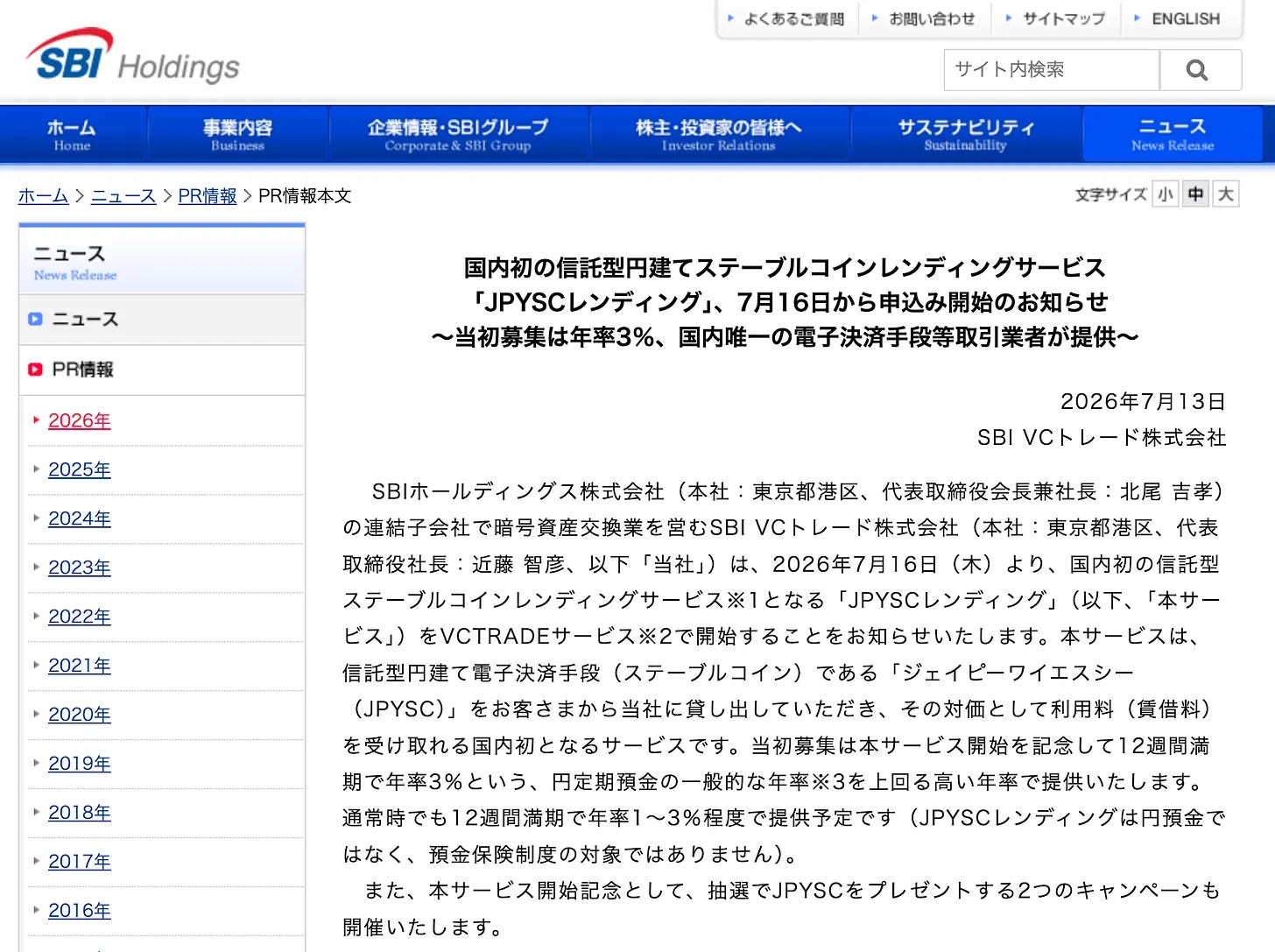
On July 13, the opening day of WebX, SBI VC Trade announced a lending service for JPYSC, a trust-based yen stablecoin. Users can lend JPYSC for a fixed period and receive compensation in return, with applications opening on July 16.
SBI VC Trade holds the electronic payment instruments service provider license required to offer stablecoin distribution and trading services to retail customers in Japan. SBI Group announcement
Mio Yonenaga saw stablecoin potential in the everyday habits of Japanese consumers.
“Japanese people are very accustomed to point systems like IC cards for transportation. Stablecoins can play a similar role.”
From this perspective, stablecoins could become the first onchain service that consumers use without consciously thinking about blockchain.
Mass adoption will be difficult if users must learn about blockchain addresses and gas fees. The experience should resemble existing mobile-payment services: users open an app, check their balance, and make a transfer or payment.
Startale looked at the same asset from the perspective of businesses and financial institutions.
Tatsu identified cross-border remittances and peer-to-peer foreign-exchange settlement as early potential use cases for JPYSC, which Startale and SBI are jointly developing.
Whether yen stablecoins can match the market capitalization of dollar stablecoins is not the most important question. Given the dollar’s position in international finance, yen-denominated assets are unlikely to surpass the scale of USDT and USDC.
The more realistic market for yen stablecoins is likely to emerge through corporate payments and accounting in Japan, remittances across Asia, foreign-exchange settlement, and onchain settlement for Japanese financial products.
If dollar stablecoins expanded global access to the dollar, yen stablecoins could become payment rails connecting Japan’s financial market with overseas onchain markets.
This also explains why BitGo’s Abel emphasized custody, trading, tri-party collateral management, and issuance infrastructure alongside stablecoins.
Token issuance alone is insufficient for institutional stablecoin adoption. Reserve-asset management, custody, redemption, counterparty management, and anti-money laundering procedures must all be connected.
The next phase of stablecoin competition will not be determined by market capitalization alone. Who issues the asset, who holds it in custody, which financial institutions participate in settlement, and where it can be used in practice will become increasingly important.
3. After Cash, Stocks and Capital Markets Move Onchain
If stablecoins bring cash onchain, RWAs supply the financial products that can be traded with that cash.
Mengqi from bitFlyer explained that RWAs in Japan are still primarily associated with real estate and real estate investment trusts. Japan has extensive experience with real-estate securitization, and consumers are relatively familiar with structures that divide property investments into smaller units. This helps explain why blockchain-based RWAs are also initially understood through real estate.
Globally, however, tokenized stocks are growing rapidly.
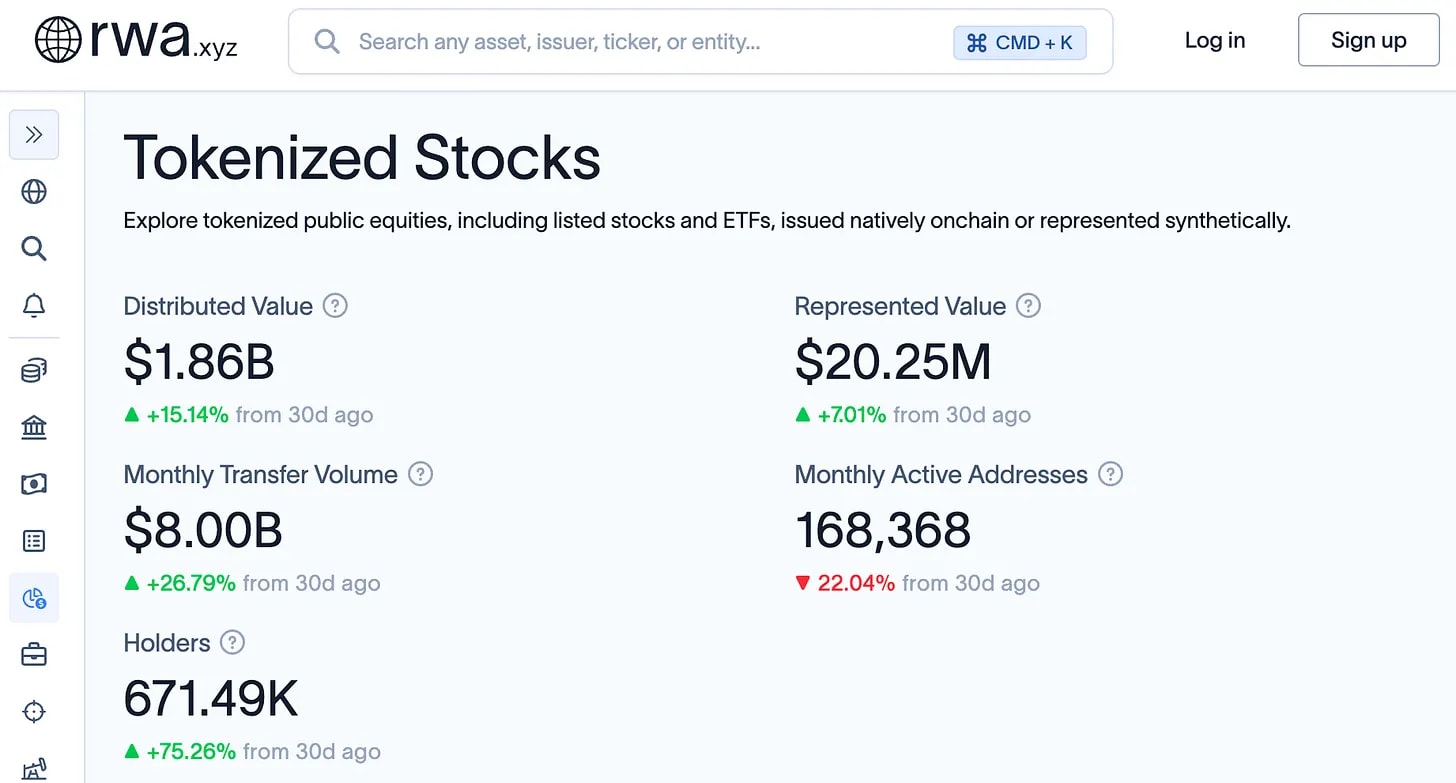
According to RWA.xyz, tokenized stocks had approximately $1.86 billion in distributed value as of July 21, 2026, with monthly transfer volume of roughly $8 billion and around 670,000 holders. Ondo had become the largest platform in the category, supplying approximately $850 million in tokenized stocks.
The sector remains tiny compared with traditional equity markets. Its growth rate and emerging use cases, however, are worth watching.
Tokenized stocks allow overseas investors to gain exposure to US equities without opening local brokerage accounts and provide a trading environment that remains available outside regular market hours.
Still, 24-hour trading alone does not fully explain the long-term value of tokenized stocks.

In his WebX session, Ondo Finance CEO Ian De Bode focused less on extended trading hours and more on liquidity and collateral efficiency.
Price discovery for stocks still takes place on Nasdaq and the New York Stock Exchange because that is where liquidity for the underlying shares and ETFs resides. Creating separate liquidity pools on decentralized exchanges can cause onchain prices to diverge from prices on traditional exchanges.
Ian argued that some early tokenized-stock products failed to solve this problem adequately. If investors purchase a token at a significant premium to the actual share price, the loss caused by the price discrepancy can outweigh the benefit of 24-hour trading.
Ondo Stocks, formerly Ondo Global Markets, chose a model in which tokens are minted and burned in real time based on prices formed on Nasdaq and the New York Stock Exchange. Rather than creating a separate onchain price, the system connects directly to prices and liquidity in traditional financial markets.
The next stage is using tokenized stocks as collateral.
On most perpetual futures platforms today, stablecoins remain the primary form of collateral.
Suppose an investor opens a long position on a Tesla perpetual. A market maker takes the opposite side by providing a short position. To remove directional price risk, the market maker buys actual Tesla shares through an offchain brokerage account.
From the market maker’s overall portfolio perspective, the position is now hedged.
The problem is that the onchain perpetuals platform cannot see the Tesla shares held in the external brokerage account. From the platform’s perspective, the market maker still holds an unhedged Tesla short position. The market maker must therefore maintain additional stablecoins as margin in case Tesla’s price rises.
Ian explained that this structure can reduce the effective capital efficiency of large funds and market makers to between 30% and 50%.
The structure changes if tokenized Tesla shares can be deposited directly into the perpetuals platform as collateral. The platform can then recognize both the short position and the spot asset hedging it. The market maker can provide liquidity with less additional margin while collecting funding payments.
“Quite a few institutional market makers do not take perps seriously right now because of the capital inefficiency. Tokenized spot assets need to be used as collateral directly on the platform.”
This is where the real scalability of tokenized stocks emerges.
Stocks can move beyond being assets that are merely bought and sold on a blockchain. They can be used as collateral for loans, margin for derivatives, and assets in portfolio-management strategies. They gain composability—the ability to connect with multiple financial protocols and assets to create new services.
Strium, jointly developed by Startale and SBI, is also targeting this market.
Strium is designed as a Layer 1 blockchain offering 24-hour spot and derivatives trading and settlement for tokenized stocks and RWA-linked financial products. Its plan to support JPYSC as a native asset is also significant.
The project seeks to connect a yen-denominated payment asset with tokenized financial products from Asia and the United States within a single trading environment.
Stablecoins and tokenized stocks are not two separate narratives. One supplies cash; the other supplies the financial products that can be traded with that cash.
4. AI Will Change How Financial Institutions Operate Before It Creates New Assets
AI was one of the official headline themes of WebX 2026. Yet the role of AI observed at the event appeared more closely tied to automating the operations and trading activities of existing financial institutions than to creating new tokens.
Mengqi explained that bitFlyer had already replaced many routine internal operations with AI.
“Personally, I write most of my documents and materials using Claude 3.5. Trading firms will also develop more sophisticated strategies using AI.”
AI’s impact on crypto markets can broadly be divided into two stages.
The first is improving productivity inside financial institutions. AI can automate repetitive tasks such as reviewing customer due diligence documents, organizing market data, preparing reports, and detecting suspicious transactions.
This can have a particularly direct effect on Japanese financial institutions, where regulatory compliance requires significant time and staffing.
The second stage is the automation of asset management.
AI agents can analyze market data, adjust portfolio allocations, and manage positions as collateral values change.
For this to work, assets must exist in a form that machines can read and move. Continuous management becomes difficult when trading hours are restricted or assets are recorded differently across separate systems.
Stablecoins, tokenized assets, and onchain markets provide a suitable structure for AI-driven finance.
This is why AI and tokenization are often discussed together. Tokenization turns financial assets into programmable instruments, while AI manages those assets faster than humans can.
However, institutions cannot hand every operational authority over to AI. Trading limits, approval rights, accountability, and rules for stopping abnormal transactions must be designed into the system.
As AI becomes more deeply integrated into finance, compliance and verifiable records of execution also become more valuable.
AI does not eliminate the need for regulation. By enabling a greater number of transactions to be executed more quickly, it creates demand for more sophisticated control systems.
5. Privacy Becomes More Important as Institutions Enter the Market
Tatsu from Startale also identified privacy as a key area for the next five years.
Public blockchains are transparent because transaction histories are publicly visible. That can be an advantage for small peer-to-peer transactions, but it creates problems for companies and financial institutions.
If the amounts a company pays its suppliers, the assets it holds, its counterparties, and the timing of its fund movements are all publicly visible, commercially sensitive information can be exposed.
Financial institutions also cannot disclose their customers’ transaction information to the public.
As institutional adoption grows, the transparency of public blockchains must be reconciled with the confidentiality required in financial transactions.
The privacy required here is closer to selective disclosure than complete anonymity. Transaction participants and authorized institutions can view the relevant information, while amounts and counterparties remain hidden from unnecessary third parties. Regulators may also be granted verification rights when required.
Datachain, which participated in WebX, also introduced KuraPrivacy, its onchain privacy infrastructure, alongside an enterprise Web3 wallet. The company’s position was that policy, markets, and technology must be considered together to bring stablecoins and tokenized deposits into real-world use. Datachain announcement
Privacy and compliance have often been treated as opposing concepts. Institutional onchain finance needs technology that can satisfy both.
Transaction information must remain private from the broader public while allowing the relevant parties to verify that transactions are lawful and compliant.
Without a solution to this problem, onchain finance may remain largely confined to retail trading markets.
6. Prediction Markets Show the Value of Prices That Are Always Available
Prediction markets, another area highlighted by Tatsu, are unlikely to grow easily in Japan in the immediate future. The regulatory boundaries between gambling and financial products remain complex, and Tatsu acknowledged that regulation makes it difficult to offer prediction markets in Japan.
Nevertheless, the reason for identifying prediction markets as a promising sector is clear. They can convert political, economic, and social events occurring across the world into real-time prices.
This characteristic also connects with the weekend price signals that Ian described as a source of value in onchain equity perpetuals.
Traditional financial markets close on weekends. International events and company-specific developments do not follow exchange operating hours. Perpetual futures and prediction markets continue to translate market expectations into prices even while traditional venues are closed.

Ian explained that weekend prices for onchain equity perpetuals are becoming increasingly predictive of prices at the Sunday or Monday open.
If trading volume and open interest—the total value of outstanding derivatives positions—become sufficiently large, traditional financial institutions will find it increasingly difficult to ignore these prices.
Prediction markets and equity perpetuals naturally have different product structures. Both, however, provide continuous price discovery that existing markets cannot.
From this perspective, 24-hour trading extends beyond convenience for retail investors. It creates a separate market in which new information can be reflected in asset prices while traditional exchanges are closed.
7. Regulation Matters More Than Any Single Sector in Japan
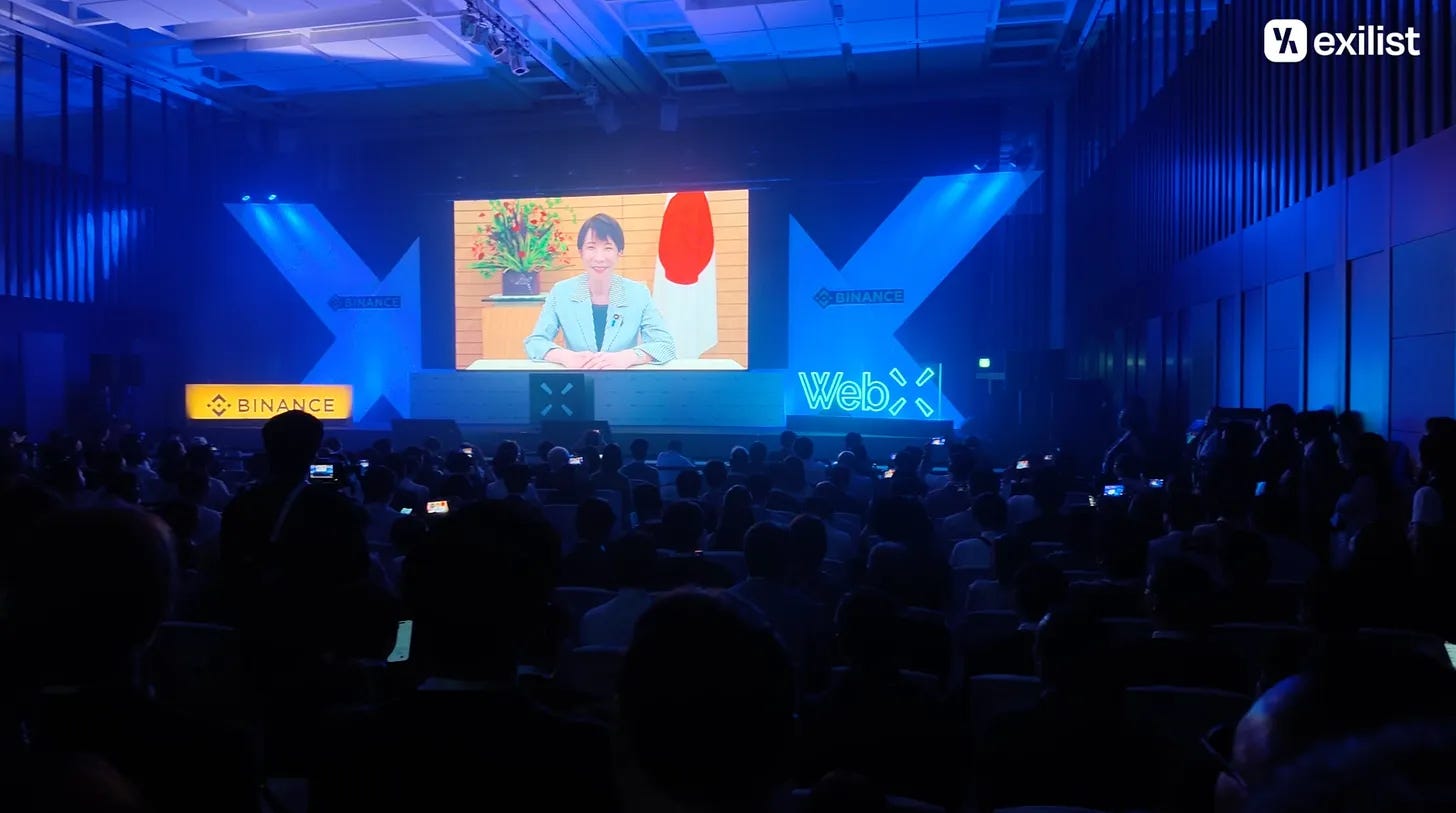
Japan’s regulatory overhaul was the most important backdrop to WebX 2026.
At the opening of the conference, Japanese Prime Minister Sanae Takaichi said that the social implementation of Web3 was progressing and emphasized the growth of Japan’s innovation ecosystem through startup development and public-private cooperation.
In addition to the prime minister, government officials responsible for finance, economic and industrial policy, and digital policy participated in WebX.
This was significant because the government had begun to address Web3 within existing financial and industrial policy, rather than treating it only as an industry to monitor or support from the outside.
One day after WebX closed, a legislative development formally advanced this direction.
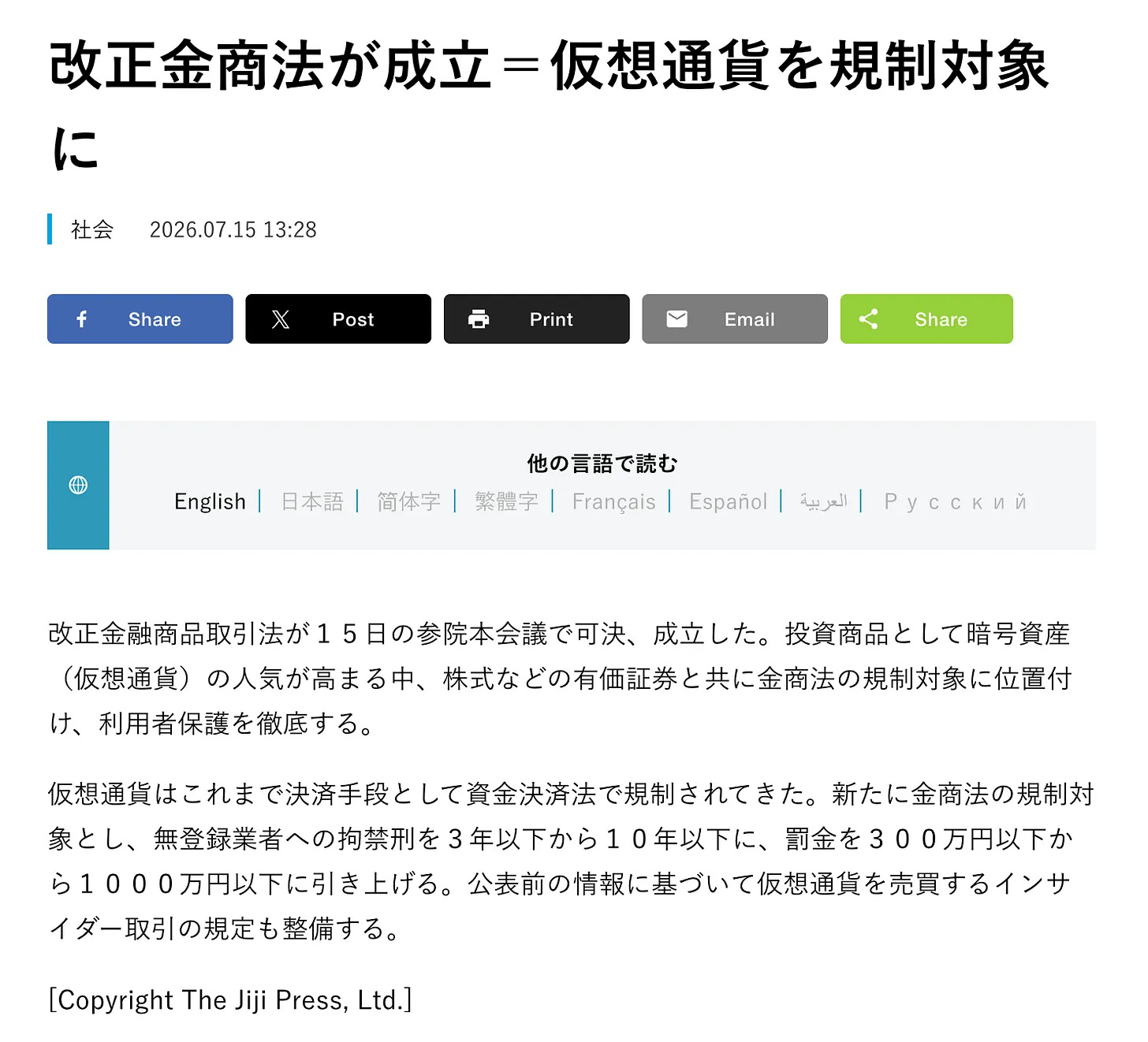
On July 15, Japan’s House of Councillors passed an amendment bringing crypto assets under the regulatory scope of the Financial Instruments and Exchange Act.
The legislation shifts crypto assets away from a framework centered primarily on their use as payment instruments and toward one designed for investment products. It also strengthens disclosure requirements, insider-trading rules, and penalties for unregistered operators. Report on the amendment’s passage
The legislation also established the foundation for moving from progressive taxation of up to approximately 55% to separate taxation of around 20%.
The lower tax rate does not take effect immediately. At present, implementation is expected in 2028.
During the interview, Yonenaga identified this shift as the most important development in Japan’s market.
“Crypto assets are likely to be recategorized from ‘crypto’ to ‘securities’ under Japanese law. This would reduce the maximum tax rate from 55% to around 20%, significantly increasing liquidity and making it much easier for people to trade freely.”
Stronger regulation also raises costs for businesses. Companies must invest in disclosure, internal controls, customer-asset protection, and market-surveillance systems. For smaller operators, this can become a significant burden.
For institutional investors, however, regulation provides a basis for entering the market.
Institutions cannot allocate significant capital to a market when they do not know how an asset is classified, who is permitted to hold it in custody, or how losses and taxes should be handled.
Once the rules are clear, internal investment committees, risk-management teams, and external auditors can evaluate the market within an established framework.
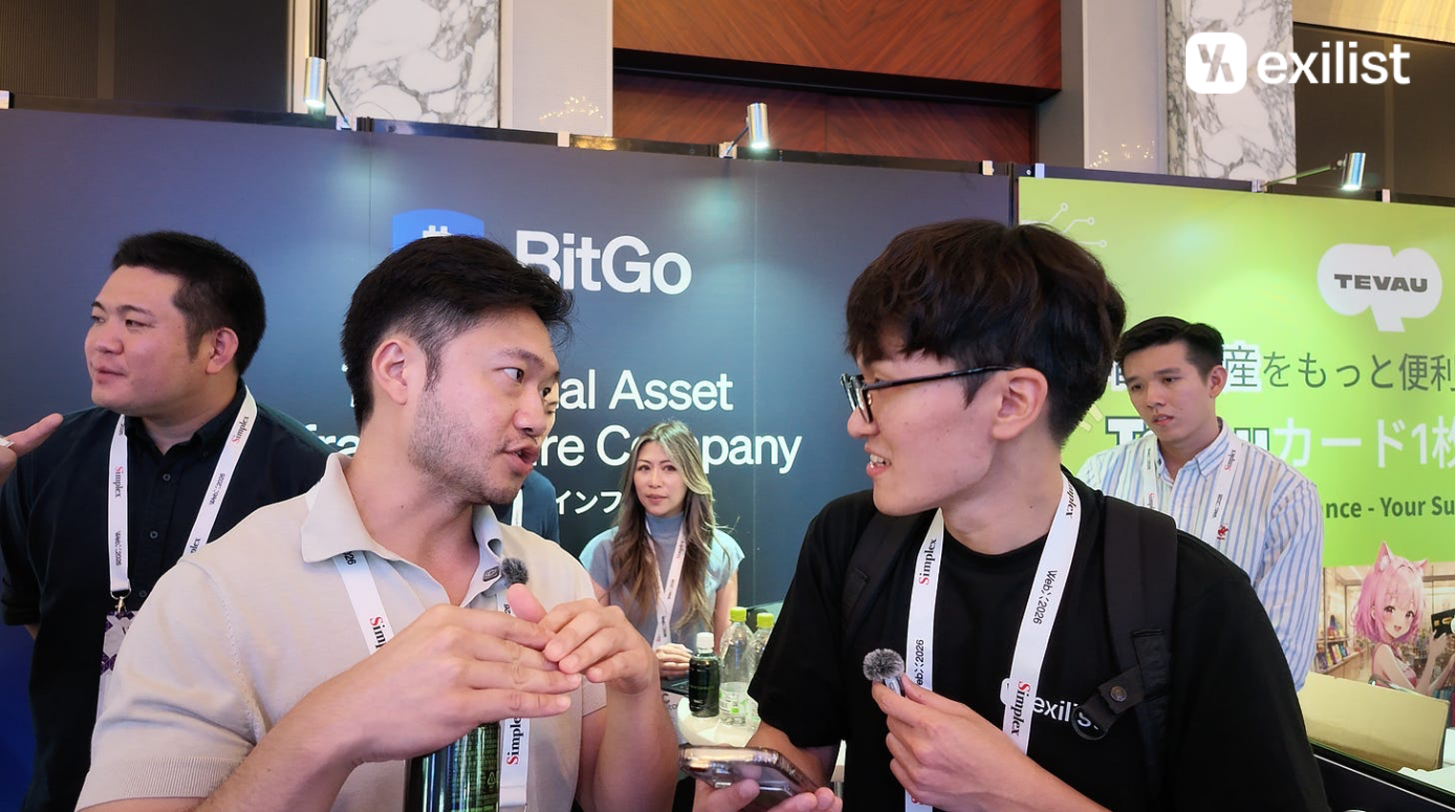
Abel from BitGo explained that numerous proofs of concept were already underway between Japanese crypto companies and traditional financial institutions.
“Within the Japanese scene, I see clear participation from fintech exchanges, traditional finance, and large corporate players. There is a lot of proof-of-concept activity happening right now between crypto-native players and traditional Japanese firms.”
The prevalence of proofs of concept also indicates that commercialization remains limited. At the same time, it shows that budgets are being allocated and dedicated teams have already begun working inside these companies.
Institutional adoption in Japan will not happen overnight following a single announcement. It must pass through due diligence, security reviews, license verification, and internal approvals.
The process is slow. Once adopted, however, these systems can scale through the existing customers and distribution networks of established financial institutions.
8. Institutional Infrastructure Is Being Built During the Bear Market
Market conditions in 2026 remain far from a bull market. Yet the companies participating in the interviews were focused on building foundations for institutional markets rather than scaling back their businesses.
Mengqi explained that onboarding market makers and institutional clients takes time.
“Institutional onboarding, due diligence questionnaires, and compliance checks cannot be completed overnight. Doing this groundwork during a bear market ensures that we are fully prepared. Once market conditions improve, we will be ready to execute and scale immediately.”
This view aligns with bitFlyer’s actual business direction announced at WebX.
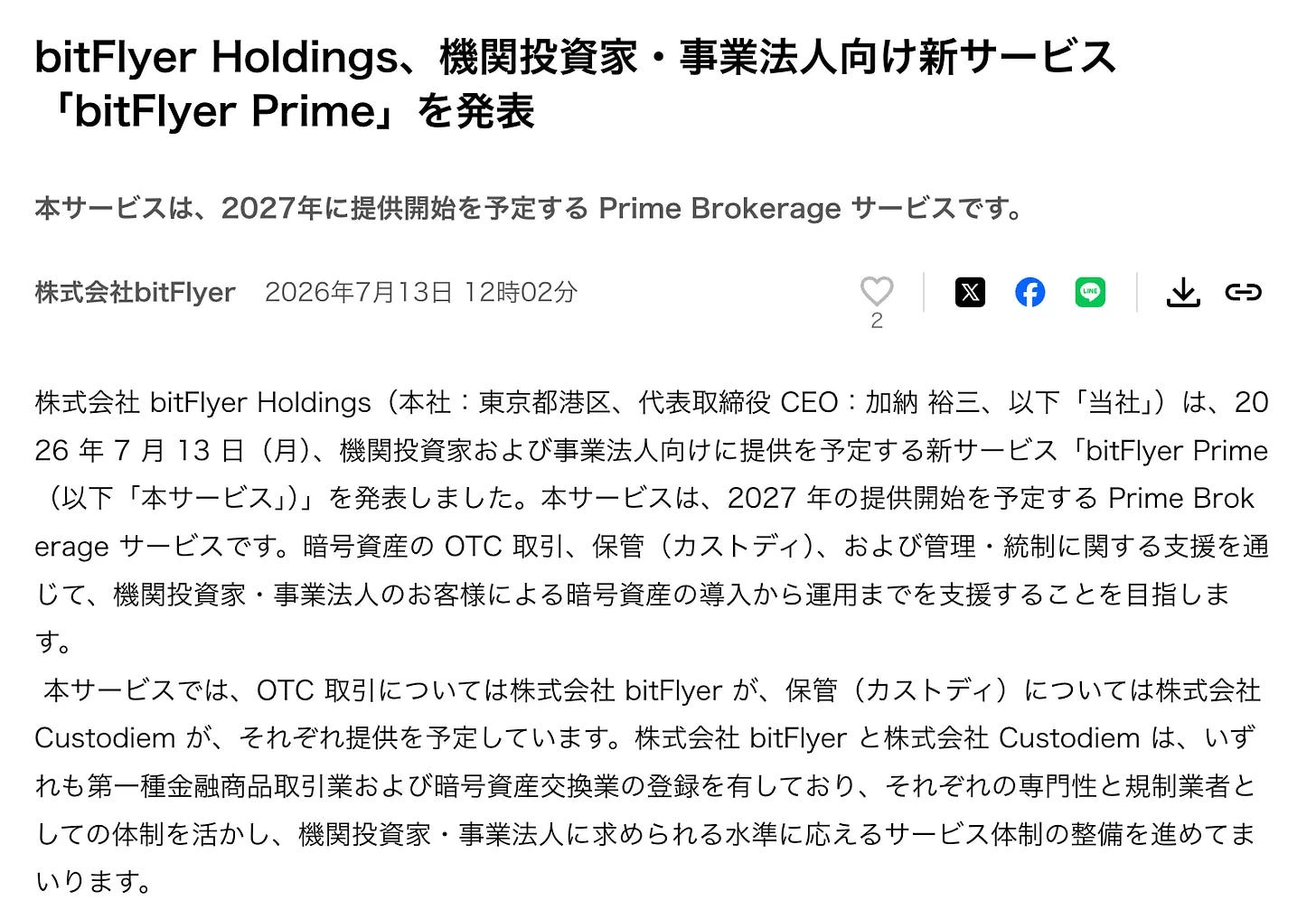
bitFlyer Holdings introduced bitFlyer Prime, a prime brokerage service for institutional investors and corporations. Scheduled to launch in 2027, it is expected to provide over-the-counter trading, custody, and management and control support. bitFlyer Prime announcement
BitGo is similarly expanding beyond wallets and custody into trading, staking, tri-party collateral management, stablecoin issuance, and DeFi access.
Once institutional adoption becomes a reality, an exchange alone cannot support the entire market.
The market also needs custodians to hold assets, market makers to provide liquidity, over-the-counter desks to execute large orders, and systems to manage collateral and liquidations.
These are not the most visible businesses during a bull market. When token prices rise, attention tends to concentrate on trading volume and new-user growth.
When institutional capital begins entering the market, however, custody, liquidity, and regulatory compliance determine how much capital the market can absorb.
This is the infrastructure that Japanese companies are preparing during the bear market.
9. Japan Moves Slowly, but It Executes Once a Decision Is Made
Japan’s crypto market has long been viewed as slow-moving.
The number of assets available for listing was limited, while high tax rates suppressed trading by both individuals and corporations. Strict regulations also led some global projects to abandon plans to enter Japan.
That assessment was not wrong. In 2026, however, the same regulatory environment began to serve a different function.
Japan is bringing crypto assets under financial-product regulations, moving taxation closer to the treatment of equities, and building stablecoin and custody infrastructure through banks and exchanges.
The country has chosen to bring the crypto industry into its existing financial system instead of growing it outside the regulatory perimeter.
Tatsu from Startale identified regulatory clarity and institutional adoption as the two most important factors for Japan’s market.
“We are already seeing a lot of Japanese companies and banks testing more of those RWA use cases. We are in a very good position to push this together with SBI Holdings. They are one of the pioneers in the onchain space in Japan.”
Mengqi from bitFlyer described Japan’s market more directly.
“The Japanese market may be perceived as slow to move, but once they decide to do something, you know it will happen. Teams are being formed and the direction is being set.”
This statement captures the WebX 2026 floor particularly well.
The market presented at the conference was not yet complete. Companies were simultaneously testing stablecoins, RWAs, custody, and AI. Some yen stablecoins still cannot move freely across public blockchains, while certain institutional services will require more time before launch.
Nevertheless, dedicated business teams have been formed. Licensed companies are launching products, and proofs of concept between financial institutions and crypto companies have begun.
Japan is moving from the evaluation stage into the construction stage.
10. The Winner of the Next Five Years Will Not Come From One Sector
It is difficult to select a single sector that will dominate the next five years.
Stablecoins are well suited to payments and settlement, but they do not create a diverse range of investment products by themselves.
Tokenized stocks supply investable assets, but they need reliable settlement assets and liquidity.
AI can automate trading and asset management, but it depends on trustworthy data and clear control rules.
Privacy can enable companies to participate, but it must be implemented in a structure that regulators can verify.
The growth of each sector depends on the others.
This is why the industry professionals we met at WebX gave different answers while describing the same future. The market they envisioned does not consist of several isolated narratives. It is a process in which cash, stocks, trading, collateral, payments, and information become connected within one onchain financial system.
The defining competition of the next five years is therefore likely to take place at the points of connection rather than around individual tokens:
Issuance and redemption providers connecting fiat currencies with stablecoins
Tokenization platforms connecting traditional equities with onchain markets
Custodians connecting institutional assets with public blockchains
Collateral and liquidation infrastructure connecting spot assets with derivatives
Privacy technology balancing data transparency with transaction confidentiality
AI systems connecting human decision-making with automated asset management
Companies that control these points of connection can generate recurring revenue from the movement of transactions and assets.
Japan may not be the first market to create a new crypto narrative. Its advantage lies in its ability to anchor technology within the existing financial system through regulation and the distribution networks of banks, exchanges, and major corporations.
What WebX 2026 revealed was less about Japan’s speed than its direction.
The future discussed most often at the event was not the emergence of another new coin. It was a market in which stablecoins are used for payments, stocks trade onchain, institutions hold assets through custodians, and AI manages those assets.
It will take time for that market to become a reality. Japan is currently using that time to establish regulation and build infrastructure.
When the next bull market arrives, the key question in Japan will not be which narrative is attracting the most attention.
What will matter more is how many financial institutions have launched real services—and how much capital and liquidity have moved onto that infrastructure.
Disclaimer
This material is provided for informational and research purposes only and does not constitute investment advice, nor is it intended to recommend the purchase, sale, or holding of any asset (including equities or tokens), or to replace independent investment judgment.
All views and analyses expressed herein are based on publicly available information and reasonable assumptions as of the time of writing, and are subject to change depending on market conditions, policy developments, or regulatory changes.
This research has been prepared independently and without any financial compensation, sponsorship, or incentives from any of the projects or their affiliated parties mentioned. However, the author or affiliated organization may have had prior commercial relationships with such projects, and potential conflicts of interest may exist. All opinions and interpretations presented in this material reflect the independent judgment of the author.
The final responsibility for any investment decisions rests solely with the reader. The author assumes no legal liability for any outcomes resulting from reliance on this content.
Terms of Use
Exilist permits the fair use of its research materials for non-commercial and informational purposes, provided that the original meaning and analytical context are preserved.
Proper attribution to Exilist is required when referencing or citing this publication.
Any form of republication, translation, modification, commercial distribution, or derivative use of this material, in whole or in part, requires prior written consent from Exilist.
Unauthorized commercial use, misrepresentation of analytical conclusions, or distribution without proper attribution may result in legal action.

