


1. Introduction: Why KRW Stablecoins, and Why Now?
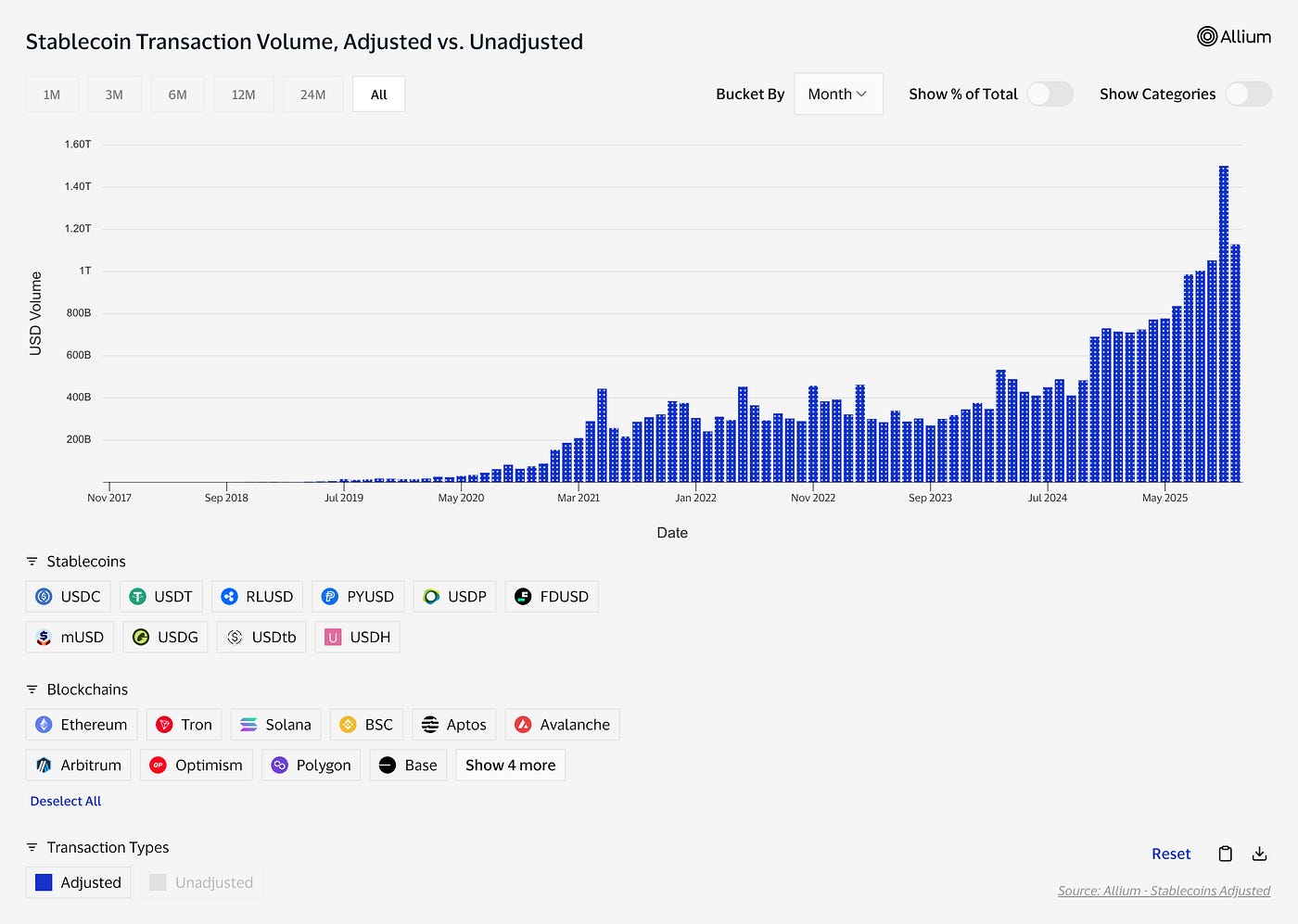
Stablecoins have evolved into core infrastructure across global digital asset markets. USD-pegged stablecoins such as USDT and USDC now function as liquidity rails for exchanges, DeFi protocols, and cross-border flows.
Korean investors have long relied on USD stablecoins as an intermediary bridge between the domestic KRW exchange ecosystem and global crypto markets. The dominant capital flow has been:
KRW deposit → USD stablecoin conversion → offshore deployment.
Despite Korea’s outsized retail participation in crypto markets, it has never operated a domestically regulated KRW-pegged stablecoin at scale.
In 2025, that conversation has shifted. The question is no longer whether KRW stablecoins should exist, but rather:
Who will be permitted to issue them?
Under what regulatory architecture?
And within which institutional boundaries?
2. What Is a KRW Stablecoin?
A KRW stablecoin is a blockchain-based digital token designed to maintain a 1:1 peg with the Korean won.
The emerging regulatory consensus in Korea strongly favors:
Full (100%) reserve backing in KRW-denominated assets
Clear redemption rights
Segregated custody of reserves
Ongoing transparency and audit requirements
Algorithmic models are effectively excluded from serious policy consideration following the Terra/Luna collapse.
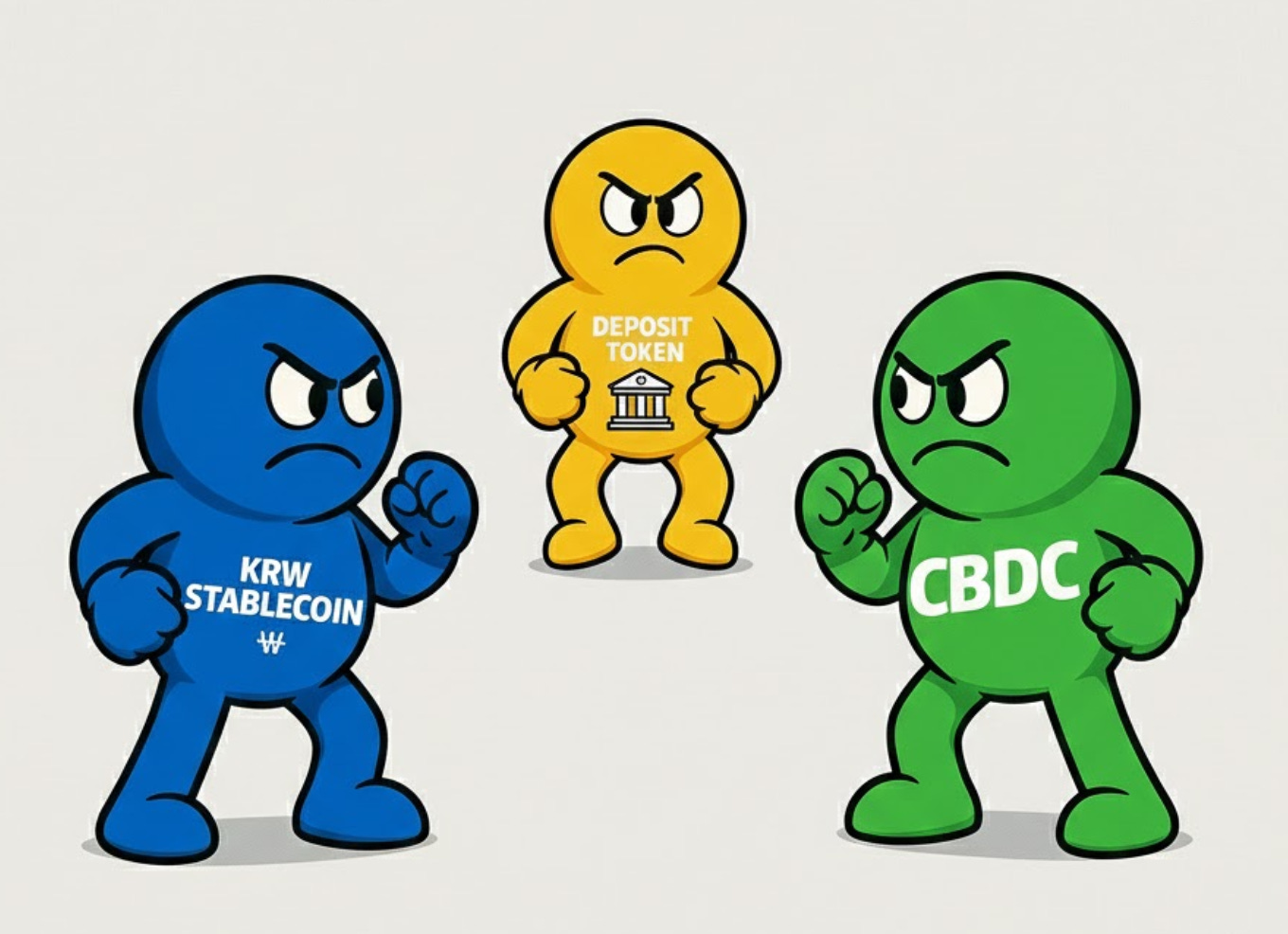
Two adjacent models influence the debate:
Deposit Tokens – Tokenized bank deposits issued by regulated financial institutions.
CBDC – A central bank-issued digital won controlled directly by the Bank of Korea.
KRW stablecoins, if approved, would likely sit between these models: privately issued, but heavily supervised.
3. Diverging Visions: The Bank of Korea, the FSC, and the National Assembly
Although public messaging suggests alignment around “safe stablecoins,” the three primary institutional actors approach the issue from meaningfully different angles.
The Bank of Korea (BOK): Monetary Stability as the Priority

The BOK does not primarily see stablecoins as digital assets. It views them as potential monetary instruments.
Key concerns include:
Impact on monetary policy transmission
Currency substitution risks
Capital flow volatility
Fragmentation of the payment system
The BOK has signaled preference for:
Bank-centered issuance structures
Tight oversight of reserve composition
Systemic risk safeguards
Clear separation between sovereign money and privately issued quasi-money
From the central bank’s perspective, the issue is not crypto innovation. It is monetary control and financial stability.
The Financial Services Commission (FSC): Innovation Within Prudential Boundaries

The FSC approaches KRW stablecoins as a matter of financial supervision rather than monetary sovereignty.
Its framework centers on:
Mandatory 100% reserve backing
Capital requirements
Licensing and registration obligations
Disclosure and audit standards
Governance and internal control rules
Unlike the BOK, the FSC appears more open to allowing regulated fintech participation, provided systemic safeguards are satisfied.
Its stance can be summarized as:
Permit innovation, but within defined risk parameters.
The National Assembly: Post-Terra Legislative Normalization

Following Terra’s collapse, stablecoin regulation shifted from debate to inevitability in the political arena.
Multiple draft bills have circulated. While details vary, common elements include:
Defined issuance criteria
Redemption guarantees within specified timeframes
Reserve transparency requirements
Oversight mechanisms for both domestic and foreign stablecoins
Tiered capital thresholds depending on issuer scale
The political objective is clear:
Normalize stablecoins under controlled legitimacy, rather than leave them in regulatory ambiguity.
4. Structural Implication: A Negotiated Architecture
Although the institutions differ in emphasis, none advocate for a fully decentralized issuance model.
If current trajectories hold, Korea’s stablecoin framework will likely feature:
Licensed issuers only
KRW cash and short-duration government bond reserves
On-chain issuance on major public blockchains
Periodic disclosure obligations
Domestic supervisory authority over foreign stablecoin circulation
Rather than a crypto-native experiment, Korea appears to be constructing a regulated digital fiat extension layer.
5. Strategic Takeaways
Issuance is likely to favor consortium models combining banks, fintech firms, exchanges, and potentially large technology companies.
Regulatory capital and compliance capacity will be competitive advantages.
Stablecoin growth will be shaped more by institutional negotiation than by market hype.
KRW stablecoins could reduce structural reliance on USD stablecoins for domestic flows, but global liquidity bridges will remain relevant.
6. Conclusion
KRW stablecoins in 2025 are no longer a theoretical innovation discussion.
They represent an institutional design question.
The final architecture will be shaped not by crypto narratives, but by monetary doctrine, financial supervision philosophy, and legislative consensus.
Part II will examine the technological infrastructure, competitive positioning, and market implications beyond the policy layer.
Legal & Disclosures
Disclaimer
This publication is for informational and research purposes only and does not constitute investment, financial, or legal advice, nor a recommendation to buy, sell, or hold any asset.
All analysis reflects publicly available information and reasonable assumptions at the time of writing and may change as market or regulatory conditions evolve.
This research was prepared independently and without compensation from any issuer or affiliated party. Readers are solely responsible for their own investment decisions. Exilist assumes no liability for any losses resulting from reliance on this publication.
Terms of Use
Exilist permits the fair use of its research materials for non-commercial and informational purposes, provided that the original meaning and analytical context are not altered.
When referencing or citing this publication, clear attribution to Exilist is required.
Any republication, translation, restructuring, commercial distribution, or derivative use of this material, in whole or in part, requires prior written consent from Exilist.
Unauthorized commercial use, misrepresentation of analytical conclusions, or redistribution without proper attribution may result in legal action.