


Introduction
On June 9, Anthropic introduced Claude Fable 5 and Claude Mythos 5. Fable 5 was a high-performance Claude model designed for general users, while Mythos 5 was a more restricted model made available to security teams and major infrastructure operators. Both models were presented as especially strong in software engineering and security vulnerability detection.
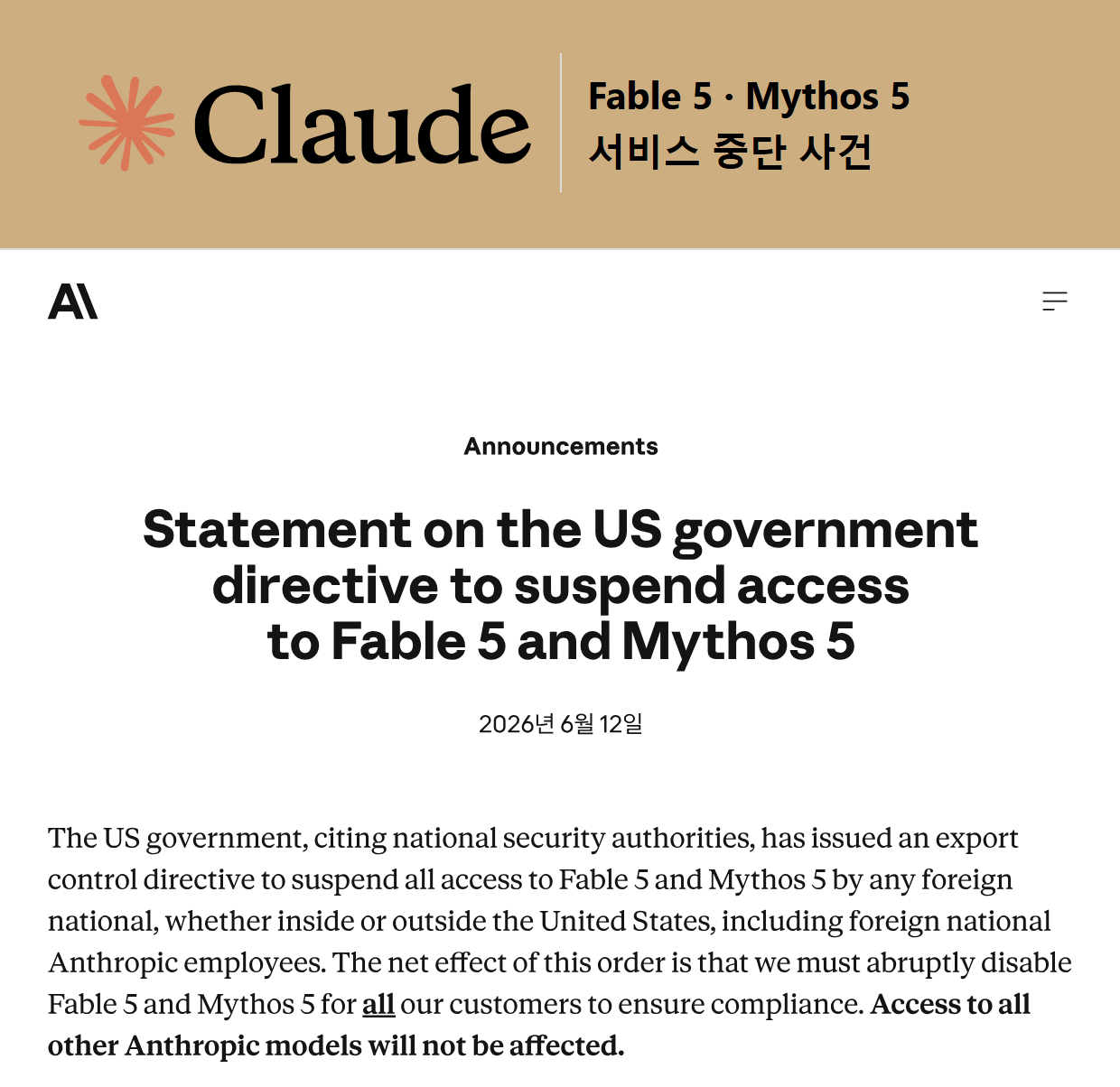
A few days later, the U.S. government ordered Anthropic to suspend access to both models for foreign nationals. The restriction did not apply only to users outside the United States. It also applied to foreign nationals inside the U.S. and to Anthropic employees who were foreign nationals. Because it was difficult to separate access conditions in a more granular way, Anthropic eventually suspended access to Fable 5 and Mythos 5 for all customers.
The first thing to note is the changing status of AI. Frontier AI models are no longer being treated like ordinary software. The fact that the U.S. government treated model access as an export control issue suggests that AI is now tied to cybersecurity, infrastructure defense, and potential offensive capabilities.
At the same time, the weakness of centralized AI became clear. When a model runs on a company’s servers and access depends on government orders and corporate policy, users can be cut off at any time. Most users will continue to use convenient centralized AI services. But users who care about privacy and self-sovereignty will start looking for other options.
A similar structure has already appeared in crypto. Bitcoin became an alternative outside the centralized financial system, and Zcash absorbed demand for privacy. The AI market could develop in a similar way. Even if centralized AI captures most of the market, decentralized AI, or DeAI, and privacy-focused protocols may still secure meaningful demand.
The restriction on Fable 5 and Mythos 5 is more than just an AI regulation story. It is closer to an example of how stronger AI leads to stronger control, and how that control can increase demand for decentralized or privacy-focused infrastructure.
1. Why Fable 5 and Mythos 5 Became Sensitive
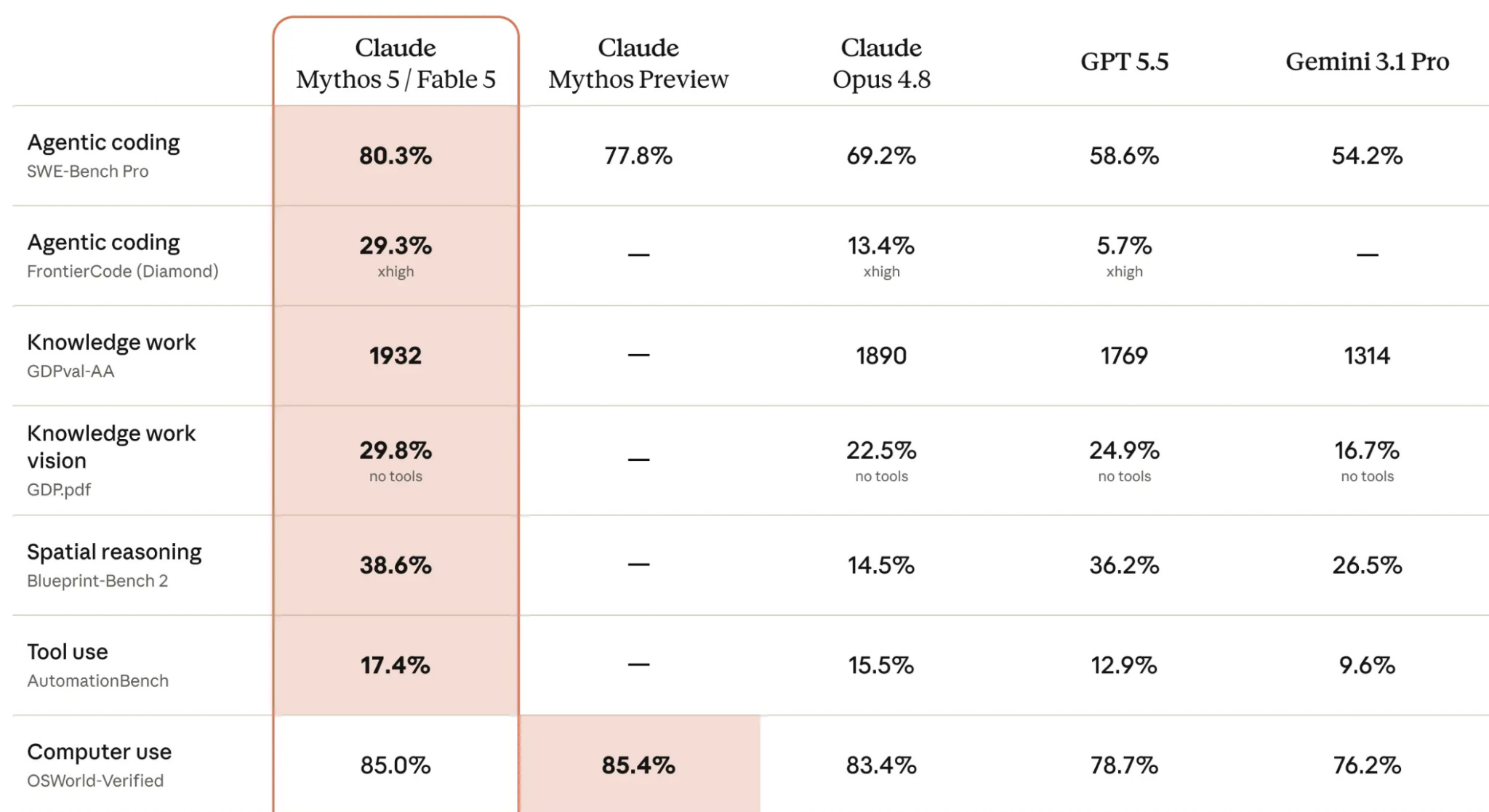
Fable 5 and Mythos 5 became sensitive because of what the models could do.
A typical AI chatbot writes text, explains code, and summarizes documents. Fable 5 and Mythos 5 moved into a more sensitive area. Anthropic described Fable 5 as stronger than its previous generally available Claude models in software engineering, scientific research, and long-running tasks. The model was designed to handle longer work with fewer instructions and break down complex problems into multiple steps.
Mythos 5 was more restricted. It was offered to security teams and major infrastructure operators. Rather than a general AI assistant for everyday users, it was closer to a security audit tool that could inspect code and systems for hidden vulnerabilities.
This capability is useful for defenders. It can read old codebases and find vulnerabilities that humans may have missed. Security teams can identify weaknesses and patch them faster. But the same capability becomes dangerous if attackers gain access to it. The ability to find vulnerabilities can be used for both defense and offense.
This was also the area that drew attention from the U.S. government. Anthropic said the government was concerned about a possible jailbreak method that could bypass Fable 5’s safeguards. Anthropic argued that the method only surfaced a narrow set of minor vulnerabilities and that similar capabilities were already available in other public models.
Later reporting suggested that the issue was not limited to jailbreaking. Semafor reported that the U.S. government was concerned about the possibility that a China-linked actor may have gained access to Mythos. Wired reported that the White House had raised concerns over SK Telecom’s access to Mythos and possible China links, while SK Telecom denied those concerns. The details of these allegations have not been confirmed. Still, it is clear that the U.S. government has started to treat not only the performance of advanced AI models, but also who can access them and through which channels, as a national security issue.
This also connects to concerns around model distillation. Distillation is a method of training a smaller model using the outputs and behavior of a stronger model. Even without stealing the model file itself, enough access to a powerful model can create concern that some of its capabilities could be replicated. From a government’s perspective, simply giving someone access to a model can become a risk.
2. The Stronger Centralized AI Becomes, the More It Gets Controlled
Until now, AI competition has mostly been explained through performance. Which model can handle longer context? Which one writes better code? Which one is better? These have been the main questions.
The Fable 5 and Mythos 5 incident introduces a critical new vector for evaluation: access continuity. No matter how strong a model is, it cannot be used if access is blocked. The value of a model now needs to be judged not only by performance, but also by access.
Crypto markets are familiar with this structure. Bitcoin emerged as a network for transferring value without a central bank. The issue was not only price. The more important questions were who controls issuance, who can censor transactions, and who can block access to accounts.
Privacy coins emerged from a similar need. In a blockchain environment where transactions are visible, some users wanted stronger privacy. Zcash was designed for that demand. It is not a mainstream asset in the same way Bitcoin is, but it has a clear reason to exist for users who need privacy.
The AI market could split in a similar way.
Most users will use centralized AI services from companies like OpenAI, Anthropic, and Google. These services are convenient, powerful, and backed by support and reliability, which matters especially for enterprise customers. But not every user values the same things. Some users may prioritize access continuity, data privacy, and censorship resistance over raw performance.
As centralized AI becomes more powerful, government and corporate control will also increase. In this environment, DeAI and privacy protocols do not need to fully replace centralized AI. They can instead become complementary infrastructure that reduces control risk.
The opportunity for DeAI does not only come from building a chatbot that is better than OpenAI. In a world where access to centralized models can be shut off, the more important question is whether DeAI can provide a path that remains open.
3. Why Bittensor Reacted


The market reacted quickly after Anthropic’s announcement. One clear example was Bittensor’s TAO. Grayscale interpreted the event as a sign of centralized AI control risk and argued that it highlighted the need for decentralized AI networks like Bittensor. According to Grayscale, TAO rose about 30% within 12 hours after Anthropic’s announcement.
This price move was not just a reaction to one company. The market was responding to the possibility that access to centralized AI could become a policy-driven variable.
Bittensor describes itself as something close to Bitcoin for AI. If Bitcoin created a network for digital value without a central bank, Bittensor is trying to build a network that connects models and inference resources without relying on a central AI company. Participants can contribute to the network and receive rewards.
This does not mean Bittensor is about to build a general-purpose model that is better than Anthropic or OpenAI. Looking at it that way misses the point. The reason to pay attention to Bittensor is less about whether it can build a better chatbot than Claude, and more about whether it can provide another route when access to centralized AI is restricted.
Different DeAI projects focus on different parts of the stack. Bittensor is closer to a model and incentive network. Render and Akash are trying to decentralize the GPU and compute resources needed to run AI models. Gensyn is focused on moving AI training and verification outside centralized cloud infrastructure. Ritual aims to provide infrastructure that allows blockchain applications to use AI models. Nous Research is closer to an open-source AI research group than a crypto project, but it can still be discussed within the broader sovereign AI movement that seeks to reduce dependence on centralized models.
These projects should not all be evaluated in the same way. They differ in development stage, real usage, and token structure. The common question is simple: when centralized AI becomes unavailable, what alternative path can the project provide?
4. Why Privacy Demand Is Becoming Important Again
The DeAI price reaction alone does not fully explain this incident. The access restrictions on Fable 5 and Mythos 5 showed the possibility of centralized AI being controlled, and also revealed why data privacy is becoming more important in the AI era.
AI requires more personal context than a search engine. Users enter work documents, code, customer information, investment ideas, security vulnerabilities, and personal messages into AI systems. As AI becomes more powerful, users entrust it with more sensitive data. At that point, the important question is not simply “which model is smarter.” It also becomes important to ask who stores and controls users’ prompts, data, and access records.
This trend is also visible in the AI strategies of major companies. Apple emphasized Private Cloud Compute when it announced Apple Intelligence. That is because, for users to use AI on a daily basis, they need trust in where their personal data goes and who can see it. Cisco’s consumer privacy survey also found that more than 75% of consumers would not buy from an organization they do not trust with their data.
This is where the Zcash case becomes relevant. Zcash is a privacy-focused crypto project launched in 2016. It was designed to prove that a transaction is valid while hiding who sent it, who received it, and how much was sent. If Bitcoin represents censorship resistance and store-of-value demand, Zcash addresses privacy demand more directly.
Zcash is not a DeAI project. But in the context of this article, it shares an important question. As centralized systems become stronger and more controllable, what data do users leave behind, who can see those records, and what alternatives can users choose?
Therefore, privacy in the age of AI control is not simply a matter of anonymity. It is an infrastructure issue that protects user choice and access. Zcash can be seen as an example showing that privacy demand has existed independently outside centralized systems. As centralized AI becomes more powerful, protocols that provide data privacy and censorship resistance may also receive renewed attention.
5. Anthropic’s Dilemma

Anthropic has not been a company that opposed AI regulation. If anything, it has been one of the companies calling for stronger AI safety rules. CEO Dario Amodei has warned that AI could soon resemble “a country of geniuses in a data center” within the next one to two years. He has argued that advanced AI models need independent safety testing before release.
This time, Anthropic itself became the direct target of government restrictions.
There is a growing argument that powerful AI must be controlled because it can be dangerous. At the same time, the same models are also useful for defenders. They are used in cybersecurity, infrastructure defense, and protocol audits.
Blocking a powerful model does not only block attackers. It also removes the same tool from defenders. The Zcash audit is an example of this. Mythos was treated as a risky model that the government wanted to restrict, but it was also used to help review the security of a crypto protocol.
AI companies will argue for safer deployment. Governments will restrict access in the name of national security. Users will need to ask whether the model they used yesterday will still be available tomorrow. If this conflict repeats, markets will start placing a premium not only on performance, but also on access.
6. Three Criteria to Watch Going Forward
After this incident, AI projects need to be evaluated with more specific standards. Not every project with “AI” in its name solves the same problem. Not every project that calls itself decentralized reduces the same risk.
The first criterion is access continuity.
Can the project keep working even if a company or government blocks access? Until now, AI services have mostly worked by relying on companies that build strong models and open APIs. Users did not pay much attention to where the model runs or under what conditions access could be restricted. After the Fable 5 and Mythos 5 incident, that assumption has weakened. Model performance is the starting point, but access continuity is becoming a new evaluation standard.
The second criterion is privacy.
The more people use AI, the more data flows into models and platforms. Company code, customer information, internal documents, security vulnerabilities, and research materials can all become part of AI usage. Centralized AI is convenient, but it creates dependence on where data is stored and who can access it.
Privacy protocols, local and open-source models, and decentralized compute can create demand in this area. Not every user will choose these alternatives. But there will be a meaningful group of users who care about censorship resistance and data sovereignty. Bitcoin and Zcash have already shown this pattern. Mass-market demand and core-user demand can move differently.
The third criterion is usage evidence.
If a DeAI project is actually being used, there should be traces of that usage. Who is calling the model? What tasks is it being used for? How much computation is happening? Does the output lead to real user activity? Token prices can move first, but long-term value needs usage behind it.
The rise of access risk does not mean every DeAI project deserves the same valuation. Over time, the market will separate projects with real usage from projects that only have a narrative.
Conclusion
The AI market can no longer be explained only by asking who has the smartest model. We also need to ask who can access the model, under what conditions that access can be restricted, and where user data is stored.
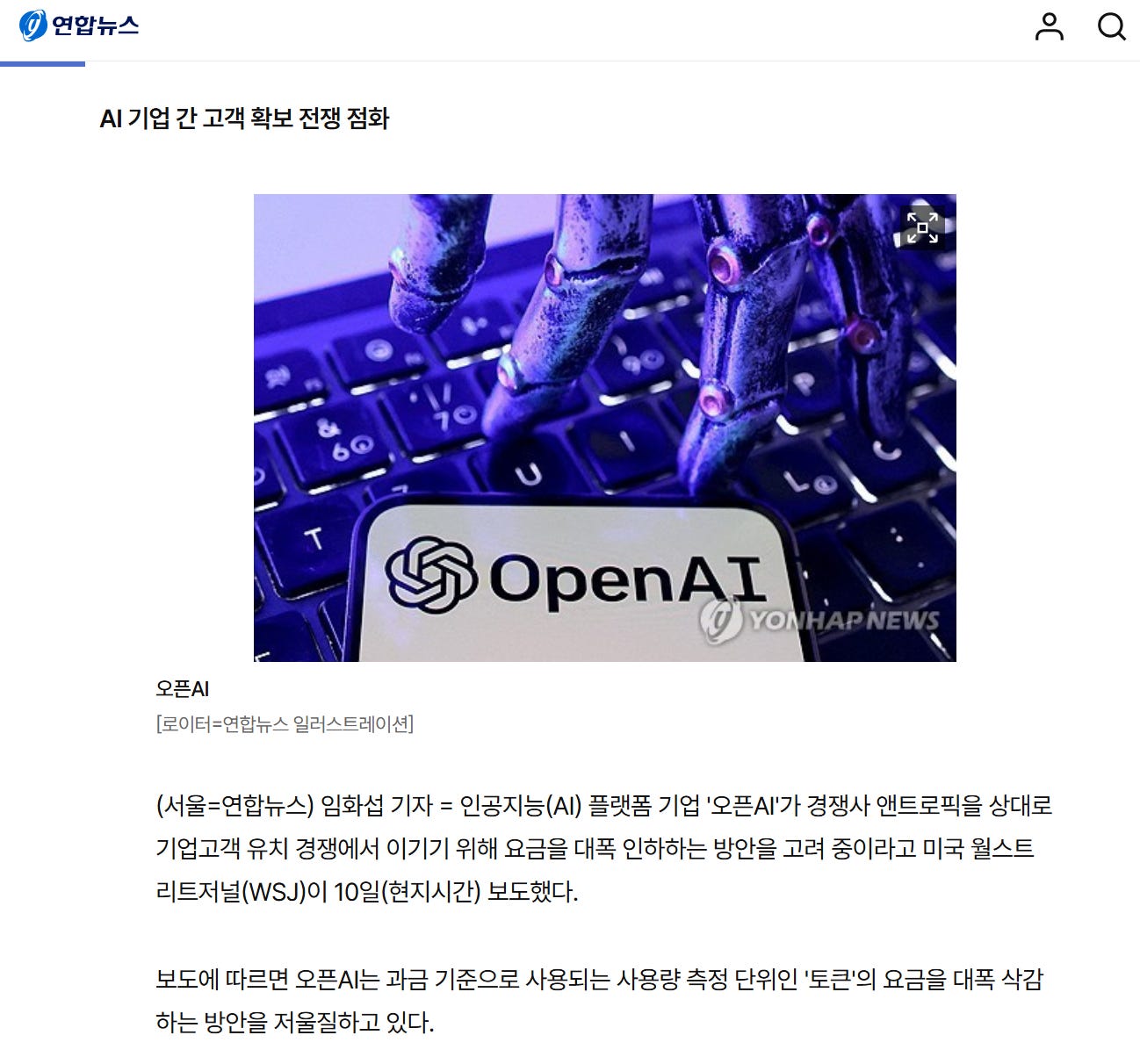
The AI market is also starting to see price competition. Companies like OpenAI and Anthropic are under pressure to reduce token prices and usage costs to win enterprise customers. Cost has become a bigger issue because AI is being used more often. If AI were only a toy that people used occasionally, companies would not be worried about token costs.
Centralized AI is likely to remain dominant. More capital, data, GPUs, and enterprise customers will flow toward centralized AI companies. Most of the mass market will likely remain there.
But mass-market users and core users can move differently. As powerful AI becomes a national security asset, control becomes stronger. As control becomes stronger, users who care about access, privacy, and censorship resistance will look for separate alternatives.
Bitcoin did not replace the entire centralized financial system. Zcash did not replace Bitcoin. But both captured clear, specific demand. DeAI and privacy protocols can occupy a similar position. They do not need to fully replace centralized AI. They can instead become a market for access continuity, data sovereignty, and censorship resistance that centralized AI does not provide.
The Fable 5 and Mythos 5 incident accelerated this direction. AI has become stronger, and governments have started to control access. The next question is what kind of infrastructure can remain outside that control.
As centralized AI becomes more powerful, demand for infrastructure outside of it may grow as well.
Disclaimer
This material is provided for informational and research purposes only and does not constitute investment advice, nor is it intended to recommend the purchase, sale, or holding of any asset (including equities or tokens), or to replace independent investment judgment.
All views and analyses expressed herein are based on publicly available information and reasonable assumptions as of the time of writing, and are subject to change depending on market conditions, policy developments, or regulatory changes.
This research has been prepared independently and without any financial compensation, sponsorship, or incentives from any of the projects or their affiliated parties mentioned. However, the author or affiliated organization may have had prior commercial relationships with such projects, and potential conflicts of interest may exist. All opinions and interpretations presented in this material reflect the independent judgment of the author.
The final responsibility for any investment decisions rests solely with the reader. The author assumes no legal liability for any outcomes resulting from reliance on this content.
Terms of Use
Exilist permits the fair use of its research materials for non-commercial and informational purposes, provided that the original meaning and analytical context are preserved.
Proper attribution to Exilist is required when referencing or citing this publication.
Any form of republication, translation, modification, commercial distribution, or derivative use of this material, in whole or in part, requires prior written consent from Exilist.
Unauthorized commercial use, misrepresentation of analytical conclusions, or distribution without proper attribution may result in legal action.