


Exilist asked Gajia Parsons, Vice President and Global Head of Banking at Circle, questions about Circle’s identity, USDC‘s moat, the role of Circle Payments Network and Arc, and its strategy for Asia, including Japan and Korea, and received an official written response.
This article interprets the overall structure of the Internet financial infrastructure that Circle plans to build by cross-verifying the answers with Circle’s disclosures, technical documents, reserve verification reports, and official announcements from partners.
PART I. Circle Quick Brief - Update on key indicators, business structure, and institutions
1. The path that Circle has taken
Circle was founded in 2013. In the early days, it operated services that met directly with end users, such as consumer remittance app Circle Pay and cryptocurrency exchange Poloniex.
In September 2018, USDC was launched through the Centre Consortium along with Coinbase.
After shutting down Circle Pay and spinning off Poloniex in 2019, the company began focusing on USDC and developer infrastructure.
In 2023, Circle acquired Coinbase’s 50% stake in Centre and took sole responsibility for USDC governance.
It was listed on the New York Stock Exchange (NYSE: CRCL) in June 2025.
As of 2026, Circle is expanding its business into three axes: ① Arc and developer infrastructure, ② digital assets and liquidity infrastructure such as USDC, EURC, and USYC, and ③ applications such as CPN and StableFX.
2. USDC reserves and issuance structure
When Circle Mint’s institutional customers deposit dollars via bank transfer, Circle issues USDC.
Institutions can send issued USDC to an external blockchain address.
When redeemed, send USDC to Circle to be burned and receive dollars to your registered bank account.
Circle Mint is not available to individuals. Large-scale distributors such as exchanges, banks, institutional traders, wallets, and consumer app operators are the main customers.
Based on the independent verification report on June 30, 2026, USDC in circulation was $73.26856 billion and the fair value of reserve assets was $73.34491 billion.
Among these, Circle Reserve Fund assets were $61.91735 billion, or about 84% of total reserves. The remaining approximately 16% was cash stored in regulated financial institutions and payment lag adjustments.
Circle Reserve Fund is a Rule 2a-7 Government Money Market Fund (highly liquid fund that invests in short-term government bonds and cash assets) managed by BlackRock. Fund assets are held in trust by BNY.
3. Circle’s revenue and distribution costs
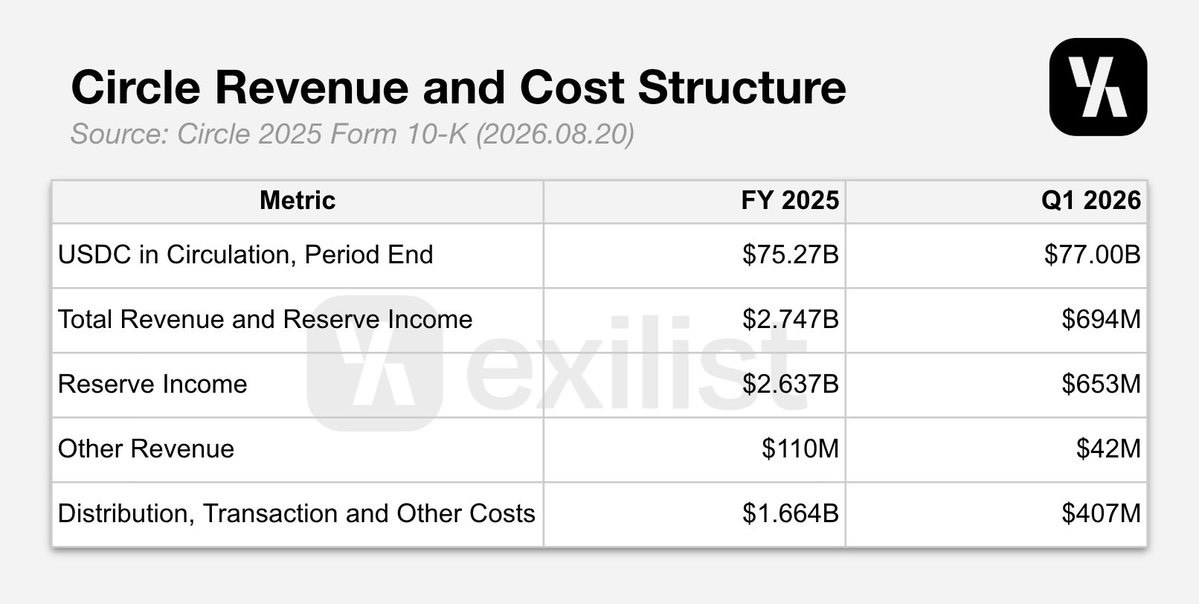
Last year, Circle’s reserve revenue in 2025 was 96% of total revenue, and other revenue was 4%.
In the same year, distribution, transaction and other costs were approximately 61% of total revenue.
Coinbase-related distribution costs in 2025 were approximately $1.4 billion, equivalent to approximately 53% of reserve revenue.
Coinbase receives a distribution based on the USDC balance held on its platform and also receives half of the remaining reserve revenue generated by USDC circulating outside of Circle and Coinbase platforms. However, the issuer’s share held first by Circle and the amount paid to third-party ecosystem participants are deducted in advance, and the specific ratio of the issuer’s share has not been disclosed.
Circle also paid Binance an advance payment of $60.3 million in 2024 and decided to pay monthly incentives based on the USDC balance held on the Binance platform and financial assets. In 2025, a separate contract linked to modular wallet infrastructure was also signed.
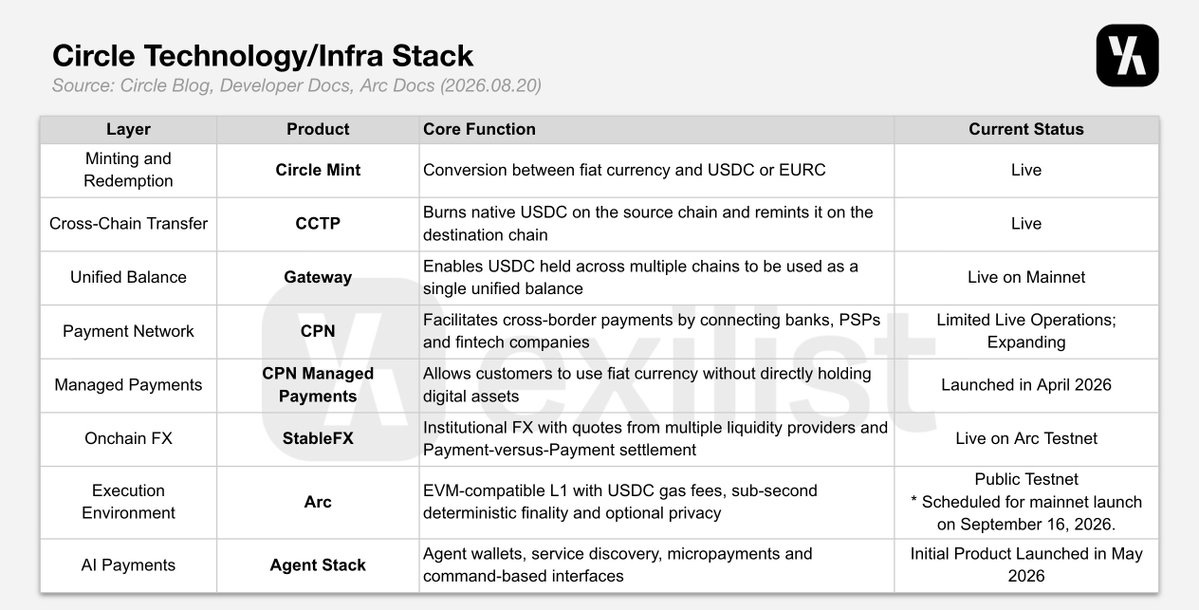
4. Circle’s technology/infrastructure stack
5. Update on major institutional partners for 2025-2026
March 2025 — SBI VC Trade
Official distribution of USDC has begun under the Japanese Financial Services Agency regulatory framework. A local distribution network in Japan was secured based on the cooperation structure between Circle Japan and SBI.
April 2025 — Circle Payments Network
CPN, which connects financial institutions and payment operators to the stablecoin payment network, was announced and began limited operation.
August 2025 — Circle Gateway
Circle launched Gateway on the mainnet, which allows USDC distributed across multiple blockchains to be used as one integrated balance.
September 2025 — Deutsche Börse
An MOU was signed to review ways to utilize USDC and EURC in European trading, payment, and custody infrastructure.
October 2025 — Arc public testnet
Circle released a public testnet where financial institutions and developers can test Arc’s payment, foreign exchange, and smart contract functions.
October 2025 — BDACS·KRW1
Won stablecoin KRW1 was distributed to Arc testnet and an MOU was signed to test KRW1-USDC on-chain transaction.
November 2025 — JPYC
Japanese yen stablecoin JPYC participated in Circle Partner Stablecoins. Circle is pursuing JPYC-USDC foreign exchange and payment connectivity through Arc and StableFX.
December 2025 — Visa
Cross River Bank and Lead Bank have begun settling payment obligations to Visa with Solana-based USDC. This is an example of institutional payment that has entered the actual operation stage.
February 2026 — Polymarket
A partnership was signed to convert bridge USDC used in Polymarket to native USDC issued directly by Circle.
April 2026 — Bithumb
An MOU was signed to jointly review measures to integrate the Bithumb platform’s multi-chain technology and support stablecoin infrastructure.
April 2026 — Dunamu·Upbit
Circle and Dunamu agreed to cooperate to provide education on digital assets, including stablecoins, and create a regulation-friendly ecosystem.
April 2026 — CPN Managed Payments
Circle has launched a managed payment service that processes USDC issuance and burning and blockchain settlement even if banks and payment operators do not directly hold digital assets.
April 2026 — Kyriba
It is linked so that companies can utilize USDC within their existing treasury management system. Main applications include fund transfers between affiliates, cross-border payments, and 24-hour liquidity management.
May 2026 — Agent Stack·ARC White Paper
Circle released the ARC white paper explaining the Agent Stack and Arc’s network economic structure, where AI agents can hold wallets and make payments with USDC.
June 2026 — Mastercard
Announced payment support for regulated stablecoins, including USDC. It is a structure that supports multiple stablecoins and blockchains without being dependent on a specific issuer.
June 2026 — BNY
The scope of support has been expanded to allow institutional customers to store and transfer USDC and instruct Circle to issue and redeem USDC through BNY.
July 2026 — Circle National Trust
The U.S. Office of the Comptroller of the Currency (OCC) has finally approved the establishment of a national trust bank. It is not a commercial bank that handles general deposits and loans, but an institution that focuses on digital asset custody and reserve management.
July 2026 — JCB
An MOU was signed to demonstrate cross-border fund transfers within JCB using USDC and to review stablecoin payments for Japanese merchants. It is not yet in the commercial service stage.
July 2026 — Kakao, Kakao Pay, Kakao Bank
Kakao, Kakao Pay, and Kakao Bank signed a strategic MOU with Circle to review the business possibilities of global payments, overseas remittances, merchant settlement, won-based digital assets, and tokenized finance.
July 2026 — Toss · Toss Bank
An MOU was signed to review digital wallets, biometric authentication payments, USDC-based financial instruments, programmable payments, and bank account-based overseas payments and settlements.
August 2026 — Arc Founding Validator Cohort
Circle announced Arc’s founding validator cohort, including BlackRock, DTCC, Galaxy, Global Payments, ICE, Mastercard, MoneyGram, SBI Group, Standard Chartered, Sumitomo Corporation, and Visa, ahead of the September 16, 2026 mainnet launch.
PART II. I asked Circle, “What kind of company are you?”
1. Introduction
The easiest sentence to describe Circle is ‘USDC issuer.’ It’s not wrong.
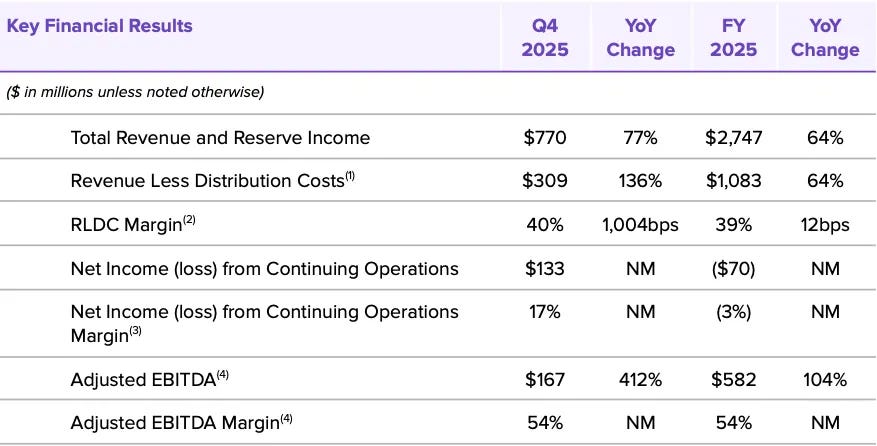
Of Circle’s total sales and reserve revenue of $2,746.64 million in 2025, 96% came from USDC and EURC reserve assets. In the first quarter of 2026, the proportion of reserve revenue was about 94%.
Looking at its profit structure, Circle is still a stablecoin issuer.
However, if you look at the products Circle has released over the past two years, the explanation is different.
Cross-chain USDC transfer protocol CCTP
Integrated balance system Gateway
Financial institution payment network CPN
On-chain forex engine StableFX
Proprietary Layer 1 blockchain Arc
Circle National Trust
And we even created an Agent Stack for AI agents.
It is difficult to view Circle’s full-stack strategy as simply an effort to expand product lines. Circle is trying to rise from an issuer that had to share reserve profits with distribution partners to a network operator that directly designs the movement path of currency and the operating standards of financial institutions.
If you are a company that only focuses on issuing stablecoins, there is no reason to go this far.
Exilist asked Circle directly. “What kind of company are you?”
“Circle has evolved into a full-stack platform for internet-native finance. Compliant stablecoins like USDC remain the foundation of Circle in terms of providing a trusted, compliant digital currency. But what we are building today goes far beyond simply issuing stablecoins.”
— Gajia Parsons, Circle Vice President and Global Head of Banking
Circle describes its current business in three layers. It is an infrastructure consisting of digital assets such as USDC, EURC, and USYC, applications such as CPN and StableFX, and Arc, CCTP, Gateway, and developer tools. The same structure appears in Circle’s 2025 Form 10-K.
The status Circle seeks is not limited to a company that creates dollar tokens. We are trying to design which chain the issued money moves to, which bank it passes through, what rules it is exchanged for, and where it makes the final payment.
However, to understand that goal, we need to look at Circle’s past trials and errors.
2. Circle Pay’s failure and new beginning
Circle was not an infrastructure company from the beginning.
Jeremy Allaire and Sean Neville founded Circle in 2013. The goal at that time was not much different from now. The goal was to make money exchange on the Internet as easy as information. However, the first answer was a consumer application, and that product was Circle Pay.
Circle Pay offered person-to-person transfers and cryptocurrency payments. In 2018, Circle expanded its exchange business by acquiring Poloniex. It was an attempt to create a comprehensive crypto financial company by combining consumer wallets, exchanges, and investment platforms within one company.
However, the results were not good.
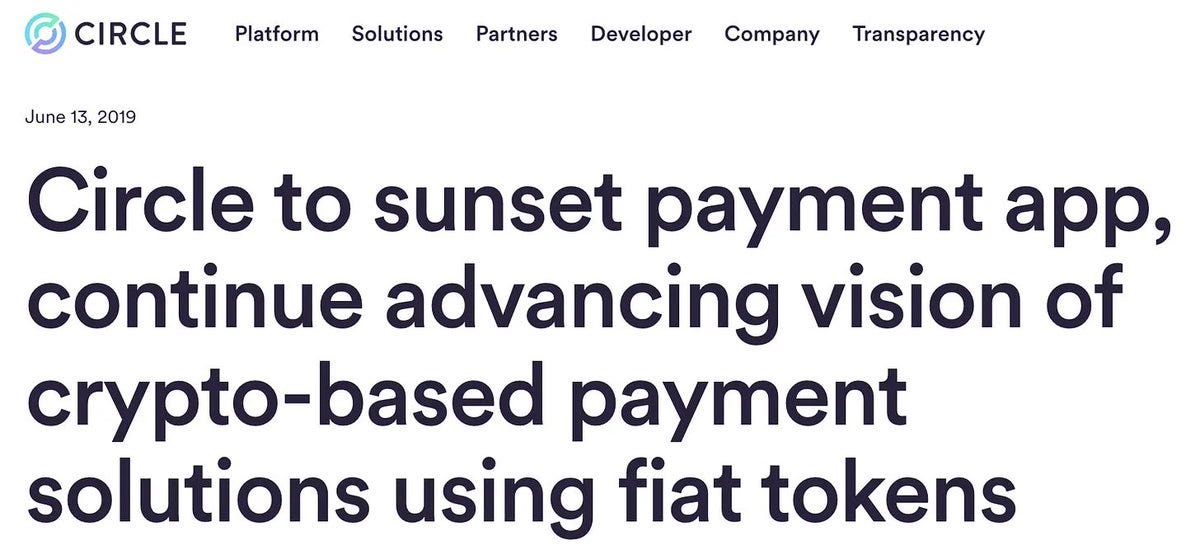
Circle announced the end of its Circle Pay service in 2019. In the same year, Poloniex was also spun off into a separate company. In its announcement at the time, Circle acknowledged that it was difficult to move money like the Internet using only consumer apps connected to existing fiat currencies and banking networks.
Instead, another possibility was found in USDC, which was launched in 2018.
Circle Pay was able to grow only when users chose Circle’s app. USDC was different. Once exchanges, wallets, payment apps, and DeFi protocols adopted USDC, it was distributed without Circle directly securing end users. Circle was able to escape the application race and provide common assets used by other services.
The withdrawal from business in 2019 was a setback, but it was also an event that changed the business model. This later turned to creating money and infrastructure that all financial apps could use.
This transition becomes more evident in 2023. Circle acquired the remaining 50% stake in Centre Consortium held by Coinbase with shares worth approximately $209.99 million. USDC governance has been unified into Circle. At this time, Coinbase remained the strongest distribution partner, not a co-issuing partner.
Afterwards, Circle was listed on the New York Stock Exchange in 2025, and received final approval as a national trust bank from the U.S. Office of the Comptroller of the Currency (OCC) in July 2026. A company that started out as a consumer remittance app has become a company that seeks to have both a federally supervised custodian bank and its own blockchain in 13 years.
But the important part is why it had to expand this far.
3. How is 1 $USDC created and redeemed?
The structure of USDC may seem complicated, but the basic principle is simple.
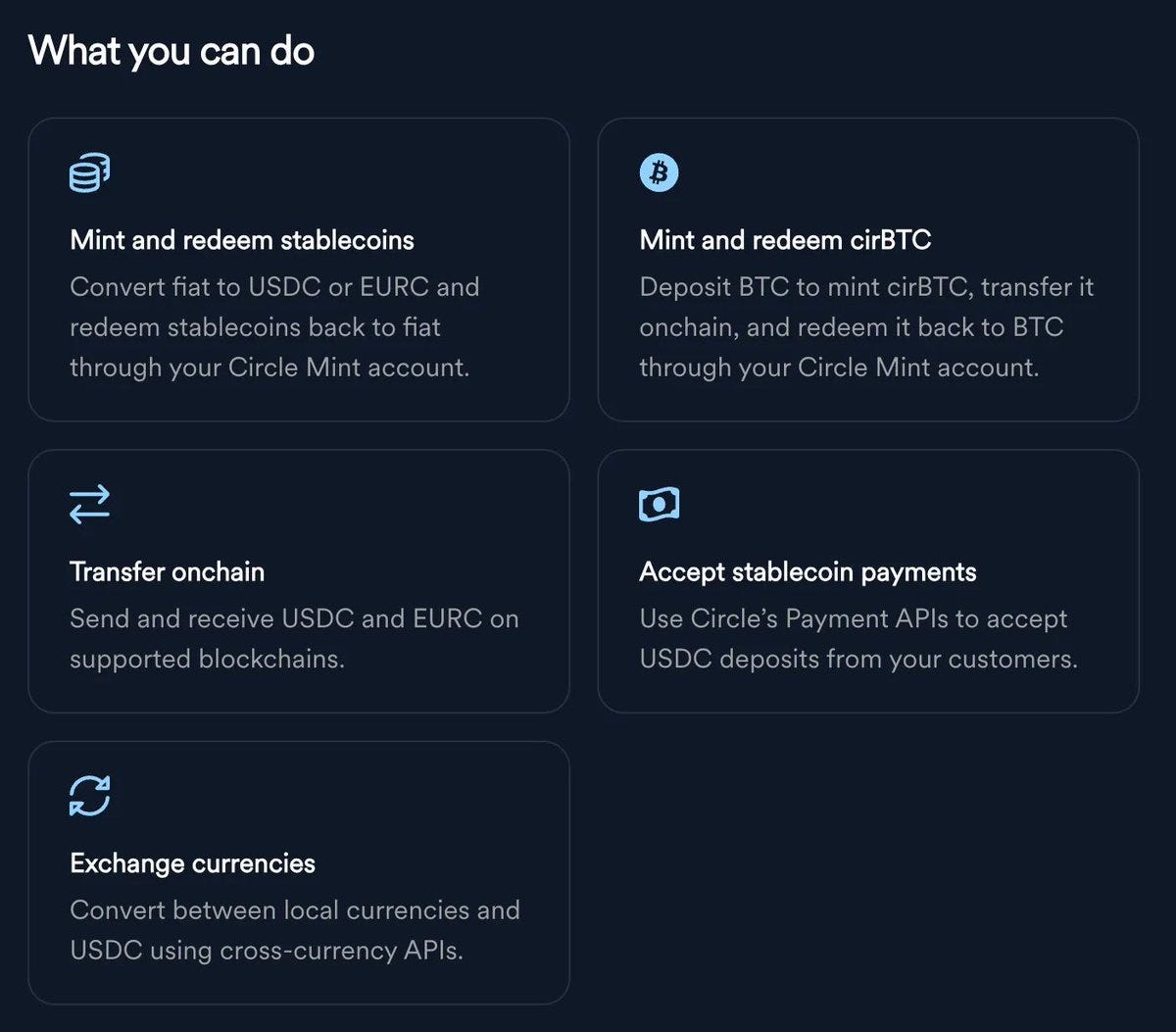
Circle Mint-approved institutions transfer dollars to designated bank accounts. Once the deposit is confirmed, Circle issues the same amount of USDC to the institutional account. The institution sends it to a supported blockchain address such as Ethereum, Solana, and Base. When repaying, you send USDC to Circle to be burned and then receive dollars in your bank account. Circle Mint documentation explains this process in the following order: deposit, issue, on-chain transfer, burn, and fiat payment.
Individuals do not issue USDC directly on Circle. They buy USDC already issued on exchanges and fintech apps. Circle Mint is a wholesale outlet for large-scale distributors such as exchanges, institutional traders, banks, wallet operators, and consumer apps.
Dollars received for issuance are separated from Circle’s operating funds.
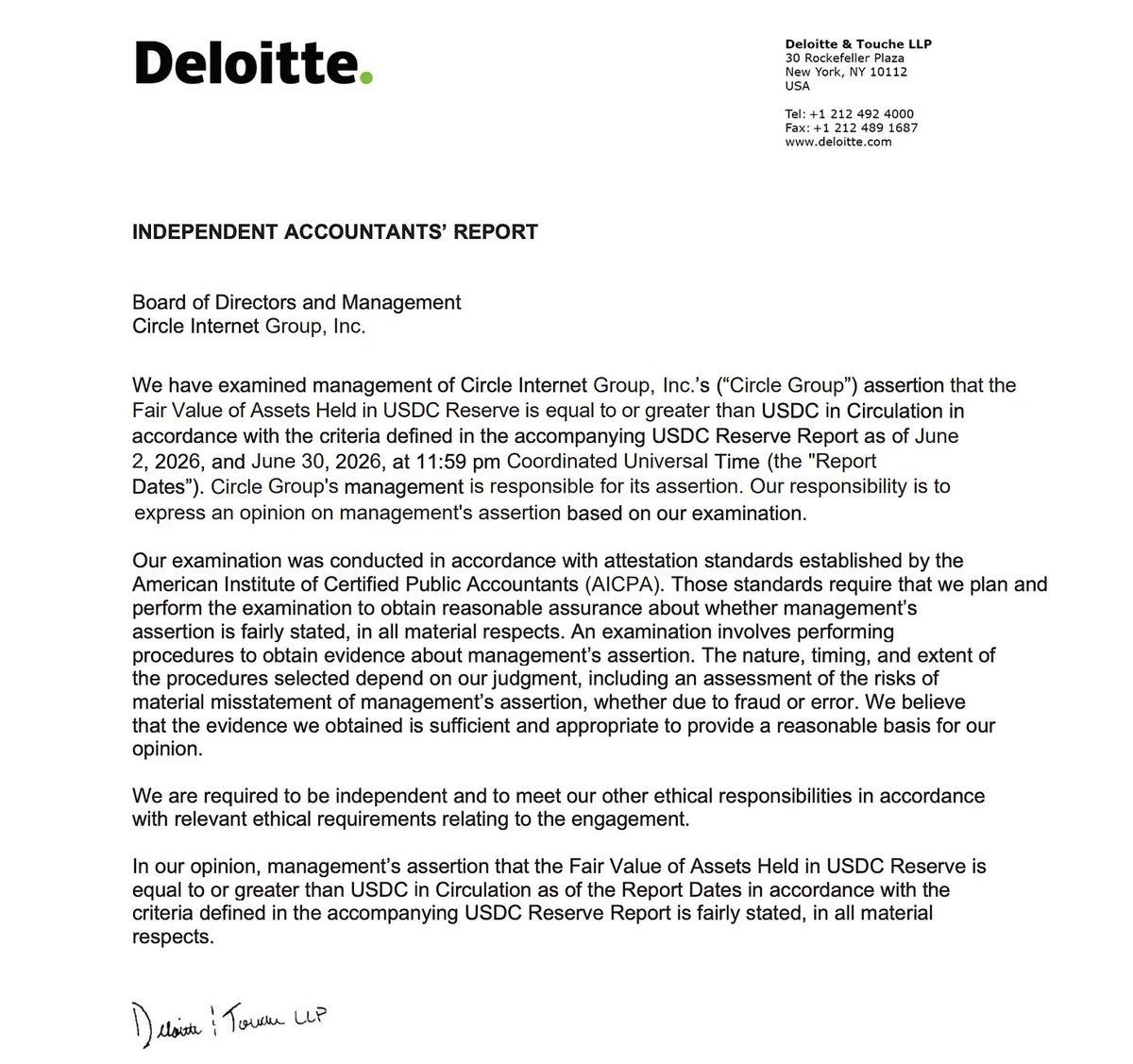
According to USDC reserves report verified by Deloitte as of June 30, 2026:
USDC in circulation was $73.26856 billion.
The fair value of reserve assets was $73.34491 billion.
$61.91735 billion was in the Circle Reserve Fund.
$11.42756 billion was cash stored in regulated financial institutions and payment lag adjustments.
The Circle Reserve Fund is managed by BlackRock. Assets consist of U.S. Treasury bonds of less than three months, overnight Treasury repo (a transaction where cash is lent for a day and U.S. Treasury bonds are collateralized), and cash. BNY stores the fund assets.
In this structure, each party’s role is clear.
Circle manages USDC issuance, redemption, and reserve policies.
BlackRock manages most of the reserves.
BNY is the trustee of the fund assets.
Banks provide dollar deposits and withdrawals and operational liquidity.
Exchanges and fintechs distribute USDC to end users.
Blockchain provides the ledger through which USDC moves and is settled.
USDC is not a product created by Circle alone. It is the result of a long supply chain that connects traditional finance and crypto infrastructure.
This structure creates a high level of trust, but it also means that the Circle’s scope of control is limited.
4. Economics of USDC supply chain: Blackrock, BNY, Coinbase, Binance
Interest generated from USDC reserve assets is Circle’s largest source of income. Provision revenue in 2025 was $2,636.82 million. The average USDC in circulation was $64.87 billion, and the reserve yield was 4.1%.
But not all of this money stays in Circle.
Circle’s distribution, transaction and other costs in 2025 were $1,663.65 million. It is about 61% of total revenue. Of these, the cost paid to Coinbase alone was approximately $1.4 billion.
The contract between Circle and Coinbase is deeper than a typical exchange listing contract.
According to Circle’s announcement, the daily distribution standard is first created by deducting reserve management fees, etc. Circle takes a certain share of the issuer here. Afterwards, Circle and Coinbase distribute profits according to the USDC balance stored on their respective platforms. Coinbase receives the remaining half of the remaining revenue generated by USDC distributed outside of the two companies’ platforms, minus the share of approved third-party ecosystem partners.
It was not disclosed what percentage the issuer holds. Nevertheless, economic dependence can be confirmed only by Coinbase payments in 2025. Coinbase-related expenses were approximately 53% of Circle reserve revenue.
Binance also does not distribute USDC for free.
Circle paid $60.3 million in advance to Binance in 2024 and decided to provide monthly incentives linked to the USDC balance accumulated on the Binance platform and financial assets. In 2025, a four-year contract linked to Binance’s modular smart contract wallet infrastructure was added.
This is why a stablecoin’s moat is not complete with reserve safety alone. No matter how safe the dollar token is, it will not be distributed unless exchanges, wallets, payment apps, and market makers hold and support it. The stronger the distributor, the more it has to share reserve profits.
This is why Exilist asked whether Circle sees a model that shares reserve revenues with distribution partners, like OUSD, as a threat.
“As the ecosystem develops in the future, we expect that multiple commercial models for various participants will emerge.
From Circle’s perspective, the long-term opportunity is expanding stablecoin adoption across financial services. As more financial institutions, payment providers, and businesses become comfortable with using digital currencies, the entire ecosystem will benefit.
Ultimately, financial institutions do not evaluate solutions based solely on any one commercial model. We comprehensively consider reliability, interoperability, liquidity, operational readiness, and level of integration with existing workflows.
The market is still in its infancy, and innovation through different approaches can help accelerate adoption.”
Circle did not characterize revenue sharing competition as a threat. There is a good reason. Circle itself is already actively using the model of purchasing distribution using reserve revenue.
The difference comes in the next step.
Rather than competing to promise partners a higher distribution rate, Circle is building a payment and settlement infrastructure in which USDC is the primary settlement asset, while connecting local currency stablecoins issued by third parties. The goal is to move from an issuer that shares reserve profits to a business that sets network rules.
For now, it remains closer to an aspiration than a reality. Circle’s other sales in 2025 were $109.82 million, or 4% of the total. It rose to $42 million, or about 6%, in the first quarter of 2026, but is small compared to reserve revenue.
‘Saying’ that Circle is a full-stack platform and ‘making money’ on a full-stack platform are two different issues.
5. A market where trust alone cannot become a moat
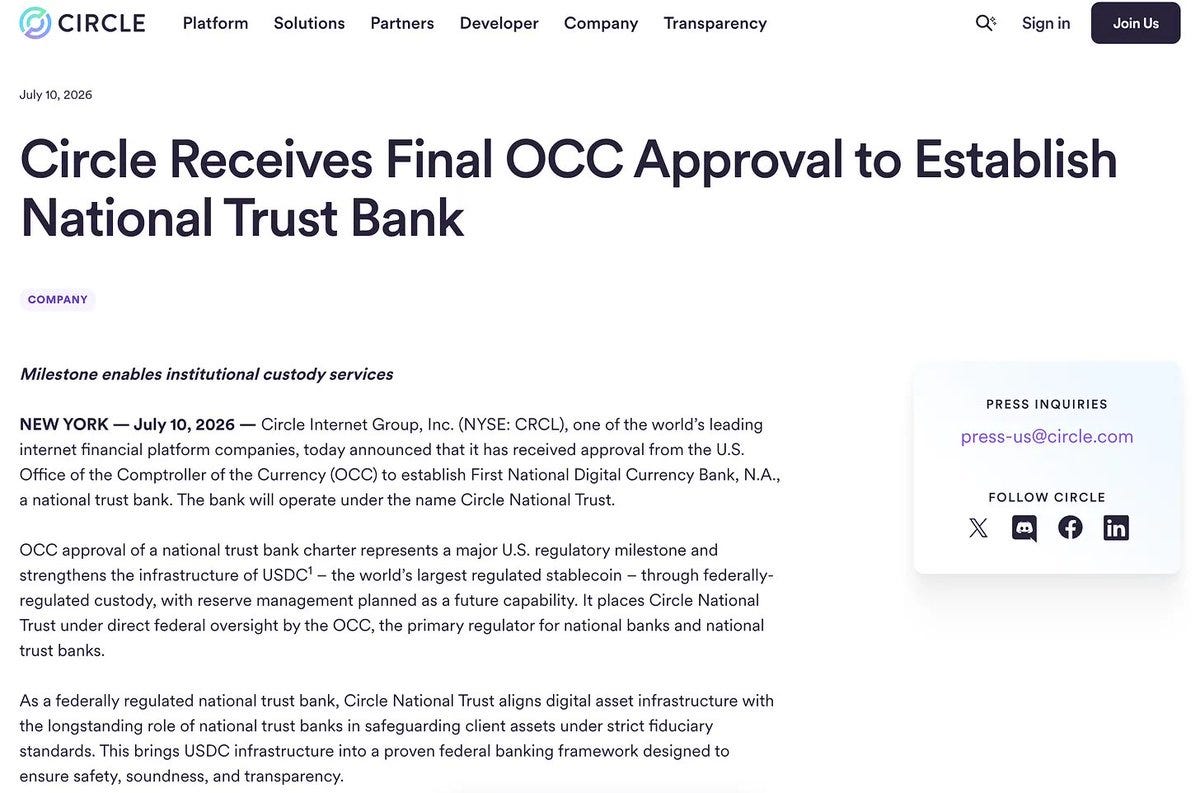
Circle put reserves centered on cash and short-term U.S. Treasury bonds, monthly external verification, weekly reserve disclosure, and 1:1 repayment at the forefront. The company also holds money transmission licenses in the U.S., New York’s BitLicense, Europe’s MiCA, Singapore’s major payment institution license, and approval for foreign-issued stablecoins in Japan. In July 2026, final OCC approval was received for the establishment of Circle National Trust.
Regulations were not a marketing pitch for Circle. This was the minimum product specification for USDC to pass the financial institution’s internal review.
“Trust is still fundamental. Financial institutions do not see trust and infrastructure as separate elements. They need both.”
The problem is that as regulations become clearer, competitors also increase.
If the United States, Europe, and Asian countries create stablecoin systems, banks, payment companies, fintechs, and large platforms can also issue regulated stablecoins. The structure of storing short-term government bonds in reserves and receiving external verification becomes standardized over time. Trust continues to be important, but the reason to choose an issuer simply because it is trustworthy is weakening.
So Circle’s line of defense is changing.
“Banks and enterprises are looking for solutions that can be used within their existing compliance, governance and operational frameworks, while also seeking infrastructure to improve the movement of funds across borders and counterparties.
Ultimately, adoption will depend on a combination of a trusted digital currency and an infrastructure that allows that currency to move efficiently between multiple banking partners, payment providers, and blockchain networks.
Fundamentally, network effects come from solving real operational problems. “Financial institutions adopt infrastructure that reduces friction while maintaining the level of control and transparency they have traditionally required.”
Circle’s moat is not just USDC. The entire path of issuing USDC, moving it between chains, making payments between banks, converting it to local currency, and connecting it to a company’s treasury management system is a moat.
6. CCTP and Gateway: Even if the chains are different, they are like one dollar
USDC exists on several blockchains. Accessibility has increased, but liquidity has fragmented.
Although Ethereum’s USDC and Solana’s USDC have the same price, they are recorded in different ledgers. Operators must pre-arrange the required quantity for each chain. If withdrawals are concentrated in a specific chain, it is difficult to respond immediately even if there is enough USDC in other chains.
Circle solves this problem by dividing it into CCTP and Gateway.
CCTP, a cross-chain transfer protocol (a system that burns USDC in the origin chain and issues the same amount in the destination chain), burns native USDC in the origin chain and issues new ones in the destination chain. Like traditional bridges, it does not deposit assets into a liquidity pool or create wrapped tokens (a replacement token that deposits the original asset and issues it on another chain).
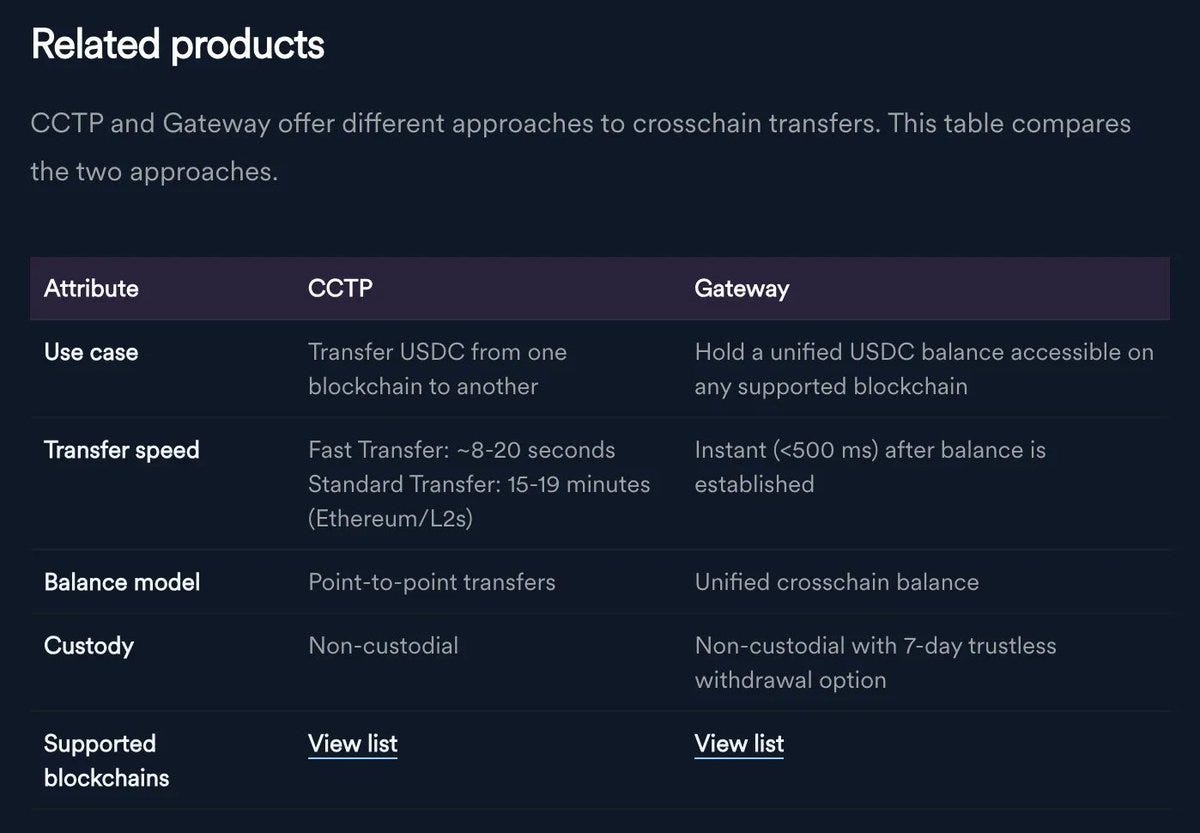
According to the CCTP official document, fast transmission takes approximately 8 to 20 seconds, and standard transmission takes 15 to 19 minutes based on Ethereum and Layer 2. It is also possible to swap or deposit as collateral upon arrival through a programmable hook (a function that automatically executes other smart contract tasks in the destination chain after completion of transfer).
Gateway goes one step further.
Users deposit USDC into Gateway smart contracts on multiple chains. Gateway calculates this as one consolidated balance. Afterwards, when the user signs the intention to send, the off-chain verification service verifies the balance, issues a certificate, and issues USDC in the destination chain. Circle explains that this process can be done in less than 500 milliseconds.
Gateway is not a custodial service. The user’s signature is required to move assets. If the off-chain service is interrupted, trustless withdrawal (a method of recovering assets only by smart contract rules without approval from a central service) can be made after a 7-day waiting period.
The roles of the two products are different.
CCTP moves USDC from chain A to chain B.
Gateway initially uses USDC from multiple chains as one balance.
What Circle wants is not ‘multichain USDC’.
What Circle wants is the USDC that does not require users and companies to worry about the chain.
Once this structure is in place, USDC becomes closer to a common dollar balance that can be called across the Internet rather than a token that exists separately on each blockchain.
7. CPN: A payment network that makes blockchain invisible
Circle Payments Network (CPN) is a key pillar of Circle’s strategy.
Two financial institutions participate in the basic transaction of CPN. The originating financial institution (the institution that receives the sender’s funds and initiates the payment) performs customer verification and sanctions checks and converts the local currency into USDC or EURC. The beneficiary financial institution (an institution that receives stablecoins and pays local currency to the final recipient) converts the received assets into local currency and pays them.
Circle does not directly store customer money or become a party to transactions. It sets network participation standards and operating rules, and provides APIs and protocols so that financial institutions can communicate with each other and make direct payments. CPN participants must pass licensing, anti-money laundering, financial risk management, and cybersecurity screening.
On the surface, CPN is similar to SWIFT. But there is an important difference.
SWIFT mainly carries payment messages. Actual money moves through correspondent banks and Nostro Accounts (accounts where funds are deposited in advance at local banks for overseas payments). In CPN, stablecoins are used as actual settlement assets between institutions. Messages and money movements become closer together.
“The traditional correspondent banking system has served global finance well for a long time. However, it requires going through multiple intermediaries, has limited transparency in the payment process, and has different operating hours for each market.”
Circle did not provide an exact cost savings rate for CPN. Gajia Parsons drew the line that speed alone should not be the sole criterion.
“Onboarding, compliance, engagement and governance must also be seamlessly integrated with existing treasury management and bank operations. Technology only has real value when it aligns with the way financial institutions already manage risk and controls.”
This answer clearly shows Circle’s view of on-chain finance.
Circle is not trying to eliminate the banks. Confirmation of the sender, local currency conversion, final payment, and dispute response are still handled by the financial institution. Circle changes the settlement assets and communication rules in between.
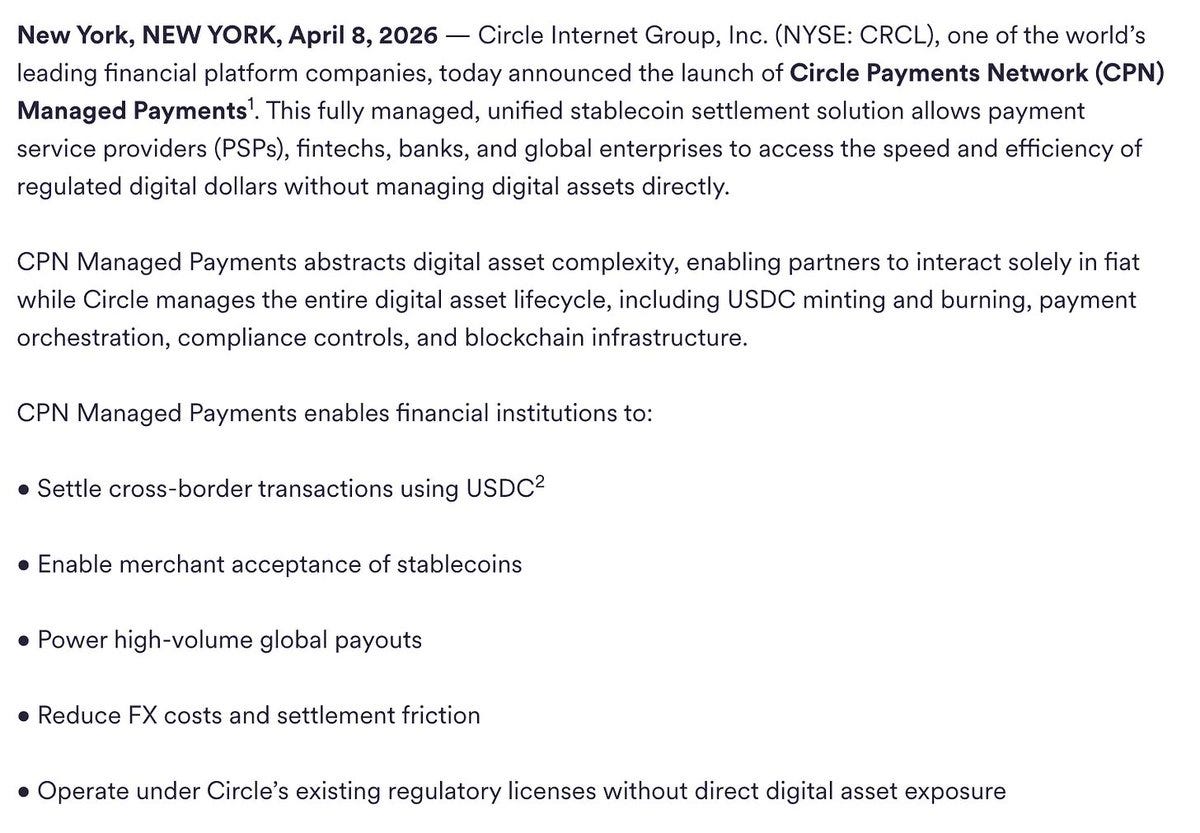
CPN Managed Payments, launched in April 2026, pushed this direction further. Banks and PSPs do not store digital assets directly and can only handle fiat currency. Circle manages USDC issuance and burning, payment coordination, compliance control, and blockchain infrastructure.
The sender can pay in won and the recipient can receive dollars. Neither of them need to know that USDC was used in the middle.
This is paradoxical, but important.
The popularization of stablecoins is more likely to be completed at the moment when people do not even know that they have used stablecoins, rather than at the moment when they directly use them.
CPN is still in its early stages, but transaction volume is growing rapidly. Annualized transaction volume based on trailing 30-day activity increased from $8.3 billion as of March 31, 2026 to $14.7 billion as of June 30, representing 76% quarter-over-quarter growth.
While the absolute scale remains relatively small, the growth rate provides a clearer indication of CPN’s early adoption trajectory. Whether this momentum can be sustained will depend on actual transaction volume, institutional adoption, and repeat usage over time.
8. Arc and StableFX: Why Circle created its own execution environment
Circle has long emphasized a multi-chain strategy. USDC has been issued across multiple public blockchains, while products such as CCTP and Gateway are designed to connect liquidity and value across those networks.
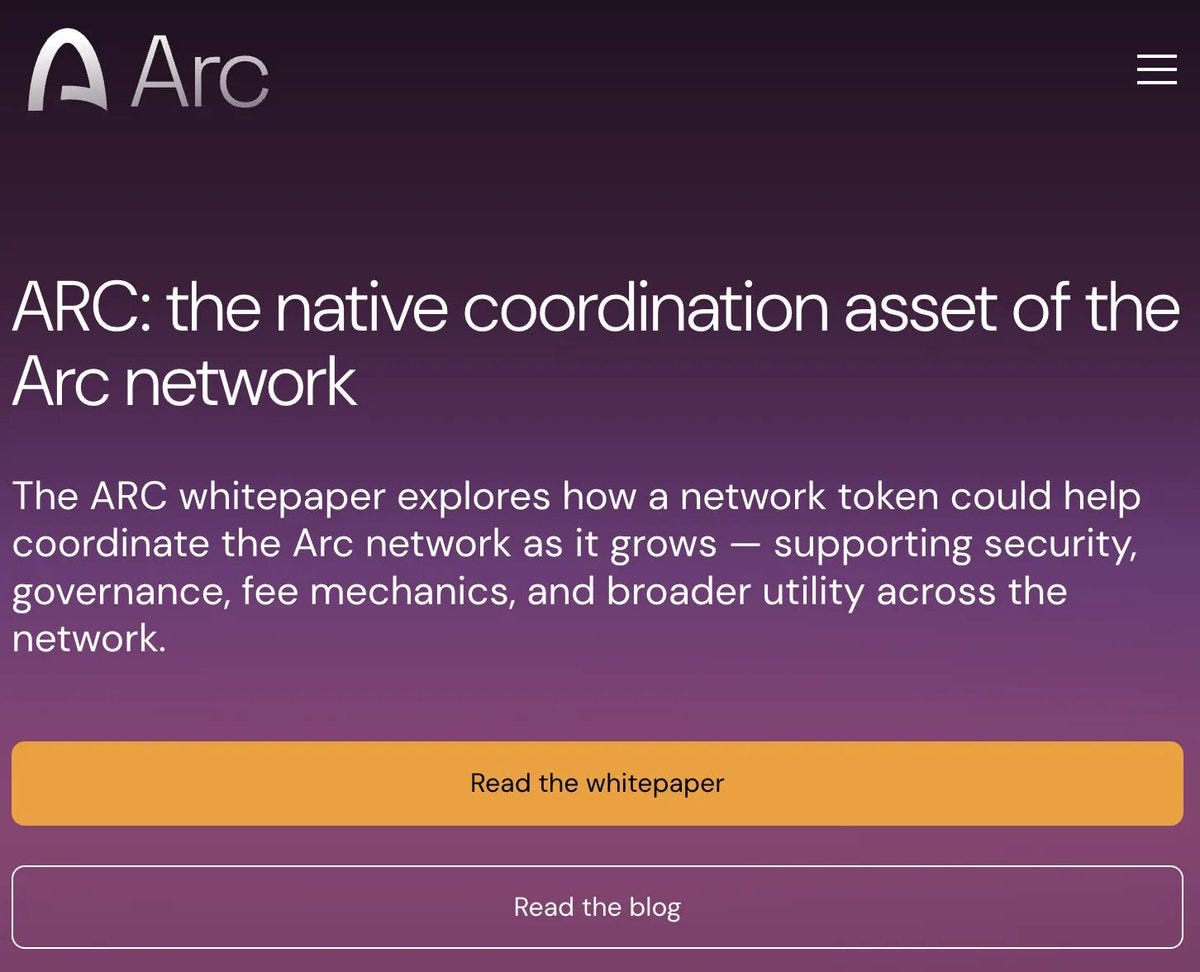
Against this backdrop, Circle created Arc, its own Layer-1 infrastructure, which is currently operating as a private mainnet and is scheduled for a public mainnet launch on September 16, 2026. More than 100 ecosystem and institutional builders are already working on the private mainnet.
On the surface, this can seem contradictory. Why create another blockchain when Circle’s broader strategy has focused on connecting multiple chains?
Circle’s official response focused on the conditions financial institutions want, rather than directly explaining Arc itself.
“Financial institutions don’t want to have to manage distributed infrastructure across multiple environments. What they want is interoperability, consistency, and operational simplicity. Success won’t come from adding more blockchains. It will come from making it possible for banks, enterprises, and end users to experience seamless movement of value between networks.”
Arc is a general-purpose smart contract platform, but its architecture is clearly geared toward finance.
USDC is used as the native gas token.
Transaction costs are denominated in USDC, making them predictable in dollar terms.
Testnet block time is approximately 0.48 seconds, with deterministic finality in under one second.
It is compatible with the Ethereum Virtual Machine (EVM, the standard environment for executing Ethereum smart contracts).
Optional privacy is provided through the Arc Privacy Sector.
It is designed to integrate with Circle products and infrastructure such as CCTP, Gateway, and Circle Wallets.
According to the current Arc documentation, consensus uses Malachite BFT and validator participation is permissioned. Building and deploying applications on Arc is permissionless, while validation is performed by a limited set of known, established institutions. This structure is intended to provide greater accountability and operational assurances for regulated financial settlement.
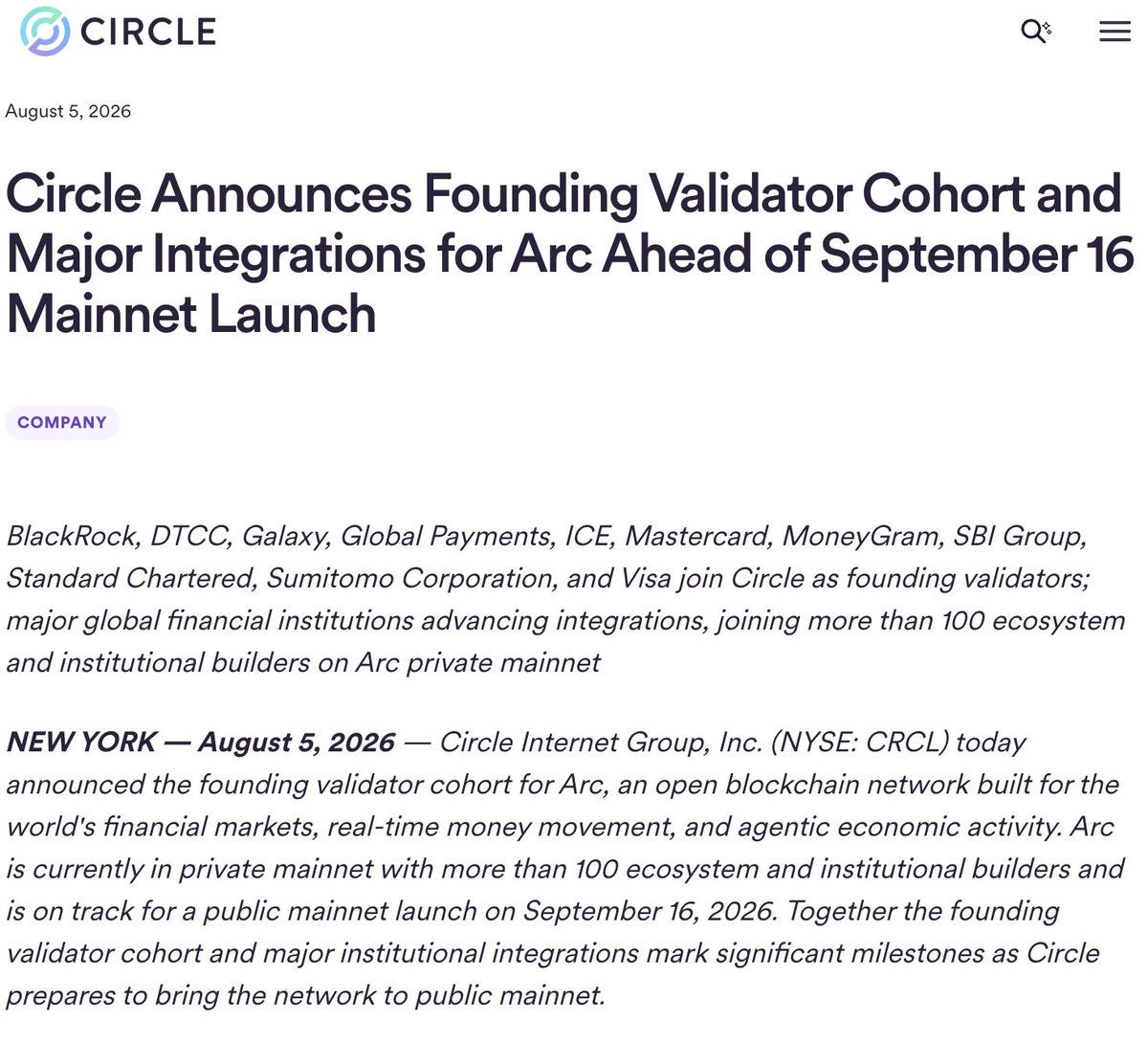
This institutional model is already taking concrete form. In August 2026, Circle announced Arc’s founding validator cohort, which includes BlackRock, DTCC, Galaxy, Global Payments, ICE, Mastercard, MoneyGram, SBI Group, Standard Chartered, Sumitomo Corporation, and Visa, alongside Circle. Rather than relying on anonymous validators, Arc is being secured by institutions that are themselves active participants in global payments, capital markets, custody, and financial infrastructure.
The significance goes beyond validation. Major institutions are also exploring direct integrations with Arc. BlackRock is expected to deploy BUIDL, its tokenized institutional liquidity fund, on the network. Circle is also working with DTCC to enable DTC-custodied assets to be tokenized on Arc beginning in the second half of 2027. BNY and Standard Chartered are exploring integrations spanning digital asset custody, stablecoin access, tokenized settlement, FX, and repo infrastructure.
At the same time, Arc is not designed as a closed institutional network. Circle describes it as combining permissionless application development with institutional-grade infrastructure. DeFi protocols, exchanges, wallets, payment providers, and infrastructure companies including Aave, Uniswap, Kraken, Fireblocks, MetaMask, Upbit, Rain, and Thunes are among the projects expected to support the network.
Arc also has a published roadmap that includes a transition from its current permissioned Proof-of-Authority model to permissioned Proof of Stake. A potential ARC token is designed to support this transition through staking and delegation.
In May 2026, $222 million was raised through an ARC token presale, with the network valued at a $3 billion fully diluted valuation. Participants included a16z crypto, Apollo, BlackRock, ICE, SBI Group, SC Ventures, and others.
However, the ARC whitepaper states that the token has not yet launched and that no final decision has been made regarding its development, deployment, or functionality. This means that, despite the presale, the token’s launch and design remain subject to change.
On Arc, USDC is used to pay gas fees, while a potential ARC token is designed to coordinate network security, economic governance, fee mechanics, and broader network participation. In this sense, the proposed architecture separates the transactional asset from the network coordination asset.
StableFX is the application that best demonstrates why Circle needs Arc.
At StableFX, certified institutions request foreign exchange quotes from multiple liquidity providers. Once the most advantageous price is selected, both currencies are committed to a smart contract, and settlement is completed only when both sides of the transaction are ready. This implements Payment-versus-Payment (PvP, a structure in which payment in one currency and receipt of another occur simultaneously) on-chain, reducing foreign exchange settlement risk.
Circle also recognizes that this market cannot be built with USDC and EURC alone. The Circle Partner Stablecoins program includes Japan’s JPYC, Korea’s KRW1 issued by BDACS, Brazil’s BRLA, Mexico’s MXNB, and the Philippines’ PHPC.
Circle does not need to issue every currency itself. Instead, it can bring local issuers into Arc, StableFX, and CPN, creating a network in which different currencies and stablecoins can trade and settle against USDC.
This structure also helps explain why Circle does not necessarily view other regulated stablecoin models as unconditional competitors. If third-party stablecoins are traded and settled within Circle’s infrastructure, they can simultaneously compete with Circle-issued assets while also contributing to the value of the broader network.
9. USDC entering bank, card company, and corporate systems
Circle has many partnerships. But just collecting logos is meaningless. This is because actual operation, planned release, and review stages are mixed.
First, the relationship with BNY is the most direct.
BNY is the asset custodian of the Circle Reserve Fund and the main custodian of USDC reserves. In June 2026, the role was expanded to allow BNY institutional customers to store and transfer USDC on the digital asset custody platform and instruct Circle to issue and redeem USDC through BNY. BNY’s official announcement emphasized that it has incorporated traditional asset custody and the entire life cycle of USDC into one institutional operating system.
Circle National Trust is a vertical extension in the other direction.
Circle National Trust, which received final approval from the OCC in July 2026, will hold in custody the digital assets of Circle and its affiliates in the early stages of business opening. It is not a commercial bank that accepts deposits and makes loans, but is a national trust bank that focuses on trust and reserve management. Depending on future demand, it can provide services to a limited number of institutional customers and even take charge of USDC reserve management. It has not yet replaced BNY and BlackRock. However, Circle secured the option to directly operate not only issuance but also part of custody and reserve management under federal supervision.
Visa moved first in the card payment network.
Visa announced that in December 2025, Cross River Bank and Lead Bank in the United States will begin settling Visa payment obligations in USDC on Solana. The consumer’s card usage experience does not change. The only difference is the settlement asset that the card issuer and acquirer pay to Visa behind the scenes. Visa is an Arc design partner and also plans to operate validators and utilize USDC payments after the mainnet launch.
Mastercard announced support for regulated stablecoin payments, including USDC, in June 2026. However, Mastercard does not only support USDC. PYUSD, USDG, USDP, RLUSD, SoFiUSD and multiple blockchains are supported.
This difference is important. Visa’s participation in Arc is a strong endorsement of Circle infrastructure. On the other hand, Mastercard’s multi-asset strategy shows that the global payment network does not seek to be dependent on any specific issuer.
Kyriba is the link in corporate finance management.
Kyriba and Circle announced a collaboration to introduce USDC into corporate treasury management systems in April 2026. Companies can use USDC to move funds between affiliates, manage liquidity around the clock, and make cross-border payments while maintaining existing approval rules and audit records. Kyriba said its system processes $51 trillion in payments and 10,000 bank connections annually.
In the capital market, progress must be distinguished.
Polymarket decided to switch from bridge USDC to native USDC issued directly by Circle.
ICE signed an MOU to review ways to utilize USDC and USYC in derivatives exchanges, clearinghouses, and data services.
Deutsche Börse also signed an MOU to utilize USDC and EURC for trading, payment, and custody infrastructure.
The completion date of the Polymarket conversion still needs to be confirmed, and ICE and Deutsche Börse are in the review stage. Nonetheless, the direction of the partnership is consistent. Circle plans to use USDC as an institutional collateral, payment, and fund management asset rather than as a retail payment method.
“What’s important is not how Circle defines itself internally. It’s more about whether financial institutions can adopt this technology within their existing treasury, compliance and operational frameworks.”
The on-chain finance that Circle talks about is not a model that attacks existing finance from the outside. This is a model that goes into existing systems such as BNY, Visa, Mastercard, and Kyriba and changes the payment assets in the backend.
10. Asian strategy starting from Japan and Korea’s conditions
The most specific example of Circle in Asia is Japan.
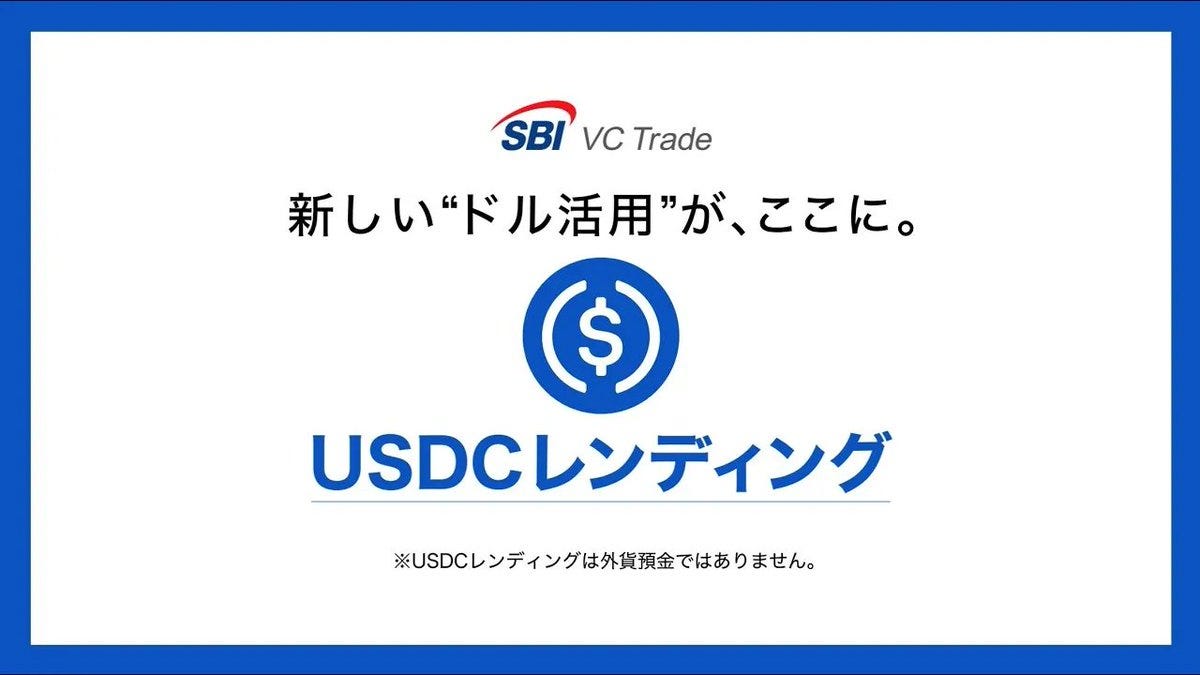
SBI VC Trade began distributing USDC under the Japanese Financial Services Agency system in March 2025. Circle explains that USDC is the first global dollar stablecoin allowed for circulation in Japan through local regulations. Binance Japan, bitbank, and bitFlyer also announced their future handling plans.
If you only look at entering Japan as a way to secure liquidity on the exchange, you are only seeing half the picture.
The scope of cooperation between Circle and SBI includes USDC distribution, bank connectivity, and Web3 infrastructure. Circle has a local corporation, Circle Japan, and the yen stablecoin JPYC also participates in StableFX. The plan is not just to upload dollar stablecoins to the Japanese exchange, but also to create payment and foreign exchange channels between yen and dollars.
In July 2026, Japan’s international card brand JCB also signed an MOU with Circle. The two companies will review JCB’s internal cross-border fund transfers using USDC and the stablecoin payment experience of Japanese merchants. While SBI opened a regulated USDC distribution window, JPYC takes charge of the yen foreign exchange connection, and JCB takes charge of the merchant payment contact point. However, JCB cooperation is in the verification and review stage.
Exilist asked where meaningful demand would come from in Japan first.
“The most consistent need we hear from banks and enterprises is to move funds across borders. Corporate treasury managers are looking at areas where traditional payments infrastructure still presents delays, costs and operational complexities, including supplier payments, cross-affiliate liquidity management and marketplace payouts.”
Circle prioritized corporate payments over exchange transactions.
This judgment does not apply only to Japan. In Asia, currencies and regulations are segmented by country, and cross-border B2B payments involve multiple banks and currency exchange procedures. On the other hand, there is great demand for manufacturing supply chains, e-commerce, overseas wages, and movement of funds between affiliates. It fits the problem Circle is trying to solve.
In Korea, Circle’s partner map has expanded rapidly in 2026.
In April, Circle signed a digital asset infrastructure MOU with Bithumb. The two companies will jointly review Bithumb platform’s multi-chain functionality and stablecoin infrastructure support measures. On the same day, an MOU was signed with Upbit operator Dunamu, but Dunamu cooperation is focused on digital asset education and creating a regulation-friendly ecosystem. This is not an announcement that Circle infrastructure has been integrated into Upbit.
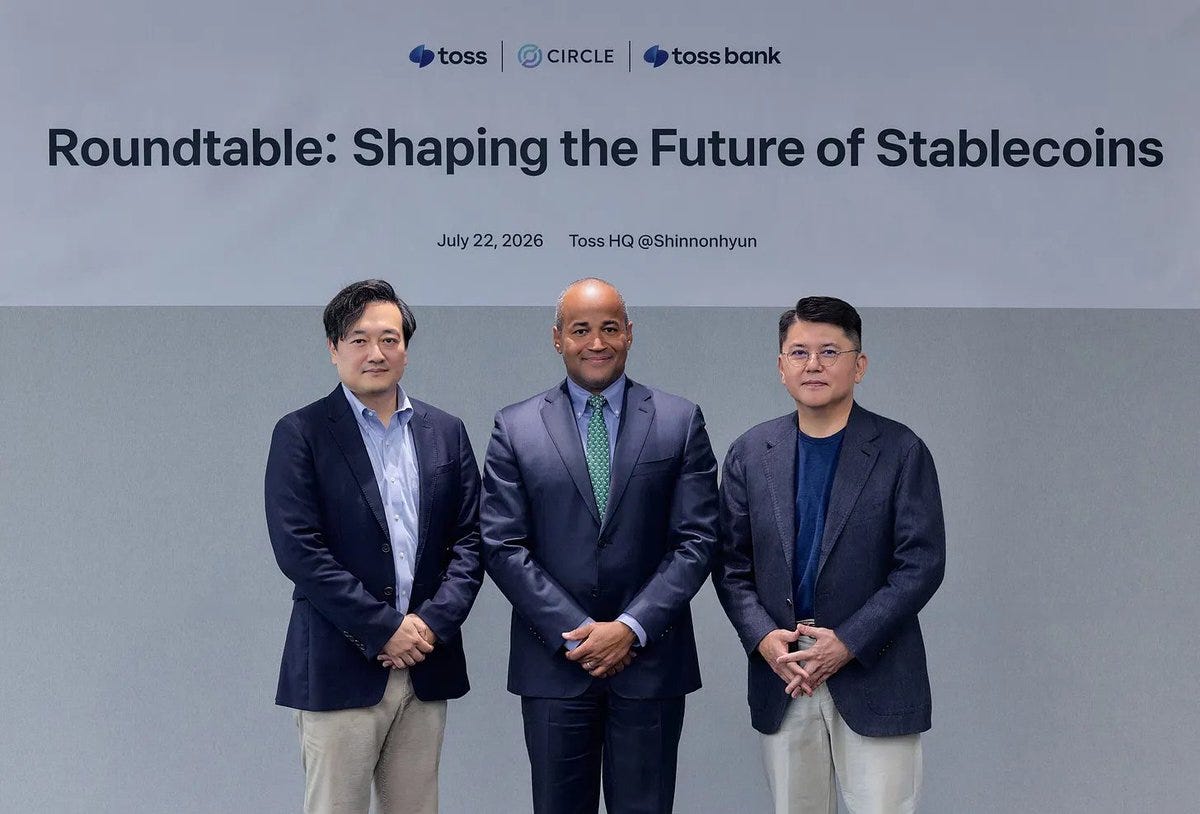
In July, the scope was expanded beyond the exchange. The MOU with Kakao, Kakao Pay, and Kakao Bank considered global payments, overseas remittances, merchant settlement, won-based digital assets, and tokenized finance as subjects of review. The MOU with Toss and Toss Bank covers digital wallets, biometric authentication payments, USDC-based financial instruments, on-chain programmable payments, and bank account-based overseas payments and settlements.
Circle’s Korean partners are divided into three levels.
Exchange infrastructure and ecosystem: Bithumb’s review of multi-chain and stablecoin, Dunamu and Upbit’s education and ecosystem cooperation
Consumer payments and bank settlement: Kakao Pay, Kakao Bank, Toss, Toss Bank
Korean Won Stablecoin and Forex: KRW1 on BDACS
Circle’s Korean partner map spans exchange, consumer payments, banking and won FX - in each case supplying connective infrastructure to a local partner that owns the customer relationship and, where relevant, issues the local currency token. However, all that is currently confirmed is the MOU and technology/business review. The launch date for USDC-based payment or settlement services has not been announced.
Circle also provided conditional answers to Exilist’s Korea-related questions.
“We have seen institutional adoption move quickly in markets with clear regulations, active bank participation, and clear operating standards. As the market matures, collaboration between regulators, financial institutions, and technology providers will be a critical factor in enabling responsible adoption.”
Circle’s institutional strategy will not be completed simply by increasing USDC trading support in Korea. There are three things you need:
Regulated KRW deposit/withdrawal and USDC issuance/redemption channels
B2B payment and settlement network in which banks and PSPs participate
Institutional foreign exchange market between KRW stablecoins and USDC
BDACS signed an MOU with Circle in October 2025 to distribute KRW1 to Arc and test KRW1–USDC on-chain trading. The inclusion of KRW1 in Circle Partner Stablecoins is the initial connection point for the third structure. However, it should be clear that StableFX, Arc, and KRW1-USDC trading are still in the testing and implementation stage.
The difference between Korea and Japan is revealed here. In Japan, USDC distribution has already begun through SBI VC Trade, and JPYC and JCB verification are being added on top of that. In Korea, the range of partners is wider, including exchanges, big tech, and internet banks, but it is still more about preparing for the overhaul of the system rather than actual services.
11. Internet finance stack expanded to AI agents
Circle’s latest narrative doesn’t stop at institutional payments.
In May 2026, Circle announced Agent Stack. It is a set of tools created to allow AI agents to hold assets, find necessary services, and make payments with USDC within set limits.
The composition is as follows.
Agent Wallets: Agent wallet that allows you to set policies such as hourly spending limits and allowed/blocked addresses.
Agent Marketplace: A directory where agents find APIs and services to use.
Circle CLI: An interface where the agent executes wallet creation, policy settings, and payment using commands.
Nanopayments: Ultra-small payments without gas fees that process amounts as small as $0.000001 using Gateway
Circle Skills: Development patterns used by AI development tools to implement Circle products
Circle’s argument is that USDC accounts for a high proportion of payments in the x402 ecosystem. The agent economy is still small. Unlike corporate payments, actual recurring demand has not been verified.
Still, Circle’s logic is consistent.
Whether a person is sending money through a banking app, a corporate treasury management system is transferring liquidity to an affiliate, or an AI agent is paying API usage fees, the need is the same. It is a payment asset that can be used at all times, is programmable, and can be moved to multiple networks.
Circle seeks to expand USDC from a digital dollar for people to a payment unit used by software.
This attempt is also connected to Arc. Arc specifies agent transactions as a use case and offers USDC gas fees and sub-second payment confirmation. Gateway integrates balances from multiple chains, and Agent Wallets applies spending policies.
AI is not a separate business that Circle suddenly added. This is a new group of customers who will use the wallet, cross-chain transfer, micropayment, and policy control features that Circle has built up over the years.
However, narrative and business should not be confused. It has not yet been revealed how much Agent Stack contributes to Circle’s revenue diversification. Now it’s more of a strategic option.
Conclusion: Circle’s final product may not be USDC
Circle was successful as a USDC issuer. However, publishing alone does not allow you to go to the next step.
USDC reserves are managed by BlackRock and held in custody by BNY. In distribution, Coinbase and Binance have great influence. Execution relies on external blockchains such as Ethereum and Solana. The final currency exchange and payment are handled by banks and PSPs in each country.
Circle cannot get rid of these partners. Rather, it needs them more.
Instead, Circle tries to create rules for connecting partners.
It manages issuance and redemption through Circle Mint.
CCTP and Gateway standardize USDC movement between chains.
CPN creates international payment rules for banks and PSPs.
StableFX connects foreign exchange between local currencies.
Arc provides a common environment where payments, foreign exchange, and collateral are carried out.
Circle National Trust expands the scope of control of trusteeship and reserve management.
The Agent Stack attracts AI agents/software as economic participants.
Therefore, it is difficult to call Circle’s strategy solely vertical integration. Rather than trying to directly own the entire supply chain, Circle is building a control plane (an upper layer that manages the rules and policies for linking multiple systems) to coordinate the supply chain.
However, four tensions remain.
First, current sales are still dependent on interest rates and USDC circulation. For a platform strategy to be successful, meaningful non-interest revenue must be generated from CPN, Arc, and developer services.
Second, Circle speaks of openness, but USDC is at the center of the network. CPN advocates stablecoin neutrality, and StableFX accepts local stablecoins. It has not yet been decided whether financial institutions will view this as a neutral infrastructure or a USDC distribution network.
Third, although Arc is a public blockchain, current validators are permissioned. It remains to be seen how the ARC token and proof-of-stake transition will adjust openness and institutional control in the future.
Fourth, announced partnerships must be converted into actual transaction volume. MOU, testnet, and design partners do not guarantee sales or recurring payments.
Nevertheless, the direction of Circle is clear.
“The industry will move from individual stablecoins to a complete financial infrastructure stack that will allow money to move as quickly and programmably as the Internet.”
What Circle really wants is for banks to use existing screens, for businesses to use existing money management systems, and for consumers to swipe existing cards. The structure in which USDC is settled behind the scenes, CPN connects institutions, and Arc confirms transactions is closer to the future that Circle wants.
When that future comes, users may not even know they used USDC.
The standards for judging the success of a circle must also change. It is not enough to just look at how much the USDC market capitalization has grown. It remains to be seen whether financial institutions treat Circle as one of several stablecoin issuers or whether they accept it as the basic infrastructure for accessing internet finance.
Circle’s final product may not be USDC.
A system that keeps USDC moving behind the scenes. What Circle is trying to create is close to that system.
Source
Quotes attributed to Gajia Parsons are based on official written responses provided by Circle to Exilist. The responses have been lightly edited for formatting and clarity where necessary, without altering their intended meaning.
1. Circle regulation/disclosure
2. Technology and products
3. Partner official announcement
Multichain/stablecoin infrastructure MOU between Bithumb and Circle
Dunamu and Circle’s digital asset innovation and education MOU
JCB·Circle’s cross-border fund transfer and merchant payment MOU
Digital asset infrastructure MOU between Kakao, Kakao Pay, Kakao Bank, and Circle
This content is analysis material for information and research purposes and is not intended to recommend buying, selling or holding specific assets (stocks, tokens, etc.) or to replace investment judgment. All opinions and interpretations included in the text are based on public information and reasonable assumptions at the time of writing and may change depending on future market conditions or changes in policies and regulations.
This research was conducted independently without receiving any financial compensation, sponsorship, or compensation in connection with the writing of this article from the project or its affiliates. However, the author or affiliated organization may have had a paid business relationship with the project in the past, and thus a conflict of interest may exist. The opinions and interpretations contained in the text are based on the independent judgment of the author.
The final responsibility for investment decisions lies entirely with the reader, and the author assumes no legal responsibility for investment results based on this content.
© 2026 Exilist Inc. · Privacy ∙ Terms ∙ Collection notice