


This report was prepared based on information available as of August 31, 2026.
It draws on official announcements from Ondo Finance and its partners, materials from the SEC, CFTC, and DTCC, official Ondo documentation, and data from RWA.xyz.
The responses from Min Lin, MD of Global Business Development at Ondo Finance, are drawn from an interview conducted directly by Exilist. They have been lightly edited for clarity and to remove verbal repetition without altering their meaning.
Introduction
The biggest illusion in tokenization is the belief that once a token is issued, a market will naturally follow. Representing a stock through a smart contract is not difficult. Making that token continuously tradable, keeping it aligned with the underlying stock, and operating dividends, redemptions, collateral, and liquidations are entirely different challenges.
The U.S. stock market is the world’s largest and most liquid capital market. Yet it is not equally accessible to everyone around the world. Investors must navigate country-specific brokerage accounts, market hours, settlement networks, foreign exchange, and regulation. Even after purchasing a stock, the asset usually remains locked inside a single brokerage account. It cannot be sent directly to another person, and using it as collateral in another financial service requires separate agreements and transfer procedures.
Tokenization emerged as a technology for reducing these constraints. But placing a stock on a blockchain does not, by itself, create a new market. The token price must remain connected to the underlying asset, and investors must be able to enter and exit at any time. Exchanges and wallets must support the token. Dividends and corporate actions must be processed. Price oracles and liquidation systems are required before the asset can be used as collateral, in lending, or in derivatives. Above all, investors must clearly understand what they actually own and against whom they can assert their rights.
For years, the RWA market competed over what could be tokenized. The center of competition is now moving beyond issuance. The question is who can distribute more assets around the world, bring traditional-market liquidity onchain, and transform holdings into collateral and productive capital. Ondo is one of the clearest examples of this shift.
Ondo began with U.S. Treasuries. Through OUSG and USDY, it built capabilities in underlying-asset custody, stablecoin-based minting and redemption, yield distribution, and regulatory compliance. It then applied the same operating system to hundreds of U.S. stocks and ETFs. After creating the assets, Ondo expanded distribution across exchanges, wallets, and chains. Through Morpho and Ondo Perps, it turned tokenized stocks into lending collateral and derivatives margin. Its connections with Oasis Pro, Broadridge, and DTCC link this international distribution network with the regulated U.S. market.
Ondo’s next challenge is not to issue more assets. It is to make each unit of an already-issued asset generate more financial activity.
If TVL represents the inventory of assets being held, trading volume, lending, and open interest represent how actively those assets circulate within the market. If inventory grows without circulation, Ondo becomes a large digital securities warehouse. If the same stock token repeatedly supports spot trading, collateral, lending, hedging, and portfolio margin, Ondo moves closer to becoming market infrastructure.
Ondo Perps was created to bridge this gap. A tokenized-stock issuer expanding into derivatives is not an arbitrary extension of its business. It is a strategic decision to transform spot tokens from static holdings into productive capital and connect issuance with trading activity and risk management. Ondo’s concept of onchain prime brokerage only becomes a concrete business structure once perps is included.
Min Lin described this as “Wall Street 2.0” in his interview with Exilist.
“Ondo has a theme around Wall Street 2.0. A lot of that is looking at how we reinvent what already works very well in its traditional form and bring it onchain. The ultimate vision for Ondo is to build an onchain prime brokerage platform.” — Min Lin, MD of Global Business Development, Ondo Finance
The core of Ondo, as examined in this report, is not tokenization itself. It is increasing the capital velocity of the assets it issues.
Ondo’s Treasury products created a foundation of stable onchain cash and operational infrastructure. Tokenized stocks expanded its global distribution network. Perps turn those stocks into collateral and hedging capital. Ondo Network provides the execution layer for these transactions, while Oasis Pro, Broadridge, and DTCC connect the system with regulated U.S. markets. Ondo’s ecosystem and infrastructure lie not in any single product, but in the way these components connect.
1. A Capital Markets Operating System Built on U.S. Treasuries
Ondo began in 2021 with DeFi structured products, including Ondo Vaults and Liquidity-as-a-Service. It discontinued those businesses when yields within crypto declined in 2022 and shifted its focus to OUSG and USDY.
This was not merely a decision to pursue higher yields through U.S. Treasuries. It was a decision to address four operational problems that any onchain capital markets platform must solve.
First is custody of the underlying assets. The number of tokens onchain must match the offchain Treasury securities and fund shares backing them.
Second is minting and redemption. When users enter and exit with stablecoins, the platform must absorb the operating hours and settlement cycles of traditional financial institutions.
Third is rights and regulation. The platform must define who may purchase the product, what claims holders have, and where the responsibilities of the issuer and service providers begin and end.
Fourth is distribution. The same asset must be delivered across multiple chains, wallets, and institutional channels rather than being sold through a single web application.
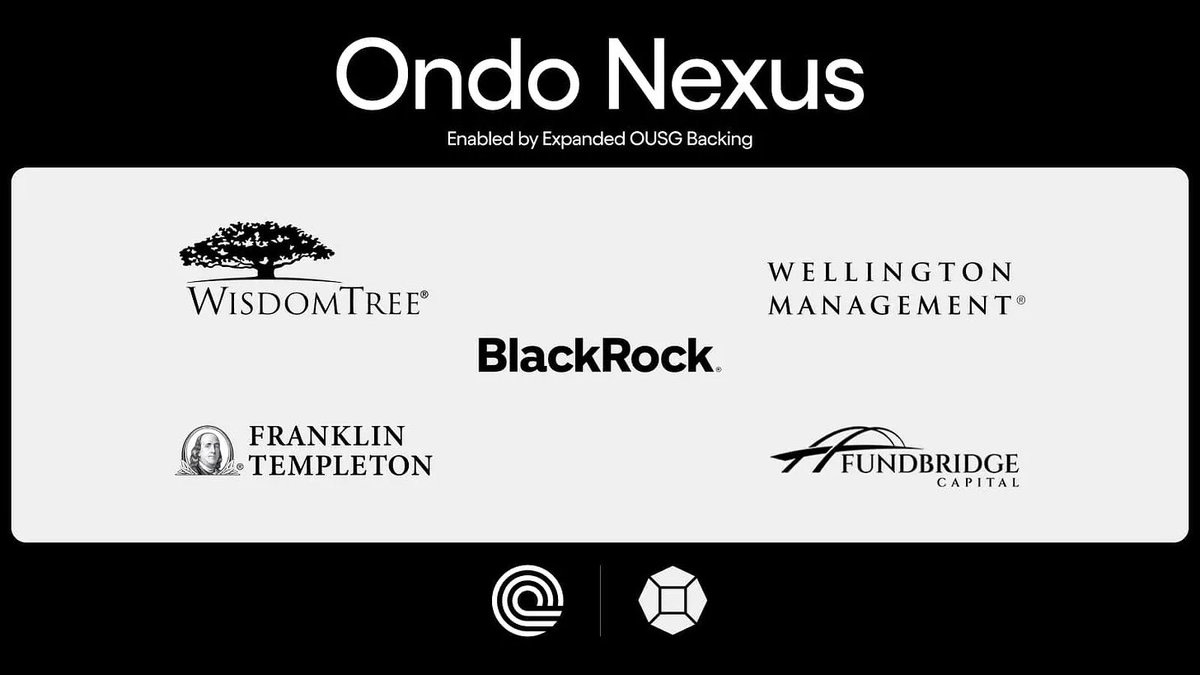
OUSG provides Qualified Purchasers with exposure to the yield of short-term U.S. Treasuries and institutional money market products, while supporting 24/7 instant subscriptions and redemptions with USDC, PYUSD, and RLUSD.
USDY allows qualifying non-U.S. investors to hold and transfer a yield-bearing, U.S. dollar-denominated tokenized note secured by short-term U.S. Treasuries, short-duration Treasury ETFs, or bank deposits. According to Ondo, USDY had grown to $2.15 billion and had been deployed across 12 networks as of August 2026.
The system built while operating only one or two Treasury products became more valuable when Ondo expanded into tokenized stocks. Every stock has different prices, dividends, stock splits, trading halts, and market hours. Ondo Stocks was able to scale rapidly to hundreds of assets not because Ondo suddenly invented stock-tokenization technology in 2025, but because it had already built a supply chain for custody, reconciliation, minting, redemption, and distribution through its Treasury business.
The move from Treasuries to stocks was therefore not product diversification. It was the replication of an operating system proven with one asset across hundreds of assets. This became the first foundation for Ondo’s expansion from an RWA project into capital markets infrastructure.
2. The Competitive Advantage of Tokenized Stocks Is Built After Issuance
Ondo Stocks launched in September 2025 with more than 100 U.S. stocks and ETFs.
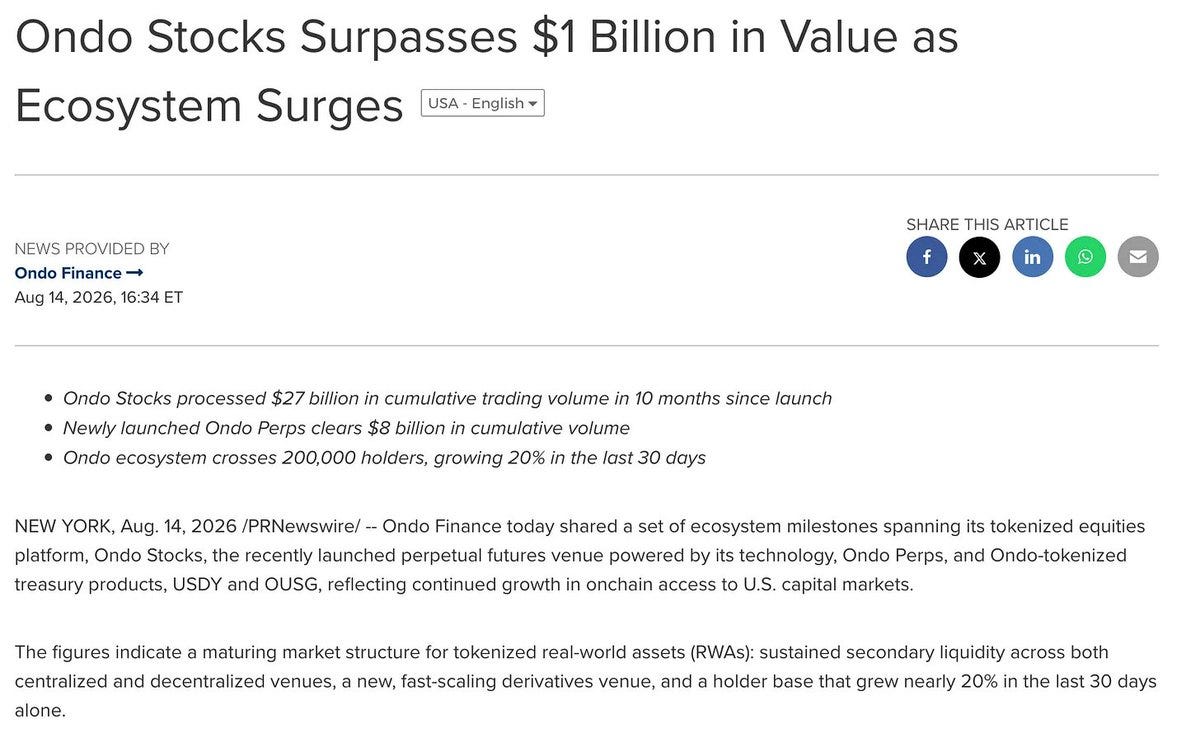
As of August 2026, the platform supported more than 440 stocks, ETFs, and commodity-linked products. According to Ondo, Ondo Stocks had reached $1.01 billion in TVL, $27 billion in cumulative trading volume, and 186,636 cumulative holders.
Of that volume, $18 billion was generated on centralized exchanges, while $206 million in Ondo assets was held across Binance, Gate, Bitget, and MEXC.
The growth of Ondo Stocks was not generated by its own application alone. Ondo distributed its assets across centralized exchanges; wallets such as MetaMask, Ledger, and Binance Wallet; and onchain trading routes such as Uniswap, 1inch, and LI.FI. The platform began on Ethereum, expanded to BNB Chain and Solana, and enabled certain assets to move to HyperEVM.
Ondo’s customers are not limited to end investors. They also include exchanges, wallets, fintech platforms, custodians, and protocols that want to offer stock products through their own interfaces.
This makes Ondo Stocks closer to B2B2C distribution infrastructure than a B2C brokerage application. The objective is for issuance, redemption, and collateral-management rails to connect back to Ondo regardless of the interface through which the end user places an order. Rather than controlling the customer relationship exclusively, Ondo aims to become the default provider across as many interfaces as possible.
2.1 Minting and Redemption Matter More Than the Token
The same Apple or NVIDIA stock can be tokenized by multiple issuers. Once their asset lists become similar, differentiation shifts away from the token itself and toward the primary market.
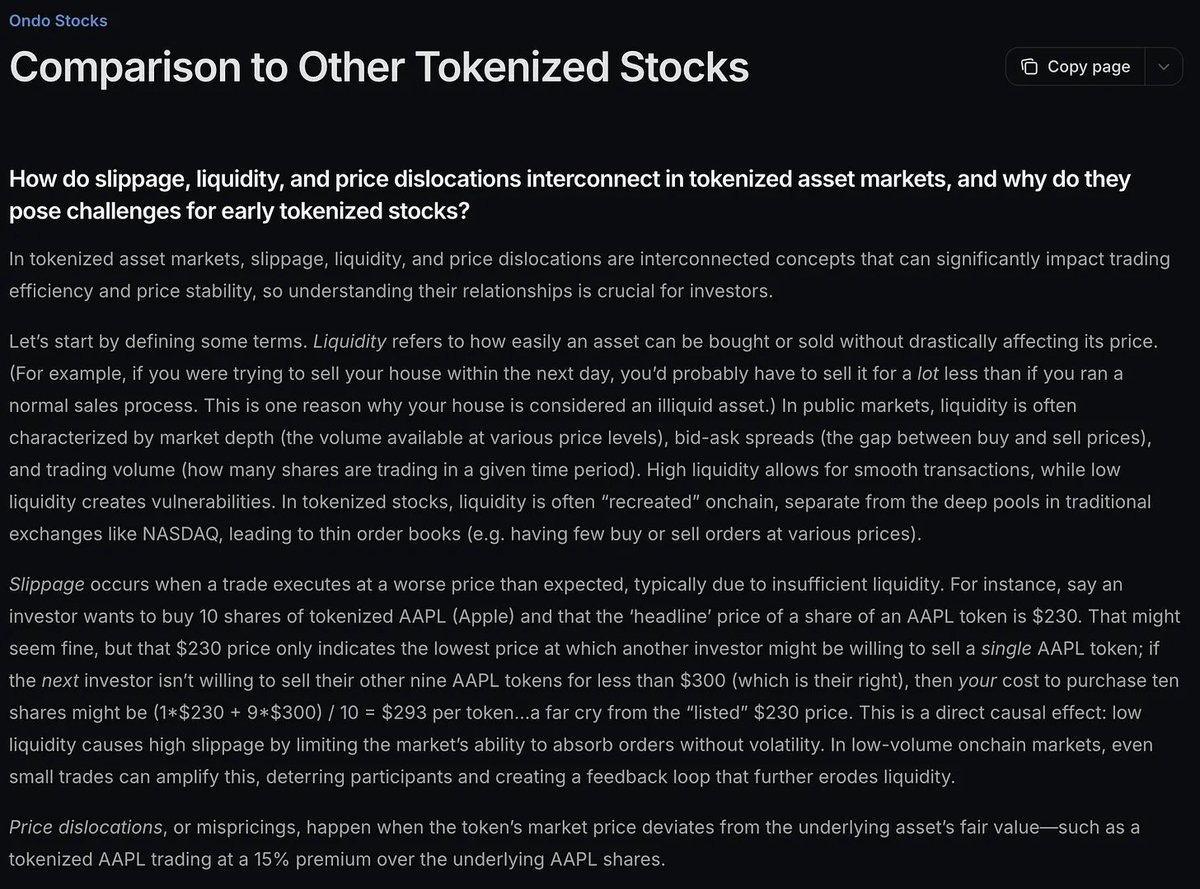
Ondo uses a Just-in-Time Liquidity model that accesses underlying-market liquidity when an order is placed. When a purchase request is received, the underlying stock or ETF is acquired and the token is minted. When a redemption request is received, the token is burned and the underlying value is paid in USDon or USDC.
Rather than pre-positioning inventory in shallow onchain pools, the model enables Ondo Stocks to inherit liquidity from traditional markets, reducing slippage and price dislocation.
It is important to distinguish 24/7 trading from 24/7 minting and redemption. Secondary trading on a DEX or CEX can remain open over the weekend. But if the primary market that creates new tokens and redeems them for their underlying value is closed, arbitrage becomes constrained and the token price can diverge from the underlying stock.
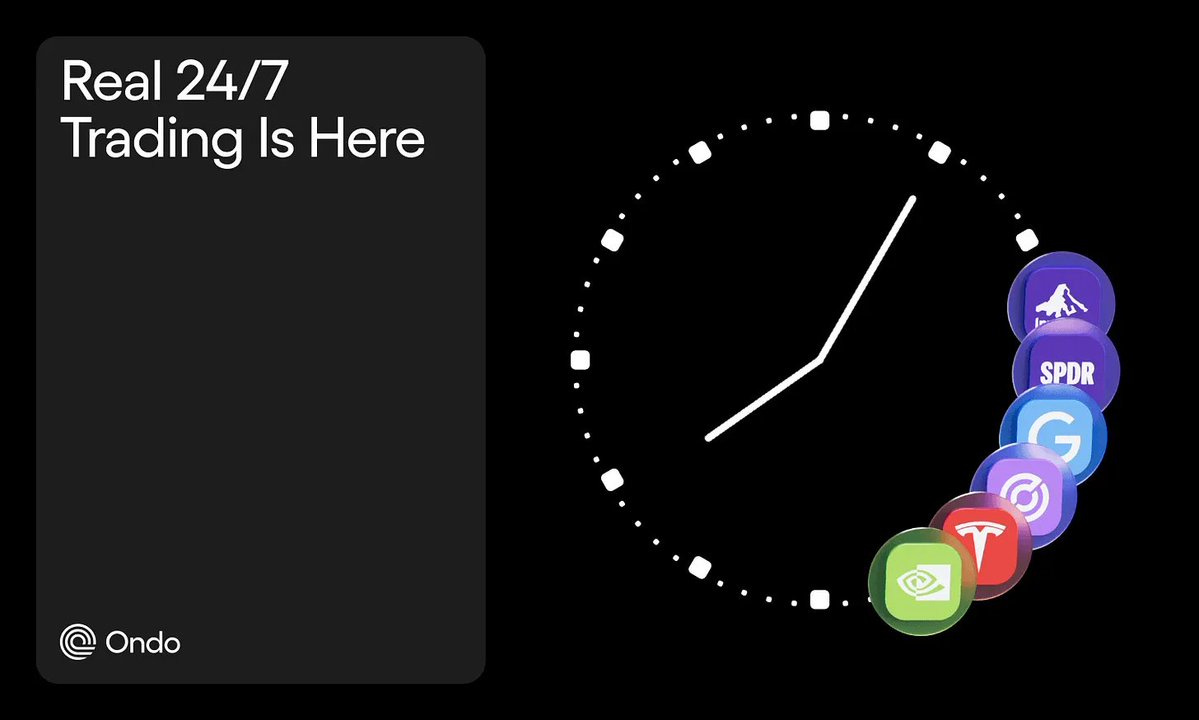
In June 2026, Ondo introduced instant 24/7 minting and redemption for six tokens tracking SPY, QQQ, Circle, NVIDIA, Tesla, and Alphabet. The scope was later expanded to more than 25 assets, including major technology stocks, semiconductor stocks, and index ETFs.
The remaining Ondo Stocks generally support 24/5 minting and redemption, while all assets can be transferred 24/7 in eligible jurisdictions.
The value of this function is less about the convenience of being able to buy at any time and more about minimizing price dislocation.
When news breaks over the weekend, spot-like tokens and perps can lead price discovery, while minting and redemption connect those prices with the expected value of the underlying assets. However, because Nasdaq and NYSE liquidity cannot be accessed immediately while U.S. cash markets are closed, spreads, price dislocations, and hedging costs may increase.
The purpose of 24/7 operations is not to eliminate liquidity risk. It is to bring that risk within Ondo’s pricing, inventory, and limit-management systems.
2.2 What Token Holders Actually Own
The standard Ondo Stocks distributed outside the United States are not the underlying shares themselves. They are structured notes issued by Ondo Global Markets (BVI) Limited and designed as total return trackers for the underlying stocks and ETFs.
Each token is fully backed by the underlying securities and cash in transit. Dividends are reinvested into the underlying stock after applicable withholding taxes, while corporate actions such as stock splits are reflected in the economic value of the product.
Holders receive economic exposure comprising price changes and reinvested dividends. They are not directly recorded as shareholders on the share register of the underlying company.
The issuer of Ondo Stocks is an SPV separate from Ondo Finance, and the underlying assets are held with a U.S.-registered custodian broker-dealer. Ankura Trust Company verifies the existence and quantity of the underlying securities each business day and holds a first-priority security interest over the assets securing the issuer’s obligations. The underlying securities are not lent without the explicit consent of the relevant holder.
The recent Broadridge integration is designed to allow holders to express preferences regarding how the underlying shares should be voted. However, this is not equivalent to the legal voting rights exercised by a direct shareholder.
This legal structure has enabled Ondo to expand rapidly, but it also creates a long-term weakness. Tokens can be distributed quickly, while platforms such as Dinari, Securitize, and Superstate can make the completeness of shareholder rights a separate axis of competition through direct shareholder rights or issuer-led native equities.
3. Issued Assets Need Markets That Put Them to Work
To understand Ondo Perps, the relevant question is not, “Why is an RWA issuer operating a derivatives platform?” It is, “What is missing when the business stops at spot issuance?”
A spot-token issuer bears the cost of custody, purchases and sales, reconciliation, corporate actions, minting, and redemption. But when users repeatedly trade the issued tokens on exchanges, the order flow, trading revenue, and customer data accumulate at the exchange.
The issuer creates the asset inventory, while the distributor owns the asset’s velocity. As more providers issue Apple tokens, the margins and brand value attached to issuance itself may weaken.
Perps change this economic structure. Perpetuals allow investors to trade long and short exposure with leverage without directly holding the spot asset, resulting in much higher trading frequency than spot markets. If the issuer operates or deeply integrates this layer, it can move beyond being a token provider and become trading and risk-management infrastructure.
This does not mean every tokenized-stock issuer must legally operate its own derivatives platform. But a company seeking to become a capital markets platform must own the derivatives and margin layer or integrate it deeply enough to retain meaningful control. Otherwise, it gives other exchanges the most active use cases and economic value generated by the assets it issues.
Through Ondo Perps, which is operated by a separate legal entity, Ondo has chosen to build this layer directly.
First, Capital Remains Idle in a Spot-Only Market
If an investor holding stocks can use only stablecoins as margin for another position, capital becomes tied up twice. An investor holding $100,000 in Apple tokens may need to provide an additional $100,000 in stablecoins to open a perps position for hedging. When the spot asset and margin are separated, the tokenized stock remains merely an asset to be held.
Ondo Perps accepts Ondo Stocks as collateral. Users can hedge or open positions in other assets without selling their spot holdings. They can, for example, use tokenized Tesla stock as collateral to trade NVIDIA perps. The moment a spot asset becomes purchasing power, the same pool of capital can support both the underlying position and additional trading activity.
Second, Separating Spot and Derivatives Increases Hedging Costs
When spot assets are held on one platform and perps are traded on another, investors must move assets, prepare separate collateral, and manage different liquidation rules. Market makers must also manage spot inventory and perps positions separately, increasing their cost of capital. Those costs ultimately appear as thinner order books and wider spreads.
Bringing Ondo Stocks and perps into the same environment allows users to retain spot exposure while opening an offsetting perps position. Basis trades, market-neutral strategies, and portfolio hedges can be executed through a shorter path. From the issuer’s perspective, spot holders can become natural providers of derivatives liquidity.
Third, Perps Provide Price Discovery for 24/7 Spot Markets
Corporate news and policy changes occur even while U.S. cash markets are closed. Because perps trade around the clock without expiration, they can reflect price expectations during nights and weekends before the underlying market reopens. When combined with 24/7 minting and redemption, these prices can also inform the pricing and inventory management of spot-like tokens.
“As we add more assets to 24/7 operations, people are able to hedge their positions around the clock and react to market news at all times. From a price-discovery standpoint, we believe this will eventually start moving onchain as well, similar to how perpetual futures have led price discovery over the weekend.” — Min Lin, MD of Global Business Development, Ondo Finance
Without perps, a 24/7 spot token can easily become an isolated secondary-market instrument trading on top of a closed underlying market. When both spot and perps remain open, price discovery, arbitrage, and hedging reinforce one another. It is difficult to view Ondo’s expansion of 24/7 minting and redemption and the launch of Ondo Perps at roughly the same time as a coincidence.
Fourth, Managing Corporate Actions and Liquidations Requires Issuer Data
Equity perps are more complex than crypto perps. Dividends, stock splits, mergers and acquisitions, trading halts, and delistings affect spot prices, funding, and contract specifications. If these events are handled inaccurately, perps prices can diverge from the underlying stocks and create unexpected basis risk for market makers and investors.
Ondo already manages corporate actions and underlying-asset inventory through the spot issuance process. Connecting this information with the pricing, funding, and liquidation systems of perps can allow risks to be reflected more quickly than on a general-purpose derivatives platform.
Because the minting and redemption of Ondo Stocks can access Nasdaq and NYSE liquidity, the system may also provide a route to the underlying-market liquidity required during large liquidations. The strongest rationale for connecting spot issuance with perps is not marketing. It is the integration of risk management.
Ondo Perps is therefore not an ancillary feature of tokenized stocks. It changes a structure in which the issuer bears the cost of inventory while giving away the economics of trading. It represents the stage at which static TVL is transformed into repeatedly deployed capital.
4. Ondo Perps: Turning Static Holdings into Productive Capital
For tokenized stocks to become more useful than traditional stocks, transferability between wallets is not enough. Holders must be able to borrow against their assets, hedge downside risk, and use them as margin for trading other assets.
What matters is not merely that an asset exists onchain, but how often it can be put to work.
Ondo Perps is a capital-efficient platform for equity, ETF, and commodity perpetual futures that launched in July 2026 for global non-U.S. users, subject to jurisdictional and other restrictions. It offers 24/7 trading with up to 20x leverage. Its primary markets are not crypto assets, but stocks such as Apple, NVIDIA, Tesla, Amazon, and Microsoft; ETFs such as QQQ, IVV, and VTI; and markets linked to gold, silver, and other commodities.
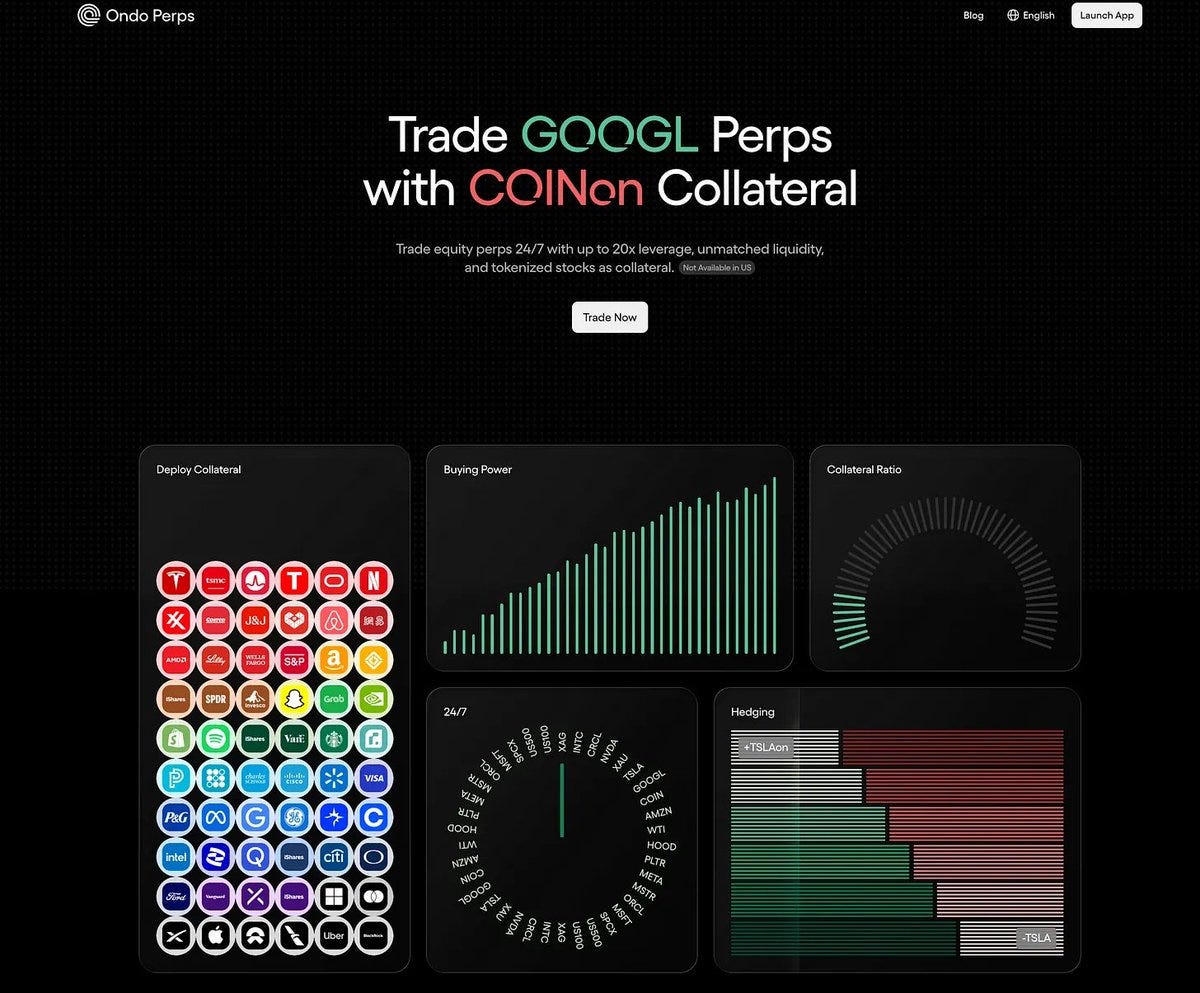
At first glance, it may not appear very different from existing equity perps platforms. But its core value is neither the number of supported markets nor the leverage multiple. It lies in connecting Ondo Stocks to the derivatives collateral layer and enabling spot and perps positions to be managed within the same portfolio.
On a conventional platform, an investor who already holds stocks must keep those stocks in place while depositing separate stablecoin margin to trade perps. Even if the investor holds sufficient assets, those assets remain outside the trading account, and additional capital is required to open a new position.
Ondo describes Productive Capital as the ability to use tokenized stocks as margin without selling them. A spot asset moves from being a static holding to productive capital supporting new positions.
In simple terms, a user could post Apple as collateral and short Microsoft.
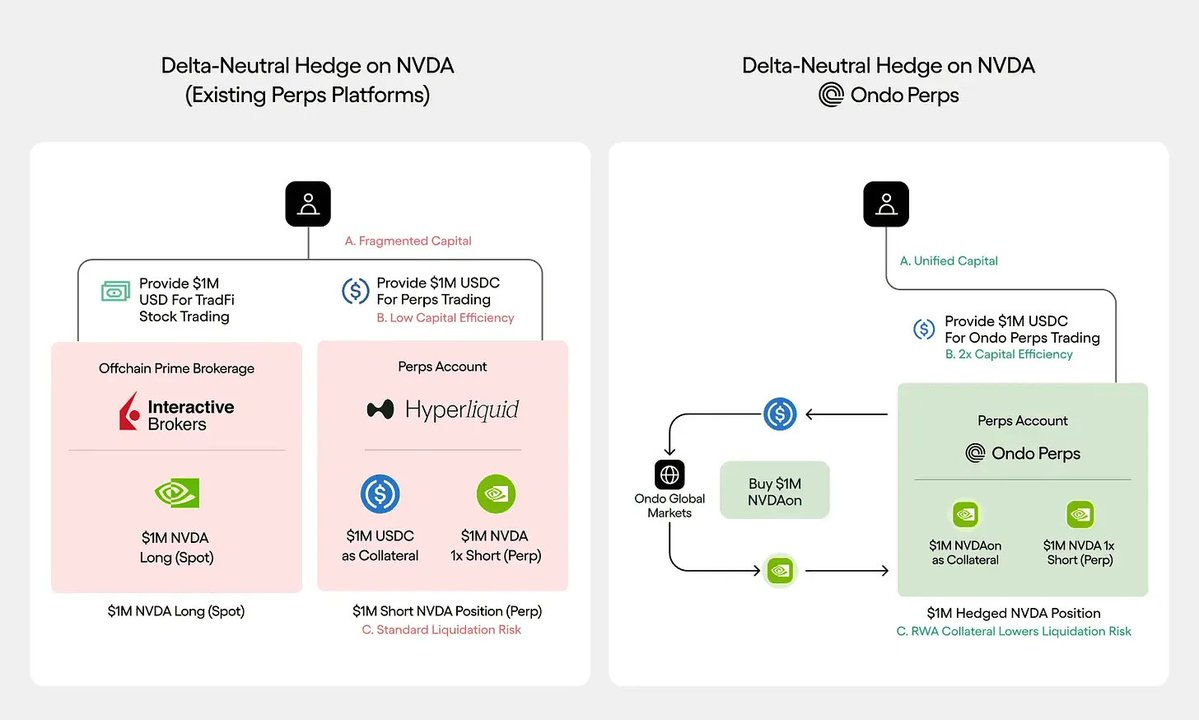
The effect of this structure is potentially more significant for market makers providing liquidity to equity perps than it is for ordinary investors.
When a market maker fills a sell order in NVIDIA perps on a conventional platform, it must purchase NVIDIA shares through a traditional brokerage account to hedge the risk of a price increase. At the same time, it must deposit separate stablecoins as margin on the perps platform. Capital becomes tied up in both the spot hedge and derivatives margin to manage a single economic exposure.
On Ondo Perps, tokenized stocks can serve as both spot hedges and multi-asset collateral. A market maker can purchase tokenized NVIDIA stock to hedge a short perps position while using the same token as productive margin supporting other positions within the portfolio.
Ondo explains that under the conventional structure, providing $1 million of perps liquidity may require approximately $2 million across the spot hedge and margin. With tokenized-stock collateral, the same exposure could be supported with capital closer to $1 million. According to Ondo’s estimate, this can provide up to approximately 2x capital efficiency.
However, this should be understood as a theoretical maximum that varies with the market-making strategy, collateral haircuts, correlations between positions, and volatility.
Portfolio margin adds another layer. Portfolio margin calculates margin requirements based on the net risk of the overall portfolio rather than evaluating each position in isolation. For example, if a trader holds tokenized NVIDIA stock and a short position in NVIDIA perps, the margin model can account for the degree to which the two risks offset each other. Capital is allocated against the remaining net risk rather than requiring margin based on the gross notional value of all spot and perps positions.
Lower capital requirements can turn the same trading revenue into a higher return on capital. This can encourage market makers to deploy more capital, increasing order sizes, tightening spreads, and reducing slippage. A better trading environment attracts more traders, while additional order flow can further improve market-maker economics.
This is why tokenized-stock collateral can operate as a liquidity flywheel rather than merely another margin option.
But capital efficiency does not emerge automatically simply because spot and derivatives are placed in the same account. Tokenized stocks used as collateral must be tradable at low cost.
If spot liquidity is insufficient, it becomes more expensive for market makers to establish or unwind their hedges. If token prices diverge materially from the underlying stocks or redemptions do not operate smoothly, the costs of hedging and liquidation may exceed the capital saved through collateral integration.
This is where the minting and redemption structure of Ondo Stocks becomes a competitive advantage for Ondo Perps. Market makers do not need to rely solely on onchain order books for tokenized stocks. Through minting and redemption, they can draw on the real liquidity of the underlying markets on Nasdaq and NYSE.
The significance of combining Ondo Stocks with Ondo Perps does not lie in cross-selling products. It lies in Ondo’s ability to directly provide the hedging assets and liquidity routes required by the derivatives market.
The success of Ondo Perps therefore depends not on how quickly more than 440 Ondo Stocks are added as collateral, but on whether Ondo can expand the collateral set while increasing the share of Ondo Stocks in total collateral and maintaining market stability.
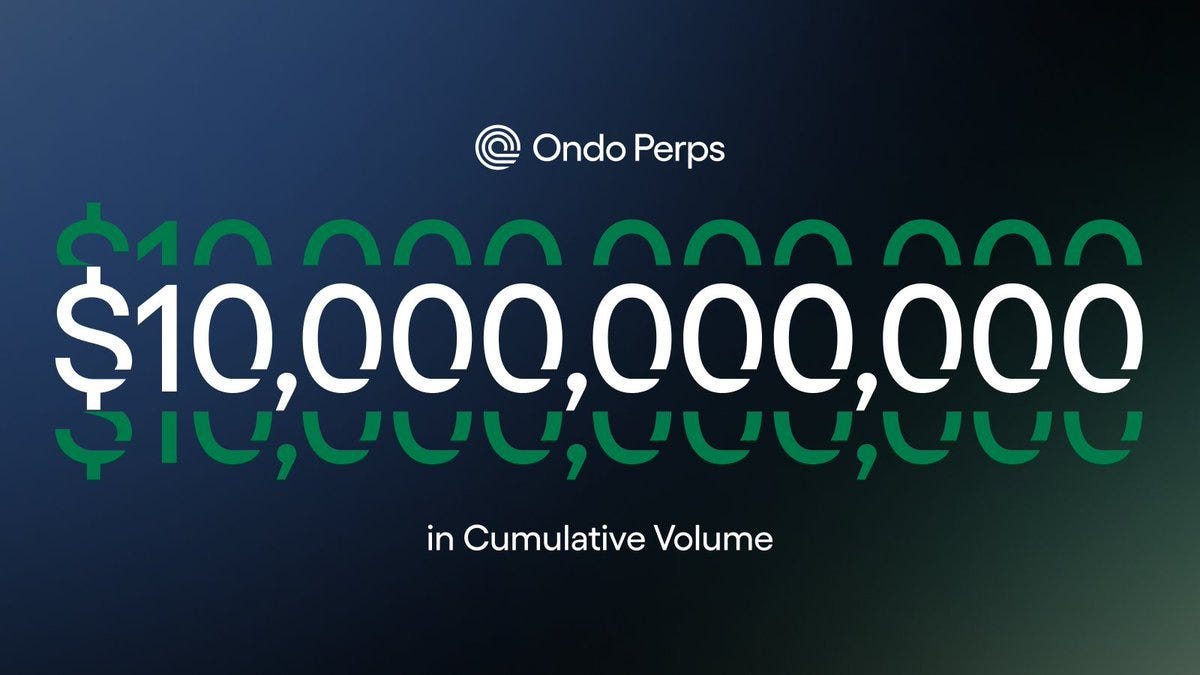


Initial performance has been relatively strong. By August 26, 2026, Ondo Perps had surpassed $10 billion in cumulative trading volume. This demonstrates that the product has moved beyond the announcement stage and generated real trading activity.
Open interest has also trended upward since launch. Trailing 30-day trading volume of $5 billion equates to average daily volume of approximately $167 million. Compared with open interest of approximately $100 million, average daily volume was about 1.67 times reported open interest. This indicates active capital turnover in the perps market and clearly shows that trading activity on the newly launched platform has moved beyond the announcement or testing stage.
At the same time, open interest of approximately $100 million shows that the base of risk capital remaining on the platform is still at an early stage. High cumulative volume can grow rapidly through repeated market-maker trading, incentives, and short-term position turnover. It is therefore too early to conclude from $10 billion in cumulative volume alone that a deep and stable derivatives market has been established.
The following indicators will require continued monitoring:
Whether open interest is sustained and continues to increase after launch
The share of Ondo Stocks in total collateral, including stablecoins
The number of Ondo Stocks supported as collateral
Whether spreads, market depth, and funding remain stable across major markets
How basis behaves relative to spot markets during weekends and corporate actions
How liquidation losses, insurance, and loss-sharing mechanisms perform during sharp market moves
Whether trading volume is concentrated among specific market makers or a small number of accounts
The collateral usage rate of Ondo Stocks is particularly important in determining the identity of Ondo Perps.
If most trading is collateralized by stablecoins, Ondo Perps may be a rapidly growing equity derivatives platform, but it will not yet have validated the onchain prime brokerage model built around Ondo Stocks.
If tokenized stocks are actually used as collateral and spot holders repeatedly execute hedges, basis trades, and cross-asset positions, Ondo’s concept of Productive Capital will move beyond a marketing term and become a functioning capital structure.
The legal and operating structures must also be distinguished. Ondo Perps is offered to eligible non-U.S. users by Ondo Global Panama Inc. According to its official disclosures, neither the platform nor its derivatives contracts are registered with the SEC, the CFTC, Panama’s securities regulator, or any other regulatory authority. Trading takes place through peer-to-peer smart contracts between users.
The service is not available in restricted jurisdictions, including the United States, Panama, and Canada. Even though Ondo Finance developed the technology and the products are connected within the Ondo ecosystem, the regulatory responsibilities of the Ondo Stocks issuer, Ondo Finance, Oasis Pro, and the operator of Ondo Perps should not be treated as one and the same.
The initial performance of Ondo Perps ultimately demonstrates two things. Demand exists for 24/7 trading in stocks, ETFs, and commodities, and Ondo generated substantial trading activity within a short period.
What Ondo must ultimately prove, however, is not volume. It must demonstrate that tokenized stocks are used as collateral, that this collateral lowers the cost of capital for market makers, and that lower capital costs return to the market as deeper liquidity.
When that cycle is established, Ondo Stocks move from digital stocks held in a wallet to productive financial capital used across the market. That is why Ondo Perps matters.
5. The Capital Flywheel Designed by Ondo
The synergy between Ondo Stocks and Ondo Perps is not simply that one ecosystem offers both spot and derivatives. What matters is whether activity on one side improves the quality of and demand for the other.
The first link is between issuance and collateral. As the TVL of Ondo Stocks increases, the inventory of equity collateral available for use on perps also grows. Existing holders gain more reasons to retain the tokens because they can hedge, use leverage, and execute relative-value trades without selling their assets.
The second link is between collateral and trading volume. Once stock tokens are accepted as margin, the need for separate stablecoin collateral declines and the return on capital for market makers and professional traders can increase. As these participants provide more orders, spreads and market depth on perps may improve.
The third link is between perps and spot liquidity. perps traders buy and sell spot Ondo Stocks and use minting and redemption to hedge their positions. If perps volume generates spot orders and arbitrage activity, both the issuance and turnover of Ondo Stocks can increase. Spot becomes the underlying asset for Perps, while Perps become an additional source of demand for spot.
The fourth link is between price discovery and liquidation. Perps provide an expected price while traditional markets are closed, and 24/7 minting and redemption of Ondo Stocks transmit that price to spot-like tokens. When traditional markets reopen, the Just-in-Time Liquidity model reconnects prices with Nasdaq and NYSE.
At the same time, spot minting and redemption rails provide an exit route through which perps liquidators and market makers can reduce risk.
The fifth link is between portfolio margin and customer retention. The more a single account can recognize offsetting relationships among multiple spot and perps positions, the less incentive users have to move their capital to another platform. Switching costs arise not from the brand of an individual token, but from the integrated collateral and risk-management system. This is the economics of prime brokerage.
“In traditional brokerage accounts, stocks are essentially inert. With tokenized stocks, you can use them as collateral or margin, and in lending and borrowing protocols. There is much more you can do with the tokenized version.” — Min Lin, MD of Global Business Development, Ondo Finance
If this flywheel succeeds, the competitive advantage of Ondo Stocks will come less from the fact that they were issued by Ondo and more from the range of activities they can support within the Ondo ecosystem.
Even if the economic exposure of an Apple token is similar across providers, users have a reason to choose Ondo’s version if it offers lower collateral costs, deeper hedging markets, and faster minting and redemption.
The synergy is not automatic. If perps volume depends on subsidies to external market makers, usage of Ondo Stocks as collateral remains low, or spot and perps prices diverge materially, the two products will remain separate services under the same brand.
The flywheel must be demonstrated through collateral composition, order flow, spreads, and liquidation data rather than through a list of products.
6. Connecting Execution, Settlement, and Regulation
Ondo announced Ondo Chain, an RWA-focused Layer 1, in 2025. The general-purpose L1 was not launched in its original form. In July 2026, the follow-on strategy evolved into Ondo Network, which separates trade execution from asset settlement.
Ondo has explained that, through building Ondo Perps and discussions with institutions and market makers, it came to see the real bottleneck not as the blockchain layer that records ownership, but as the execution layer responsible for high-speed order matching, margin management, and liquidations.
Public blockchains are effective at transparently recording ownership and settlement. However, an architecture in which every node replicates the entire state can be disadvantageous for high-speed order matching and trade privacy.
Ondo Network is the execution layer for a new generation of financial markets. It processes order matching, margin, and liquidations quickly and privately within Trusted Execution Environments. A decentralized set of attestors cryptographically ensures that only approved code is running before final asset transfers and settlement are recorded on public blockchains.
The shift from Ondo Chain to Ondo Network means more than a change in the technical roadmap. It indicates that Ondo came to prioritize an execution layer capable of processing spot, perps, and collateral through a single risk engine over building a general-purpose “chain for RWAs.” Without perps, the need for this redesign would have been less compelling.
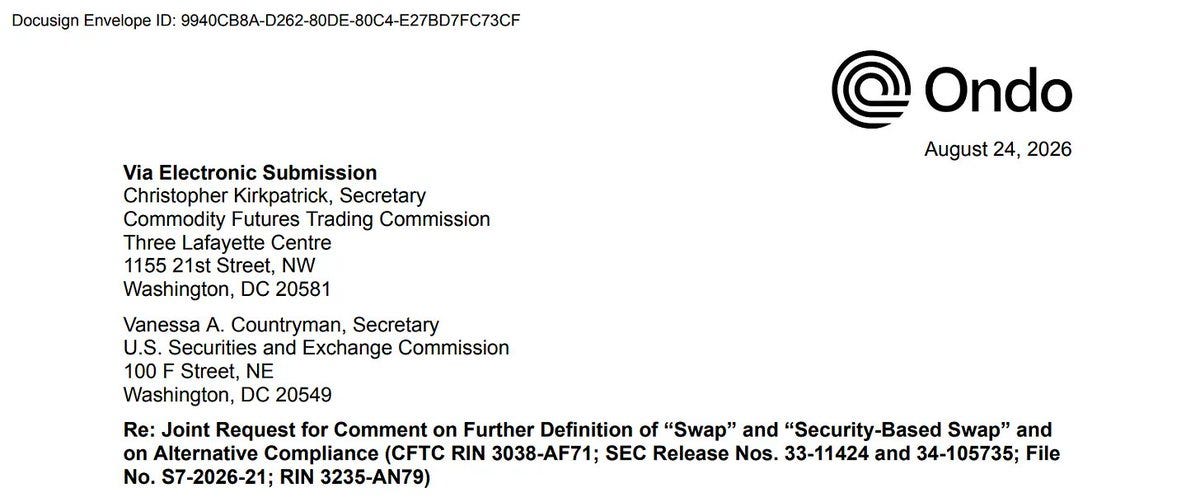
The importance of perps is also evident in Ondo’s U.S. regulatory strategy. In August 2026, Ondo Finance and Oasis Pro submitted two comment letters to the SEC and CFTC.
The first argues that cash-settled perpetual futures based on single stocks can be addressed within the existing category of a “security futures product.” Rather than creating an entirely new product category simply because the contract has no expiration date, Ondo proposes bringing these products into the United States under the existing Commodity Futures Modernization Act and notice-registration regime.
The second letter asks regulators to recognize offsetting relationships between spot stocks and perps, correlations across securities, and intraday settlement when calculating margin.
It proposes extending collateral principles already applied to tokenized Treasuries, money market funds, and corporate bonds to tokenized stocks, while recognizing portfolio margin and cross-margining between spot and derivatives.
These two documents provide some of the strongest evidence that Ondo Perps is not an experimental side project. The ultimate product Ondo wants to build in the United States is not limited to a spot market for tokenized stocks.
The structure points toward combining Oasis Pro’s broker-dealer, ATS, and transfer-agent infrastructure; the existing securities rails of DTCC and Broadridge; tokenized-stock collateral; equity perps; and portfolio margin within a regulated account structure.
This does not mean that U.S. investors can currently access such an integrated service. The SEC and CFTC comment letters are proposals, and U.S. custody-based tokens have different rights from Ondo Stocks offered outside the United States.
What is clear, however, is that the regulatory discussion is moving from whether tokens should be permitted to how spot assets, derivatives, and collateral should be integrated within a margin framework. Ondo’s intended transition from issuer to prime brokerage is consistent across both its products and its regulatory submissions.
7. The Major Competitive Models in Tokenized Equities
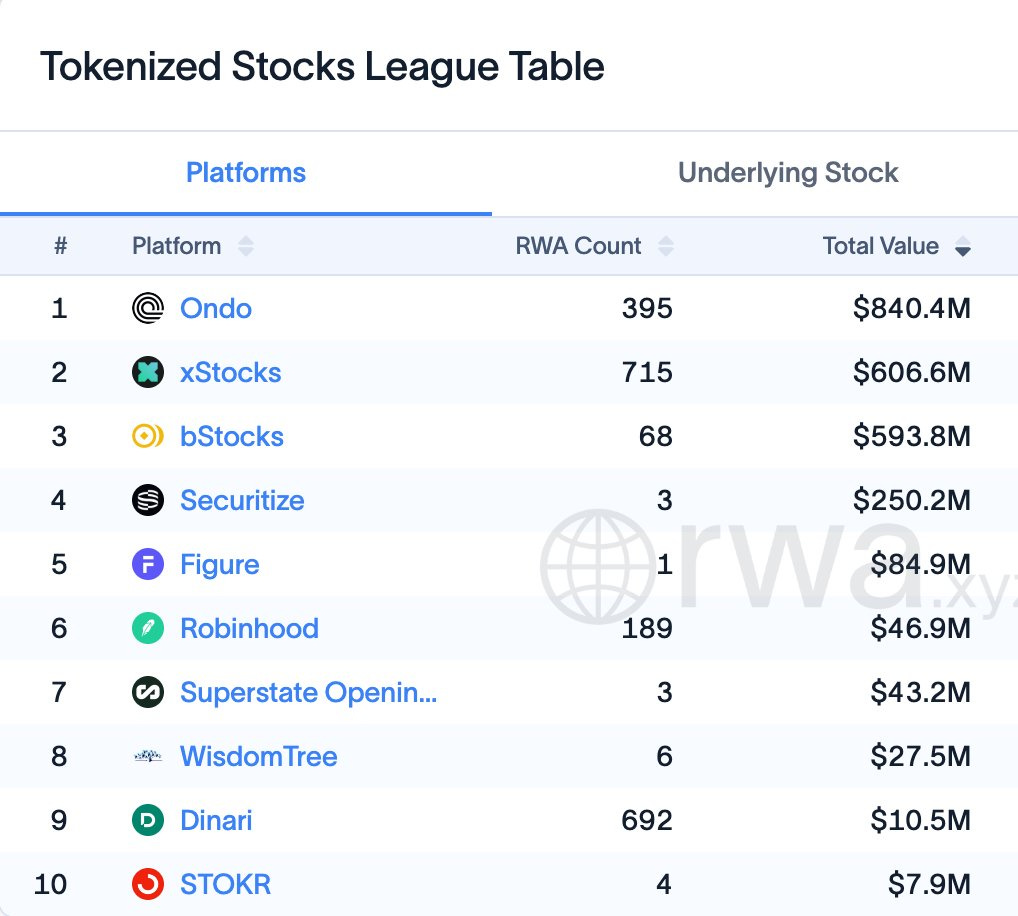
As of August 31, 2026, RWA.xyz measured the tokenized-stock market at $2.53 billion in distributed asset value.
Ondo ranked first among issuance platforms by distributed asset value, but the market combines businesses with different legal structures and operating models.
By the numbers, Ondo’s closest competitor is xStocks. By business model, the market divides into four broad categories.
Ondo and xStocks compete through open issuance and distribution networks.
bStocks and Robinhood vertically integrate issuance with their exchange or brokerage customer relationships.
Dinari, Securitize, and Superstate emphasize regulated rights and native equities.
Coinbase and Centrifuge combine the distribution power of a large platform with specialized tokenization infrastructure.
7.1 xStocks: Ondo’s Closest Competitor—and a Platform Pursuing a Similar Blueprint
xStocks distributes 1:1-backed stock and ETF tokens issued by Backed Assets (JE) Limited through Kraken and a range of exchanges, wallets, and DeFi protocols. According to RWA.xyz, xStocks had 715 assets—more than Ondo—and $606.6 million in distributed asset value.
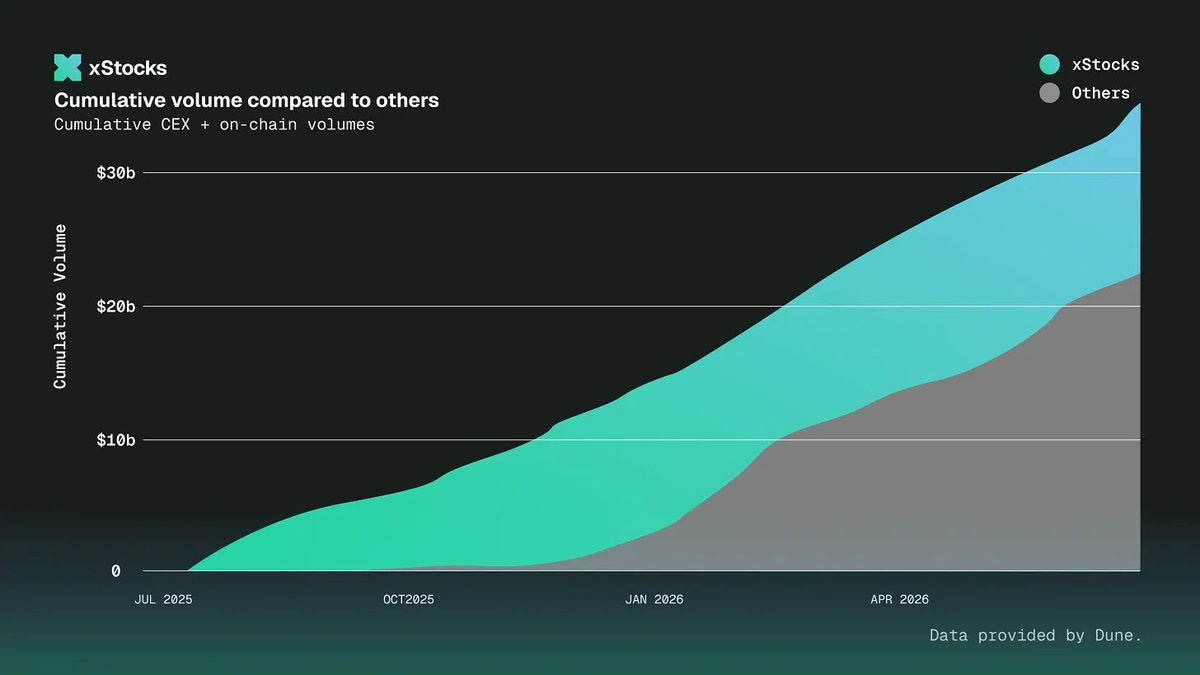
According to xStocks, cumulative trading volume reached $35 billion in July 2026, including $12.5 billion in onchain volume. It had approximately 200,000 holders, more than 100 partners, and support across seven chains.
The strength of xStocks is its open distribution standard. Rather than keeping assets within a single application, it allows the same assets to move across multiple chains and interfaces. This is where it overlaps most directly with Ondo.
Payward is also developing a transition gateway connecting Nasdaq and regulated securities markets with permissionless DeFi. It has disclosed plans to use xStocks across collateral, cross-margining, derivatives, and perps, while expanded 24/7 liquidity and RFQ functionality are included in the roadmap.
This demonstrates that Ondo Perps’ first-mover advantage is not a permanent monopoly. If xStocks completes its own collateral and derivatives ecosystem alongside the Nasdaq connection, it will compete with Ondo across almost the same dimensions.
Ondo’s current advantage is that it has already brought spot-token collateral, perps, and portfolio margin into an operating product. Defending this position will require more than having launched first. Ondo must build a record of actual collateral usage, tighter spreads, growing open interest, and reliable liquidation performance.
7.2 bStocks: Evidence That Distribution Can Matter More Than Asset Count
bStocks are tokenized securities issued by Binance-affiliated BTECH Holdings Limited and backed 1:1 by U.S. stocks held with regulated custodians. Holders do not directly own the underlying shares, but the tokens can be withdrawn to BNB Smart Chain wallets and used in DeFi.
Binance provides 24/7 spot trading, instant conversion, proof of reserves, automatic dividend reinvestment, and adjustments for stock splits. The products trade on recognized exchanges under an approved prospectus within the ADGM framework.
The most important competitive figure is 68. According to RWA.xyz, bStocks reached $593.8 million in distributed asset value with only 68 assets, narrowing the value gap with xStocks—which offered 715 assets—to approximately $13 million.
This suggests that a small number of popular assets combined with powerful exchange distribution can attract capital more quickly than a long catalog of hundreds of securities.
Within Binance, Ondo cannot become a stronger distributor than Binance itself. Instead, it must offer neutral issuance and redemption rails that work across multiple exchanges, wallets, and chains, along with greater capital utility.
Even when an exchange prioritizes its own tokens, the reasons for users to seek out Ondo Stocks must be perps collateral, lending, broader external distribution, and the quality of minting and redemption.
7.3 Robinhood: Limited Openness, but Ownership of the Customer Relationship
Robinhood Europe offers more than 2,000 Classic Stock Tokens. These are derivative contracts between Robinhood and its users and do not grant direct rights in the underlying shares.
Trading is available 24/5 from as little as €1. The tokens currently cannot be transferred to external wallets or platforms. Robinhood owns the underlying assets, which are held with licensed U.S. institutions.
From the perspective of onchain openness, Ondo has the advantage. But Robinhood combines an existing customer base, an intuitive application, payments, and asset management within a single interface.
In addition to Stock Tokens, Robinhood Europe offers 24/7 perps on ETFs, commodities, currencies, and crypto with up to 10x leverage. Its official materials do not currently state that Classic Stock Tokens can be used as collateral for perps. Even so, the direction of offering spot-like products and derivatives through one brokerage application supports Ondo’s full-stack thesis.
Robinhood’s competitive threat is not the protocol. It is ownership of the user relationship. Most investors may choose a familiar application, low minimums, and simplified tax and corporate-action processing over external transferability and DeFi utility.
Ondo must respond through a B2B2C strategy that encourages third-party applications to adopt its assets and risk engine, rather than attempting to compete solely on the user experience of its own application.
7.4 Dinari: The Threat Lies Less in Current Scale Than in Rights and U.S. Access
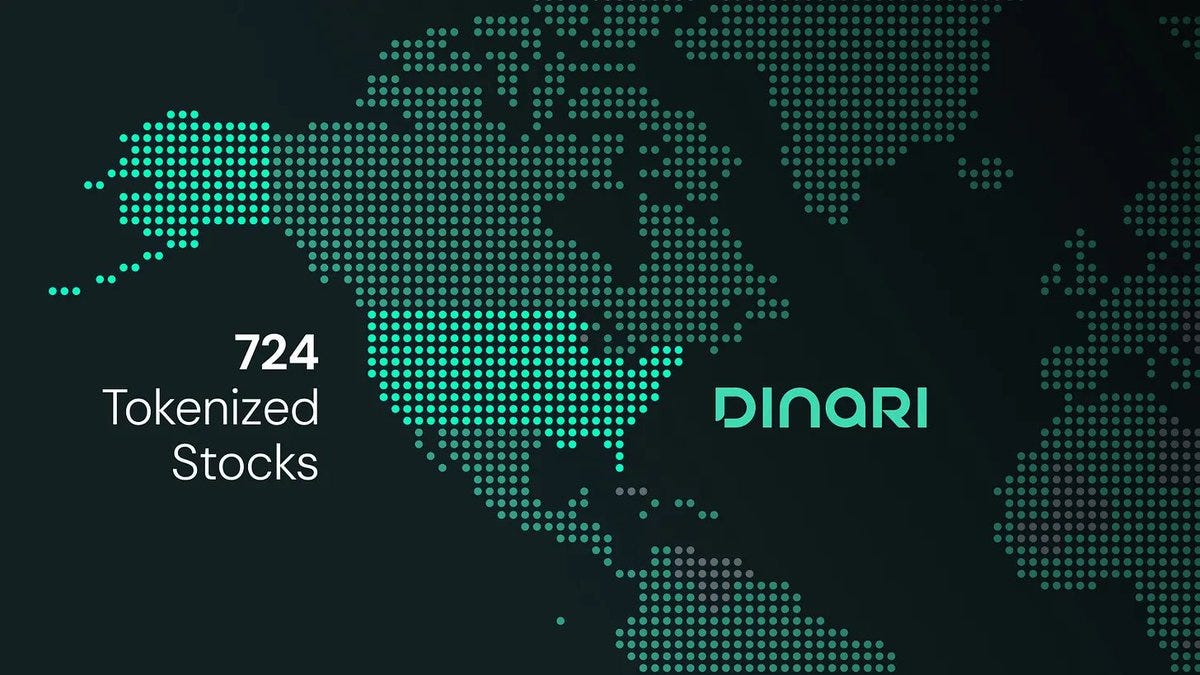
In August 2026, Dinari began offering 724 dShares to eligible U.S. investors and businesses, including the entire S&P 500. The assets can be purchased with USDC through self-custodial wallets.
Dinari states that it provides NBBO execution, voting rights, cash dividends, corporate actions, and protected claims on the underlying securities. It also operates a B2B API through which broker-dealers, banks, and fintech platforms can offer tokenized securities.
RWA.xyz measured Dinari’s distributed asset value at $10.5 million, leaving it well behind Ondo in current scale. But Dinari’s threat lies not in its current liquidity. It lies in the completeness of its rights and its ability to serve the U.S. market.
Whereas Ondo’s international tokens use a total-return tracking structure, Dinari emphasizes a custody-based model designed to preserve the rights and protections associated with traditional stock ownership. It also connects more than 85 jurisdictions with the United States and allows external financial institutions to offer the products under their own brands.
If Dinari implements the 24/7 trading, T+0 settlement, collateralized lending, and margin capabilities it has announced, it will target both Ondo’s open distribution and utility model and the rights offered through regulated U.S. securities.
The difference in current scale remains substantial, but strategically, Dinari is the regulated competitor that warrants the closest attention.
7.5 Securitize and Superstate: Bringing Actual Shares Onchain, Not Wrappers
Securitize and Superstate compete from a different direction than businesses that rapidly wrap hundreds of existing stocks.
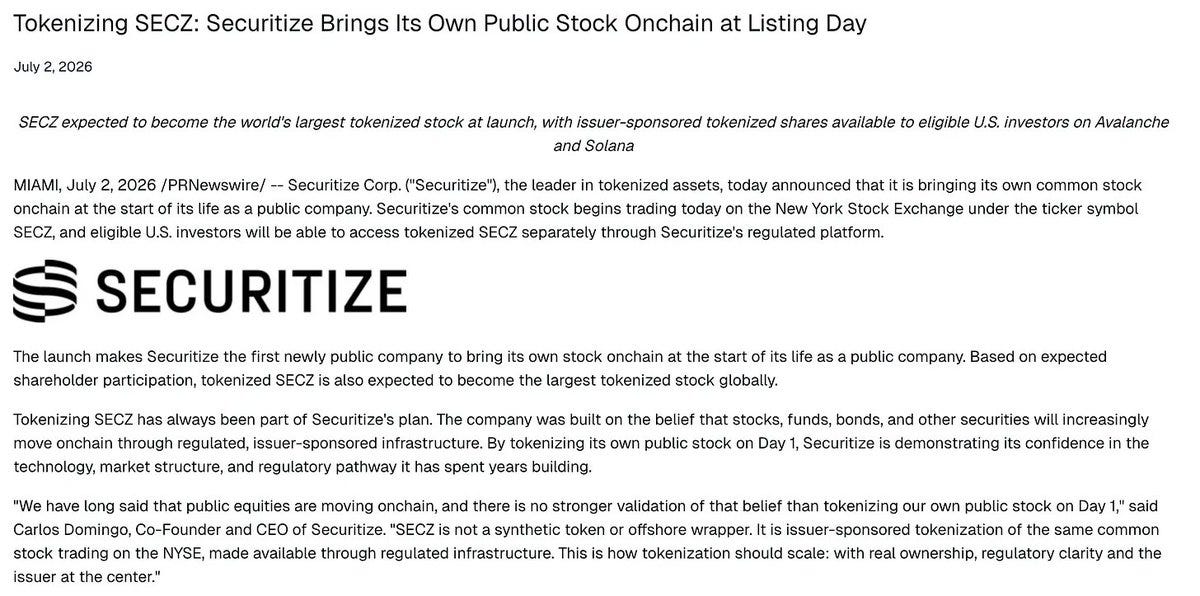
Securitize operates SEC-registered broker-dealer, ATS, transfer-agent, and fund-administration infrastructure. In July 2026, it tokenized its own stock, SECZ, on Avalanche and Solana at the time of its NYSE listing.
The company describes the structure not as an offshore synthetic token or wrapper, but as the same common stock brought onchain directly by the issuer. The reason three assets alone accounted for $272.7 million on RWA.xyz is that Securitize focuses on actual issuer shares and institutional assets rather than a large catalog of securities.
Superstate Opening Bell also works directly with issuers as an SEC-registered transfer agent. Its tokenized shares are not derivatives, wrappers, or separate classes of stock. Superstate maintains the shareholder register across both onchain and book-entry records.
Shares can move between KYC-verified wallets, while issuers can process dividends, stock splits, new issuance, and stablecoin-based capital formation.
This model offers the most complete set of rights, but it is more difficult to scale quickly. Each listed company must cooperate, while transfer-agent, disclosure, and distribution structures must be established separately. This makes it difficult to list hundreds of popular stocks at once.
Over the long term, however, if listed companies begin issuing native onchain shares from the outset, demand for total-return wrappers could decline.
Ondo’s U.S. custody-based tokens, collaborations with DTCC and Broadridge, and acquisition of Oasis Pro are responses to this direction. Ondo is pursuing rapid wrapper-based distribution internationally while developing a parallel U.S. path that more closely aligns with actual securities rights and existing market infrastructure.
7.6 Coinbase and Centrifuge: Exchanges Can Build Infrastructure Alliances Instead of Issuing Directly
In May 2026, Coinbase designated Centrifuge as its Preferred Tokenization Infrastructure platform and made a strategic investment.
Centrifuge contributes its experience structuring assets with Apollo, Janus Henderson, and S&P Dow Jones. Coinbase contributes consumer distribution, institutional relationships, and its developer ecosystem.
The first asset, deSPXA, provides eligible non-U.S. investors with tokenized exposure to an S&P 500-linked fund managed by Janus Henderson.
This demonstrates that major centralized exchanges do not necessarily need to adopt Ondo or xStocks, nor do they need to issue tokens directly. An exchange can partner with external tokenization infrastructure to build an asset supply chain tailored to its own blockchain and customers.
Ondo’s neutral distribution strategy must provide faster integration, deeper liquidity, and more utility than these alliances.
What the Competitive Landscape Means for Ondo
Ondo currently presents one of the most complete models combining open global distribution, instant minting and redemption, tokenized-stock collateral, and its own perps platform.
A major strength is that Ondo established an integrated risk-management structure connecting spot issuance, traditional-market liquidity, perps, and portfolio margin.
However, it faces pressure from three directions.
Binance and Robinhood own the customer relationship and trading interface.
Dinari, Securitize, and Superstate are strengthening direct rights to underlying shares and regulated infrastructure.
xStocks is pursuing a similar open distribution model and expanding toward collateral and perps.
Ondo’s moat therefore cannot be defined by asset count or TVL alone. Its capital efficiency and liquidity must become strong enough that exchanges want to connect Ondo’s minting, redemption, collateral, and perps rails even when they have their own tokens.
The difficult component for competitors to replicate is not an Apple token. It is the entire path through which that token moves from issuance to collateral, hedging, liquidation, and settlement.
8. From Exporting U.S. Assets to Building a Two-Way Global Market
Ondo’s international strategy should also be viewed through the lens of perps and capital utility. Selling U.S. stocks around the world is not enough to create a global securities network.
Assets from individual regions must be placed on Ondo’s distribution, collateral, and trading rails and made available to investors globally.
Ondo and Mirae Asset Global Investments signed an MOU to tokenize ten U.S.-listed Global X ETFs. The initial scope is not Korean equities, but U.S.-listed ETFs. Mirae Asset manages the products, while Ondo is responsible for tokenization and global digital distribution.
With SBI Group, Ondo is pursuing the onchain issuance and distribution of Japanese equities, the distribution of Ondo assets through SBI channels, and the use of JPYSC for settlement and collateral.
Specific securities and launch dates have not yet been disclosed. These initiatives should therefore be viewed as supply-chain development rather than commercial results already achieved.
“Similar to how the U.S. has used U.S. Treasuries and the U.S. dollar to attract capital, and how stablecoins have unlocked global access to U.S. dollars, tokenized equities can do the same for local stocks by exporting them beyond their home markets.” — Min Lin, MD of Global Business Development, Ondo Finance
Tokenizing Korean or Japanese stocks alone will not create global demand. Investors must be able to trade outside local market hours, hedge both currency and equity risk, and use their holdings as collateral.
Ondo will become a genuine two-way distribution network only when the spot, perps, and collateral structure developed for U.S. equities is also applied to local-market assets.
This is where perps also connect with Ondo’s Asia strategy. The thinner the liquidity of local equities relative to U.S. mega-cap stocks, and the more fragmented their trading hours, the more important hedging, portfolio margin, and 24/7 risk-management tools become for global market makers.
Ondo can offer greater value to its partners if it moves beyond issuance agreements with asset managers and provides a global market for transferring risk in those assets.
9. What Ondo Must Prove Next
Ondo is already a leading RWA project and one of the leading platforms in tokenized equities. If its future is assessed solely through TVL and asset count, both the company’s most important transformation and its greatest risks will be missed.
The first metric to watch is the collateral usage rate of Ondo Stocks. It will be necessary to measure how much tokenized stock is actually used as collateral across Morpho lending markets and Ondo Perps, whether collateral remains concentrated in a few index ETFs, and whether it expands across a broader range of individual equities.
The second is the amount of durable risk capital remaining on Ondo Perps. More important than cumulative volume are the retention of open interest, repeat traders, market-maker concentration, spreads, and market depth. The $10 billion in cumulative volume represents a strong start, but the more important question is whether open interest of approximately $100 million continues to grow and remains durable over time.
The third is the quality of the price connection between spot and perps. Basis and funding behavior during weekends and corporate actions must be monitored, along with whether 24/7 minting and redemption limits continue to function during volatile markets. The benefit of integrating spot and perps will be demonstrated not through the user interface during normal conditions, but through volatility and liquidation events.
The fourth is the defensibility of Ondo’s neutral distribution network. Even if Binance prioritizes bStocks and Kraken prioritizes xStocks, third-party exchanges and wallets must continue adopting Ondo. If Ondo assets are used more broadly across collateral, lending, and derivatives than competing products, Ondo can turn the absence of a dominant proprietary exchange into a network effect.
The fifth is convergence across rights and regulatory pathways. International total-return tracking tokens, EEA prospectus-based products, securities admitted to trading under the ADGM framework, and U.S. custody-based tokens provide different rights. How closely Ondo can ultimately align the direct rights of its U.S. products with the transferability of its international products will determine its competitive position against Dinari, Securitize, and Superstate.
The sixth is the verifiability of Ondo Network. The need for high-speed execution and privacy is clear. However, the initial architecture’s dependence on TEEs and a limited set of attestors creates centralization, hardware, and key-management risks. The number and independence of attestors, failure recovery, emergency-stop authority, and the scope of state recorded on public blockchains must be publicly verifiable.
A full-stack structure can become both a moat and a network through which risk propagates. An error in a token price can trigger cascading liquidations across lending and perps. Problems involving offchain custody or corporate actions can affect the value of onchain collateral.
For these products to reinforce one another, the legal entities, collateral pools, and risk engines must be separated and transparently verified so that a failure in one layer does not destabilize the entire market.
10. Conclusion: After Tokenization, How Much Capital Stays?
The easiest way to evaluate an RWA project has been to look at the number of assets tokenized and its TVL. But these metrics reveal the scale of an issuer without fully explaining its competitiveness as a capital markets platform.
A more important metric going forward is Capital Velocity: the extent to which issued assets are repeatedly used across collateral, lending, hedging, and trading.
If $1 billion in tokenized stocks simply remains in wallets, Ondo’s revenue opportunities are limited to issuance, redemption, and distribution fees. If the same $1 billion is used as lending collateral, supports perps positions, and repeatedly serves as a hedging asset for market makers, trading activity and revenue can continue to increase even without a substantial rise in TVL.
Ondo’s growth formula is shifting from issuing more assets to enabling more use of the assets it has already issued.
Min Lin described Ondo’s ultimate direction in his interview with Exilist.
“The ultimate vision for Ondo is to build an onchain prime brokerage platform.” — Min Lin, MD of Global Business Development, Ondo Finance
Prime brokerage is not a single product. It is an account structure through which institutions and professional investors custody assets, deploy collateral, obtain leverage, trade spot and derivatives, and manage risk across an entire portfolio.
From this perspective, the logic behind Ondo’s expansion becomes clear: from Treasuries to equities, from spot to lending and perps, and then to portfolio margin and a proprietary trading network. These are not disconnected businesses. They are components of an account structure designed to keep capital within the Ondo ecosystem.
Even if Ondo Stocks supplies the assets, the most active trading and fee generation will accrue to external platforms if investors must move elsewhere to hedge.
If investors can borrow against Ondo Stocks, retain their spot exposure while hedging through Ondo Perps, and manage the entire portfolio under a single margin system, issuance, trading, and risk management can remain within one environment.
The importance of Ondo Perps therefore does not lie in cumulative trading volume alone. Perps are the first test of whether Ondo can transform the assets it issues into productive capital.
If Ondo Perps volume grows but remains concentrated in stablecoin collateral and short-term turnover, Ondo may be viewed as an RWA platform that also operates an equity derivatives venue.
If the share of Ondo Stocks used as collateral increases alongside open interest, and spot holders repeatedly participate in lending, hedging, and basis trades, Ondo will move closer to becoming a functioning onchain prime brokerage rather than remaining a tokenized-asset issuer.
The most important indicators are therefore not asset count but the collateral usage rate of Ondo Stocks, and not cumulative volume but the open interest that remains on the platform.
What matters is whether the same assets are repeatedly used across Morpho and Ondo Perps, and whether market makers begin moving the hedging assets and margin currently held in traditional brokerage accounts into the Ondo ecosystem.
If these indicators improve, Ondo’s true competitive advantage will no longer come from tokenization technology or the length of its asset list. It will come from an account structure that allows investors to continue holding, collateralizing, borrowing, hedging, and trading without leaving Ondo.
Min Lin offered the following view of the tokenization market’s future at the end of the interview.
“There will be a point where we stop talking about ‘tokenized stocks,’ because everything will be onchain.” — Min Lin, MD of Global Business Development, Ondo Finance
In a market where every stock exists onchain, turning a stock into a token will no longer be sufficient differentiation. Tokenization will become the default format of financial markets rather than a separate product category. Competition will return to who can bring the most liquidity, capital, and trading functionality into a single account.
At that point, Ondo’s competitors will not be limited to other RWA issuers. They will include global brokerages and exchanges that provide custody, spot trading, credit, collateral, and derivatives within a single account.
The final problem Ondo must solve lies here. Bringing Wall Street’s assets onchain is not enough. The capital of the investors and market makers who hold those assets must also remain onchain.
The term “tokenization” may eventually disappear. The account where capital resides—and the market that puts it to work—will remain. That is the position Ondo is attempting to occupy.
Sources
1. Ondo Finance and Ondo Stocks
Ondo Stocks Surpasses $1 Billion in Value as Ecosystem Surges
Ondo Partners with Broadridge for Tokenized Stock Voting Capabilities
2. Ondo Perps and Infrastructure
3. U.S. Regulation and Institutional Infrastructure
Ondo Finance and Oasis Pro Comment on Single-Stock Perpetual Futures
Ondo Finance and Oasis Pro Comment on Portfolio Margin and Cross-Margining
4. Asia Expansion
5. Market Data
6. Tokenized Equity Competitors
One Year of xStocks: The Tokenized Equities Framework That Made a Market
Dinari Launches 724 Tokenized Stocks for U.S. Investors and Businesses
Securitize Brings Its Own Public Stock Onchain at Listing Day
Coinbase Selects Centrifuge as Preferred Tokenization Infrastructure
This content is analysis material for information and research purposes and is not intended to recommend buying, selling or holding specific assets (stocks, tokens, etc.) or to replace investment judgment. All opinions and interpretations included in the text are based on public information and reasonable assumptions at the time of writing and may change depending on future market conditions or changes in policies and regulations.
This research was conducted independently without receiving any financial compensation, sponsorship, or compensation in connection with the writing of this article from the project or its affiliates. However, the author or affiliated organization may have had a paid business relationship with the project in the past, and thus a conflict of interest may exist. The opinions and interpretations contained in the text are based on the independent judgment of the author.
The final responsibility for investment decisions lies entirely with the reader, and the author assumes no legal responsibility for investment results based on this content.
© 2026 Exilist Inc. · Privacy ∙ Terms ∙ Collection notice